TL;DR

Get health and wellness essentials delivered free with Prime
- Fast, free delivery on millions of items
- Prime Video, Amazon Music and more included
- Member-only deals all year
A new Ebola outbreak has emerged in Central Africa, prompting international health agencies to activate response protocols. The situation tests existing containment strategies and readiness. The event underscores ongoing challenges in managing Ebola outbreaks globally.
A new Ebola outbreak has been confirmed in Central Africa, marking a critical test of global and regional health response systems. The outbreak’s emergence raises concerns about containment, resource allocation, and international cooperation at a time when health systems are already strained by other crises.
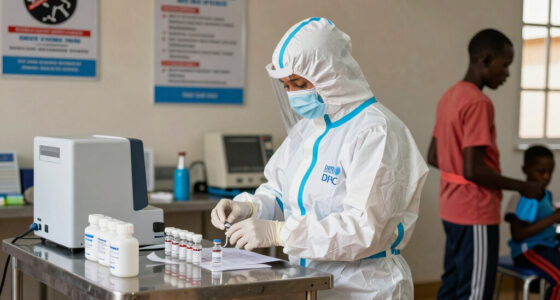
Health authorities in the Democratic Republic of Congo (DRC) confirmed the first cases of Ebola in a remote region on March 5, 2026. The World Health Organization (WHO) has dispatched emergency teams to assist local health services in containing the virus. Initial reports indicate at least 12 confirmed cases and 5 deaths, with authorities implementing quarantine measures and contact tracing efforts. The outbreak is believed to be linked to a recent increase in animal-to-human transmission, common in previous outbreaks. International agencies have activated response protocols, including vaccination campaigns using the rVSV-ZEBOV vaccine, which has shown efficacy in past outbreaks. However, logistical challenges and limited healthcare infrastructure complicate containment efforts in this remote area.
Why It Matters
This outbreak tests the effectiveness of current Ebola response strategies and highlights the ongoing vulnerability of health systems in regions prone to such diseases. The ability to contain and manage the outbreak impacts not only local populations but also global health security, given the potential for international spread. The situation underscores the importance of preparedness, rapid response, and international cooperation in managing infectious disease crises.
As an affiliate, we earn on qualifying purchases.
Background
Ebola has caused multiple outbreaks in Central Africa over the past two decades, with the most severe occurring in West Africa in 2014-2016. Past responses have emphasized rapid deployment of vaccines and treatment centers, but logistical and infrastructural challenges persist. The current outbreak follows a pattern of sporadic emergence, often linked to wildlife contact, with previous outbreaks sometimes escalating due to delayed responses. This event occurs amid broader global health concerns, including pandemic fatigue and resource constraints.
“We are mobilizing all available resources to contain this outbreak and protect local communities. Early intervention is crucial.”
— WHO spokesperson Dr. Maria Lopez
“Our teams are working tirelessly to trace contacts and implement quarantine measures, but challenges remain due to the remote location.”
— DRC Ministry of Health Director, Jean Mwamba
personal protective equipment PPE
As an affiliate, we earn on qualifying purchases.
As an affiliate, we earn on qualifying purchases.
What Remains Unclear
It remains unclear how widespread the outbreak will become or whether additional cases will emerge in neighboring regions. The effectiveness of containment measures and vaccine deployment in this context are still being evaluated. Further updates are expected as more data becomes available and response efforts unfold.
As an affiliate, we earn on qualifying purchases.
What’s Next
Health authorities plan to expand testing, vaccination, and contact tracing efforts over the coming weeks. International agencies will continue monitoring the situation, with potential escalation if cases increase or spread occurs beyond initial regions. The focus remains on rapid containment and preventing a larger outbreak.
As an affiliate, we earn on qualifying purchases.
Key Questions
How many cases have been confirmed so far?
As of now, at least 12 cases have been confirmed, with 5 reported deaths.
What measures are being taken to control the outbreak?
Authorities are implementing quarantine zones, contact tracing, and vaccination campaigns using the rVSV-ZEBOV vaccine.
Could this outbreak spread internationally?
While containment efforts are underway, there is a potential risk of spread, especially if cases are not quickly isolated and if travel occurs between affected regions.
What challenges are faced in controlling this outbreak?
Limited healthcare infrastructure, remote location, and logistical hurdles complicate containment and vaccination efforts.
Source: The Lancet
Cold & flu season Picks
humidifiers
As an affiliate, we earn on qualifying purchases.