📊 Full opportunity report: GLP-1 Pharmacy Index on IdeaNavigator AI — validation score, market gap, and execution plan.

Get health and wellness essentials delivered free — and shop member deals
- Fast, free delivery on millions of items
- Access to Prime Big Deal Days deals on October 6–7
- Prime Video, Amazon Music and more included
TL;DR
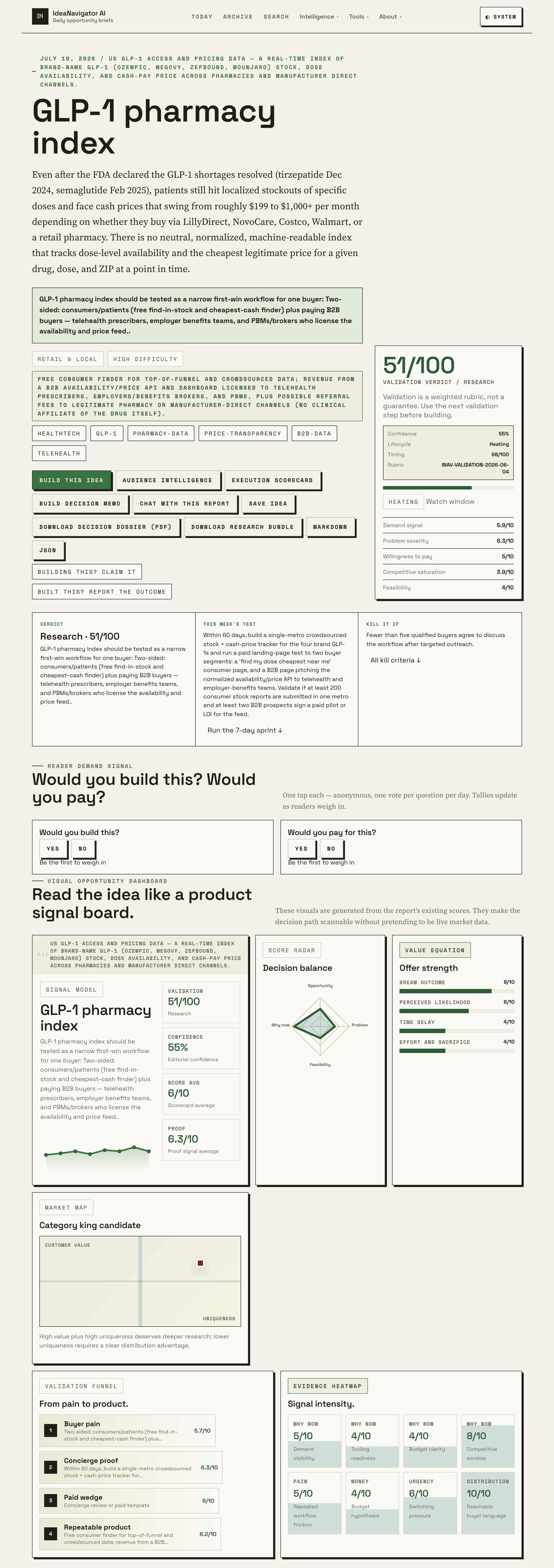
IdeaNavigator AI’s proposal describes testing a pharmacy index for brand-name GLP-1 drugs, combining dose-level stock reports with normalized cash prices by ZIP code. It outlines a free consumer finder and paid availability and pricing data for business buyers; it does not report a launched service. The proposal’s suggested 60-day test would seek 200 consumer reports in one metro and paid interest from at least two business prospects.
IdeaNavigator AI has proposed testing a GLP-1 pharmacy index that would show consumers where specific doses of brand-name drugs are reported in stock and compare cash prices by ZIP code. The proposal describes a free patient-facing finder and a paid data feed for telehealth prescribers, employers and pharmacy-benefit intermediaries. IdeaNavigator AI reports no launch or customer commitments in the proposal.
According to the IdeaNavigator AI proposal, the index would cover Ozempic, Wegovy, Zepbound and Mounjaro, organizing availability by drug, dose and location. Its consumer tool would let a patient search for a reported in-stock dose and compare cash prices from manufacturer-direct services, retail pharmacies and other listed channels. The plan also calls for alerts when a dose becomes available.
The proposal names LillyDirect, NovoCare, Costco and Walmart as potential sources for initial data, alongside a price-comparison layer and crowdsourced reports from users. It says the information would be normalized into a common format, then offered through a business API or dashboard. Potential customers named in the plan include telehealth prescribers, employer benefits teams, pharmacy benefit managers and brokers.
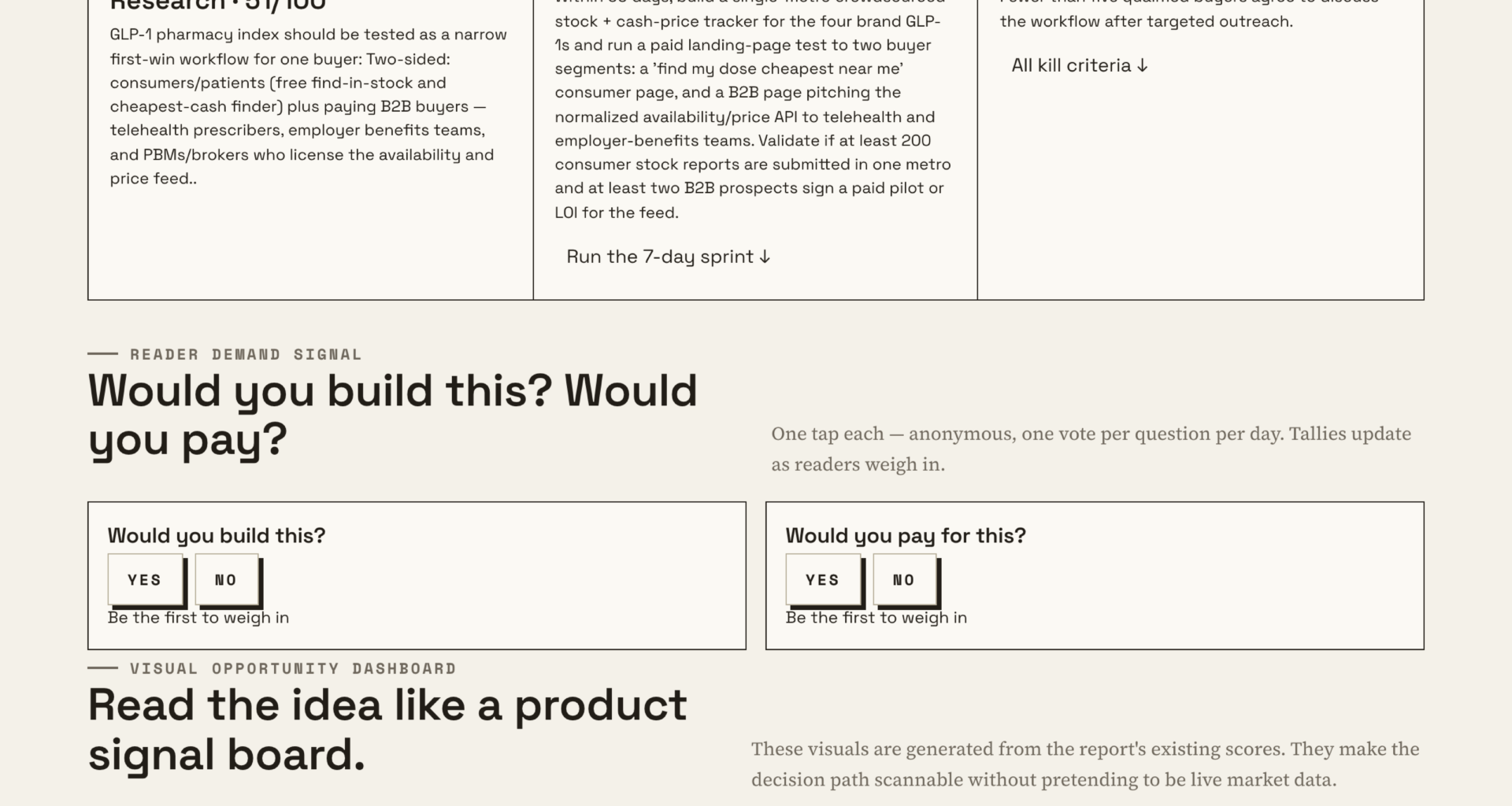
The suggested first test is limited to one US metro area and would run for 60 days. IdeaNavigator AI sets two proposed validation targets: at least 200 consumer stock reports and at least two business prospects signing a paid pilot or letter of intent. These are proposed thresholds, not reported results. The proposal identifies no city, launch date, operating team or signed partner.
Source: IdeaNavigator AI, “GLP-1 Pharmacy Index”
A New Search for Dose-Level Supply
The IdeaNavigator AI proposal frames the index as a response to a mismatch between national shortage status and a patient’s local ability to fill a prescription. A broad shortage designation may be resolved while a particular pharmacy still lacks a particular dose. A searchable index could make local differences easier to see if its reports are timely and reliable.
The proposal describes monthly prices ranging from about $199 to more than $1,000, depending on the drug and channel. It does not specify a date, a full list of products and doses, or a standardized comparison of what each price includes. Patients would need those details to judge whether two listed prices are comparable.
For employers and other institutional buyers, the proposal says a feed might help inform benefit decisions and direct patients toward available options. It also claims GLP-1 medicines account for roughly 20% of pharmacy spending for employers, but provides no survey, time period or calculation for that figure. The tool’s value to buyers would depend on verified data, consistent updates and evidence that the information changes purchasing or access decisions.
From Shortage Lists to Local Prices
IdeaNavigator AI’s proposal says the FDA declared tirzepatide shortages resolved in December 2024 and semaglutide shortages resolved in February 2025. Those dates provide context for the index idea; they do not establish that every pharmacy has every dose available.
The proposal also points to manufacturer-direct cash-pay channels, retail pharmacy offerings and the end of compounding pathways following regulatory deadlines. It names LillyDirect and NovoCare and says a federal TrumpRx portal began in February 2026. The proposal supplies no links, price snapshots or operating details for these channels, so any eventual index coverage would need to be checked against each provider’s current terms.
The article’s factual basis is IdeaNavigator AI’s product proposal, rather than evidence of an existing index or an independently reported market survey. The proposal outlines a possible service and a way to test demand, but reports no patient interviews, price collection results or buyer commitments.
Data Quality and Buyer Demand
IdeaNavigator AI’s proposal does not establish whether a service has been built, which metro would be tested, or whether any pharmacy or manufacturer has agreed to share data. It also does not identify who would verify crowdsourced stock reports. Without verification and timestamps, an availability listing could become outdated before a patient acts on it.
The proposal does not define a comparable cash price, including whether listed amounts include membership requirements, coupons, fees or other conditions. It also does not describe how the service would handle prescription requirements, product differences, privacy protections for user submissions or corrections to inaccurate listings. The proposal provides no evidence that employers, telehealth companies or pharmacy benefit managers are prepared to pay for the feed.
The proposal’s figures should be read within their stated limits: 200 reports and two prospective business commitments are targets for a test, not evidence of demand already demonstrated. It does not specify whether a letter of intent would involve payment or what a paid pilot would include.
The Proposed 60-Day Test
IdeaNavigator AI’s proposal says the next step, if pursued, would be to choose one metro, assemble public price data and collect dose-specific availability reports. It proposes testing two messages at once: a consumer offer to find a dose at the lowest nearby cash price, and a business offer for an availability and price API. The proposal gives no start date and does not say the work is underway.
The stated checkpoints are 200 consumer reports and at least two paid pilots or letters of intent from business prospects within 60 days. Further reporting would be needed to establish whether the test launches, whether those thresholds are reached, and how the service handles stale or conflicting reports. Even if the targets are met, the results would show early interest in one metro, not nationwide coverage or proven savings.
Key Questions
Has the GLP-1 pharmacy index launched?
IdeaNavigator AI’s proposal does not report a launch. It describes a possible service and a suggested test in one metro area.
Which medicines would the index cover?
The proposal’s initial list includes Ozempic, Wegovy, Zepbound and Mounjaro, with searches organized by dose and ZIP code.
How would the proposed service make money?
The proposal describes a free consumer finder and suggests licensing an availability and price API or dashboard to telehealth prescribers, employers, brokers and pharmacy benefit managers. It also mentions possible referral fees from pharmacy or manufacturer-direct channels.
What would count as a successful initial test?
The proposed 60-day test sets targets of at least 200 consumer stock reports in one metro and at least two business prospects signing a paid pilot or letter of intent. The proposal does not report that these targets have been achieved.
Source: IdeaNavigator AI
Fall Picks
fall essentials
As an affiliate, we earn on qualifying purchases.