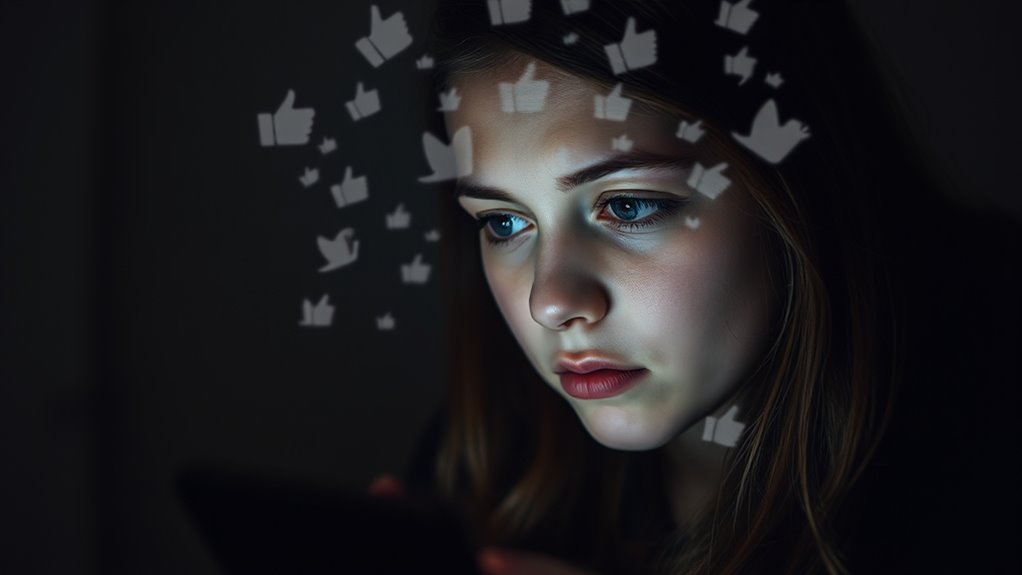

Social media impacts your mental health in many ways, often increasing stress and emotional struggles. Exposure to cyberbullying, harmful social comparisons, and curated content can lead to feelings of shame, anxiety, and depression. Constant online interactions make it hard to escape negative influences, and overuse can distort how you see yourself and others. However, understanding these effects and adopting healthy habits can help you manage your online experience better—if you keep exploring, you’ll find practical ways to protect your well-being.

Get health and wellness essentials delivered free — and shop member deals
- Fast, free delivery on millions of items
- Access to Prime Big Deal Days deals on October 6–7
- Prime Video, Amazon Music and more included
Key Takeaways
- Cyberbullying on social media can cause lasting emotional pain, anxiety, depression, and suicidal thoughts.
- Comparing oneself to curated online content can lower self-esteem and foster feelings of inadequacy and envy.
- Excessive social media use is linked to increased feelings of loneliness, anxiety, and emotional distress.
- Setting boundaries and curating positive content can help mitigate social media’s negative mental health effects.
- Being mindful of online interactions and recognizing curated portrayals promote healthier engagement and emotional well-being.
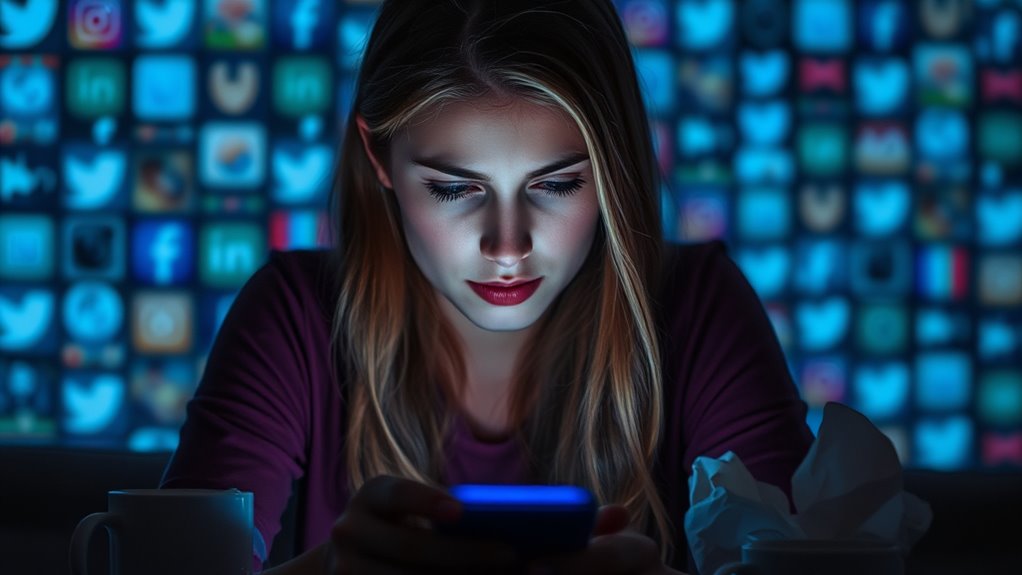
Have you ever wondered how social media impacts your mental health? It’s a question many people ask as they scroll through feeds full of curated images, perfect lives, and endless updates. While social media offers benefits like staying connected and finding support, it also has some darker sides that can negatively affect your well-being. One major concern is cyberbullying effects. Unlike traditional bullying, cyberbullying can happen anytime and anywhere, making it harder to escape. When someone posts hurtful comments, spreads rumors, or sends threatening messages, it can lead to feelings of shame, fear, and helplessness. The emotional toll can be significant, especially if you’re exposed repeatedly or feel powerless to stop it. The impact of cyberbullying isn’t just temporary; it can leave long-lasting scars on your mental health, leading to anxiety, depression, and even suicidal thoughts in severe cases.
Another way social media influences your mental health is through social comparison. It’s easy to fall into the trap of comparing your everyday life with the highlight reels others post online. When you see friends or influencers flaunting their achievements, perfect bodies, or luxurious lifestyles, it’s natural to feel like you’re falling short. This social comparison can chip away at your self-esteem and foster feelings of inadequacy or envy. Over time, constantly measuring yourself against others’ curated portrayals can lead to dissatisfaction and a distorted view of reality. You might start believing that everyone else is happier, more successful, or more fulfilled, which can intensify feelings of loneliness and depression. The more you compare, the more likely you are to feel like you’re missing out or not enough.
It’s important to recognize that social media isn’t inherently harmful, but how you engage with it makes a difference. Being aware of cyberbullying effects and social comparison can help you establish boundaries and develop healthier habits online. For instance, limiting your screen time, curating your feed to include positive and authentic content, and reminding yourself that social media often showcases only the best moments can help protect your mental health. Remember, what you see online isn’t the full story, and comparing your behind-the-scenes to someone else’s highlight reel isn’t fair to yourself. By staying mindful and aware of these potential pitfalls, you can enjoy the benefits of social media while minimizing its negative impact on your mental well-being.
As an affiliate, we earn on qualifying purchases.
Frequently Asked Questions
How Does Social Media Affect Sleep Patterns and Quality?
Your social media use can markedly affect your sleep patterns and quality. Increased screen time before bed exposes you to blue light, which disrupts melatonin production, making it harder to fall asleep. This sleep disruption can lead to poorer sleep quality and fatigue. To improve your sleep, limit screen time an hour before bed and create a relaxing bedtime routine, helping your body wind down naturally and get better rest.
Can Social Media Use Lead to Addiction or Dependency?
Yes, social media use can lead to addiction or dependency. Comparison studies show that frequent use increases the risk of becoming dependent on online validation and connection. You might find yourself constantly checking updates or feeling anxious without access, which signals dependency risks. It’s important to set boundaries and monitor your usage to prevent it from negatively affecting your mental health and daily life.
What Are the Long-Term Mental Health Effects of Social Media?
You might find that long-term social media use impacts your mental health through increased social comparison, which can lead to feelings of inadequacy or low self-esteem. It can also hinder your emotional regulation, making it harder to manage stress or negative emotions. Over time, these effects can contribute to anxiety or depression, especially if you rely heavily on social media for validation or connection. Recognizing these patterns helps you take control and protect your well-being.
How Do Different Platforms Impact Mental Health Differently?
They say “variety is the spice of life,” and that’s true for social media platforms too. Different platforms impact your mental health uniquely; for example, Instagram’s visual focus can fuel comparison and self-esteem issues, while Twitter’s fast pace might cause anxiety. A platform comparison reveals that each has distinct emotional influences—some boost connection, others lead to stress. Recognizing these differences helps you manage your social media use better.
Are There Specific Age Groups More Vulnerable to Social Media’s Effects?
You’re more vulnerable to social media’s effects if you’re an adolescent, as your brain is still developing, making you more susceptible to anxiety, depression, and low self-esteem. Conversely, elderly users face risks like loneliness and social isolation, which social media can sometimes exacerbate. Both groups need to be mindful of how social media influences their mental health, recognizing adolescent vulnerability and elderly risks to maintain better well-being.
As an affiliate, we earn on qualifying purchases.
Conclusion
As you scroll through your feeds, it’s no coincidence that social media’s impact on your mental health matters. Just like catching a glimpse of someone’s highlight reel, you’re reminded that what you see isn’t always the full story. Staying aware helps you navigate this digital world more mindfully. Remember, the connection between social media and mental health isn’t just chance — it’s an opportunity to choose how you engage and protect your well-being.
As an affiliate, we earn on qualifying purchases.
positive social media content curation
As an affiliate, we earn on qualifying purchases.
As an affiliate, we earn on qualifying purchases.
Fall Picks
fall essentials
As an affiliate, we earn on qualifying purchases.


![[World Report] “We don’t want it to happen to others”: suicide in young Māori](https://healthdailyguide.com/wp-content/uploads/2026/05/world-report-we-don-t-want-it-to-happen-to-others-suicide-in-young-m-ori-featured-560x300.jpg)