

Thyroid disorders like hypothyroidism and hyperthyroidism affect your hormone levels, impacting your energy, metabolism, and mood. With hypothyroidism, your body slows down, causing fatigue, weight gain, and depression. In contrast, hyperthyroidism speeds things up, leading to rapid heartbeat, weight loss, and anxiety. Your doctor uses blood tests and ultrasounds to diagnose these conditions. Proper treatment can help you manage symptoms, and if you want to learn more, keep exploring what’s involved.
Key Takeaways
- Hypothyroidism is caused by insufficient thyroid hormone production, leading to slowed metabolism and symptoms like fatigue and weight gain.
- Hyperthyroidism results from excessive hormone release, causing rapid heartbeat, weight loss, and nervousness.
- Both conditions can be diagnosed through blood tests measuring TSH, T3, and T4 levels, often complemented by thyroid ultrasound imaging.
- Treatment for hypothyroidism typically involves hormone replacement therapy, while hyperthyroidism may require medications, radioactive iodine, or surgery.
- Structural thyroid issues like nodules or autoimmune diseases such as Hashimoto’s or Graves’ can cause these disorders.
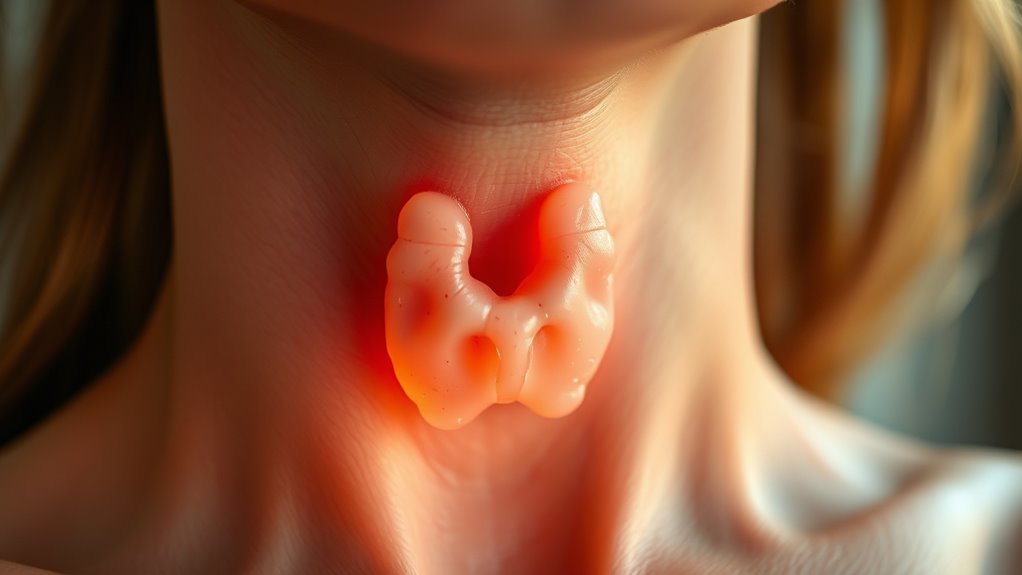
Have you ever wondered how your thyroid gland impacts your overall health? This small butterfly-shaped gland at the base of your neck plays a vital role in regulating your body’s metabolism, energy levels, and even mood. When your thyroid functions properly, it maintains a delicate balance known as thyroid hormone regulation, ensuring your body’s processes run smoothly. But when something goes awry, it can lead to conditions like hypothyroidism or hyperthyroidism, which considerably affect your well-being.
In cases of thyroid disorders, your healthcare provider might recommend thyroid ultrasound imaging. This non-invasive procedure uses high-frequency sound waves to create detailed images of your thyroid gland. It helps identify abnormalities such as nodules, cysts, or inflammation that could be disrupting normal thyroid function. The imaging provides essential insights, especially when blood tests indicate irregular thyroid hormone levels but don’t reveal the cause. By visualizing the gland, doctors can determine whether the issue stems from structural problems or other underlying conditions, guiding appropriate treatment options.
Understanding thyroid hormone regulation is key to grasping how these disorders develop. The process begins in your brain with the hypothalamus, which releases thyrotropin-releasing hormone (TRH). This hormone signals your pituitary gland to produce thyroid-stimulating hormone (TSH). TSH then prompts your thyroid to produce the hormones thyroxine (T4) and triiodothyronine (T3). These hormones regulate your metabolism, energy, and overall cellular function. When this regulation becomes disrupted, either the thyroid produces too little hormone (hypothyroidism) or too much (hyperthyroidism). In hypothyroidism, your body’s processes slow down, leading to fatigue, weight gain, and depression. Conversely, hyperthyroidism speeds things up, causing symptoms like rapid heartbeat, weight loss, and anxiety.
Diagnosis often involves blood tests to measure TSH and thyroid hormone levels, but imaging like thyroid ultrasound imaging complements this by revealing physical abnormalities. For example, nodules or enlargement seen on ultrasound might suggest autoimmune conditions like Hashimoto’s thyroiditis or Graves’ disease. These conditions can interfere with normal hormone regulation, resulting in the symptoms you experience. Additionally, advances in imaging technology have made detection of subtle thyroid changes more accurate and accessible.
Treating thyroid disorders depends on the specific diagnosis. Hypothyroidism usually requires hormone replacement therapy to restore normal levels, while hyperthyroidism might involve medications, radioactive iodine, or even surgery. Regular monitoring through blood tests and, when necessary, thyroid ultrasound imaging, helps track the effectiveness of your treatment and adjust it accordingly. Understanding the role of your thyroid and how to identify issues early can make a profound difference in managing your health and preventing complications down the line.
thyroid hormone replacement therapy
As an affiliate, we earn on qualifying purchases.
As an affiliate, we earn on qualifying purchases.
Frequently Asked Questions
Can Thyroid Disorders Be Cured Completely?
Most thyroid disorders, like autoimmune thyroiditis, can’t be completely cured, but they can be managed effectively. You’ll need to support thyroid hormone regulation through medications or lifestyle adjustments. While autoimmune thyroiditis often requires ongoing treatment, proper management helps you maintain normal hormone levels and reduce symptoms. Regular doctor visits ensure your condition stays under control, so you can lead a healthy, balanced life despite the disorder.
Are Thyroid Issues Hereditary or Caused by Lifestyle?
Your thyroid issues can be influenced by both genetic predisposition and lifestyle factors. If you have a family history of thyroid problems, you’re more likely to develop them, but lifestyle choices like diet, stress, and exposure to toxins also play a significant role. By maintaining a healthy lifestyle, managing stress, and staying informed about your family history, you can help reduce your risk and support overall thyroid health.
How Do I Know if My Symptoms Are Thyroid-Related?
If you’re wondering whether your symptoms are thyroid-related, pay attention to signs like fatigue, weight changes, or mood swings, which often indicate a thyroid hormone imbalance. Keep in mind, symptom overlap can make it tricky to identify. The best step is to see a healthcare provider who can run blood tests to check your thyroid hormone levels, confirming whether a thyroid disorder is causing your symptoms.
What Are the Latest Treatments for Thyroid Disorders?
Did you know that over 12% of the US population will develop a thyroid condition during their lifetime? You can explore advanced treatment options like personalized thyroid hormone regulation or novel medications that target underlying causes. These innovations aim to improve symptom management and quality of life. Staying updated with endocrinology breakthroughs guarantees you get the best care tailored to your specific thyroid disorder.
Can Thyroid Problems Affect Mental Health Significantly?
Yes, thyroid problems can considerably affect your mental health. You might experience emotional symptoms like depression, anxiety, or mood swings due to hormonal imbalances. These issues impact your overall well-being and daily functioning. It is crucial to recognize these signs early and seek medical advice. Proper treatment can help manage hormonal fluctuations, reducing mental health impacts and improving your emotional stability.
As an affiliate, we earn on qualifying purchases.
Conclusion
Just like a car needs the right fuel to run smoothly, your thyroid must stay balanced to keep your body working well. When I first learned about hypothyroidism, I thought of a dimmer switch that dims your energy, making everything sluggish. Conversely, hyperthyroidism is like flipping that switch to full brightness, causing everything to race. Understanding these conditions helps you take control—think of your thyroid as the engine that keeps your body moving smoothly.
hypothyroidism symptom relief supplements
As an affiliate, we earn on qualifying purchases.
As an affiliate, we earn on qualifying purchases.
As an affiliate, we earn on qualifying purchases.