
Slow parenting and slow play go together because both focus on fostering genuine connections and allowing children to develop confidently at their own pace. By being present and attentive during play, you promote better communication, independence, and emotional growth. This approach encourages exploration through simple, everyday experiences rather than structured activities. As you embrace these mindful strategies, you’ll discover how they reinforce each other, creating a nurturing environment. Keep exploring to learn more about how this powerful pairing benefits your family.
Key Takeaways
- Slow parenting fosters meaningful connections, enhancing the quality of shared slow play experiences.
- Both emphasize presence and attentiveness, promoting deeper communication and emotional security.
- Slow play encourages exploration and reflection, aligning with slow parenting’s goal of nurturing independence at a natural pace.
- Together, they create a supportive environment that respects childhood development and encourages genuine engagement.
- Both approaches prioritize quality over quantity, building lasting bonds and fostering confident, autonomous children.
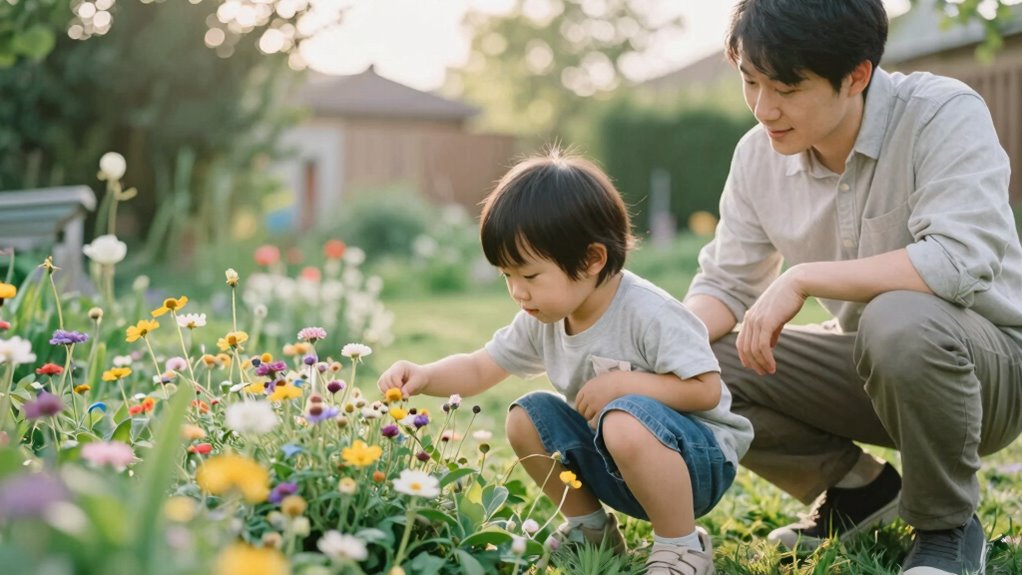
In today’s fast-paced world, many parents are discovering the value of slow parenting and slow play as a way to foster deeper connections and more meaningful childhood experiences. Instead of rushing from one activity to the next, you begin to see the importance of giving your child time to explore, reflect, and develop at their own pace. This approach encourages better parent-child communication because when you slow down, you’re more present and attentive. You listen more carefully, observe your child’s cues, and engage in conversations that matter. As a result, your child feels truly heard and understood, strengthening your bond and creating a foundation of trust.
Slow parenting promotes childhood independence because it allows your child to make decisions and solve problems without constant interference. Instead of rushing in to fix everything, you step back and give them space to try things on their own. This gradual process helps your child build confidence and resilience, knowing that they can handle challenges and learn from their mistakes. When you respect their pace and let them take ownership of their experiences, you’re nurturing their sense of self and autonomy. Over time, they become more self-reliant, capable of managing their emotions and navigating their environment with confidence. Furthermore, incorporating emerging trends like digital tools thoughtfully can enhance their learning without rushing the natural development process. Recognizing the importance of developmental stages ensures you support their growth appropriately and sustainably. Paying attention to developmentally appropriate activities helps foster a healthy balance between challenge and support in their learning journey. Being mindful of natural childhood development can help you create a more supportive and enriching environment for your child’s growth.
Giving children space to make choices fosters confidence, resilience, and independence over time.
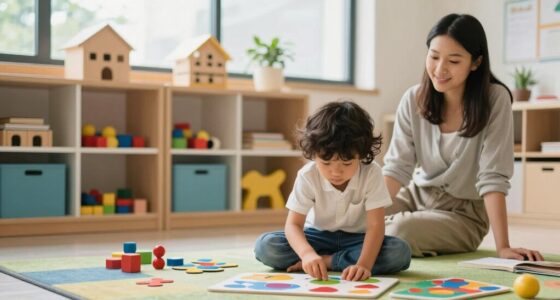
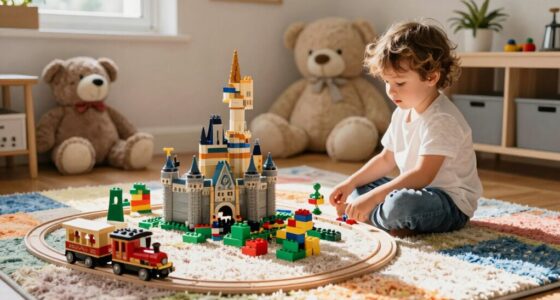
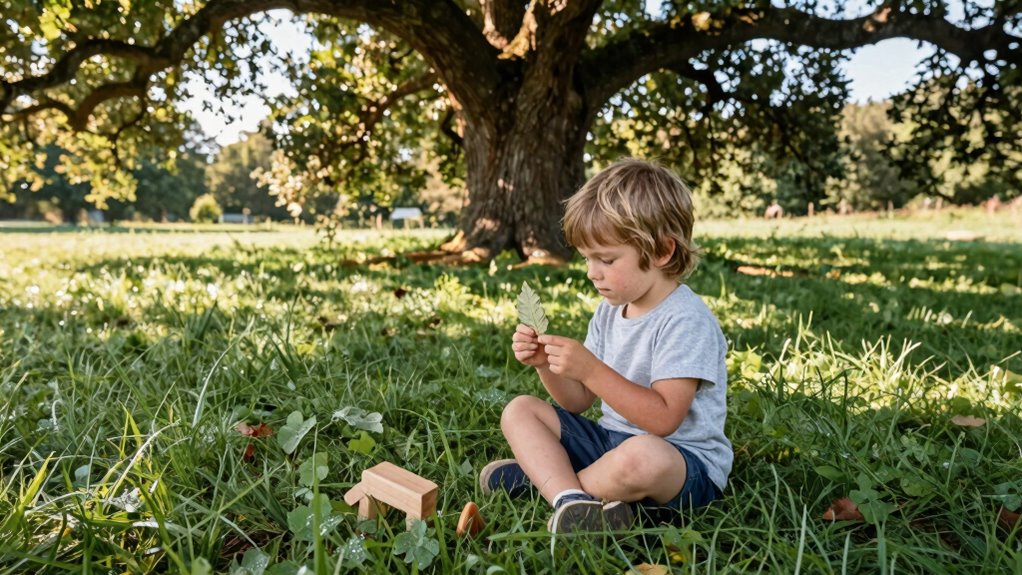
The beauty of slow play lies in its simplicity. You don’t need elaborate toys or structured activities to make it valuable. Instead, you encourage your child to engage with everyday objects, nature, or their own imagination. As they play at their own speed, you observe and participate in a way that fosters genuine connection. This unhurried approach allows you to notice their interests, strengths, and areas where they might need extra support. It also creates a safe space where your child feels free to express themselves without pressure, which is essential for healthy emotional development.
When you embrace slow parenting and slow play, you’re not only helping your child develop independence and communication skills but also creating a nurturing environment that prioritizes quality over quantity. You learn to cherish the small moments — a quiet conversation, a shared discovery, or simply being together without distractions. This intentional slowing down helps you both appreciate the richness of childhood, making your relationship stronger and more meaningful. Ultimately, it’s about giving your child the time and space they need to grow into confident, independent individuals while building memories that last a lifetime.
As an affiliate, we earn on qualifying purchases.
Frequently Asked Questions
How Do I Start Practicing Slow Parenting Intentionally?
To start practicing slow parenting intentionally, focus on creating a relaxed play environment where your child can explore freely without pressure. Embrace parenting philosophies that prioritize patience and presence, allowing your child to develop at their own pace. Set aside uninterrupted time each day for simple activities, avoid rushing, and listen actively. By doing so, you foster a nurturing space that encourages natural growth and meaningful connections.
What Are Common Challenges Faced With Slow Play?
You might face challenges with slow play, like maintaining mindful boundaries that prevent overstimulation or boredom. Sensory engagement can be tricky, as kids may seek constant stimulation, making it hard to slow down. To overcome these, set gentle limits and encourage activities that focus on one thing at a time. Patience helps, and remember, the goal is to enjoy the process, not rush to finish.
Can Slow Parenting Work With Busy Schedules?
Yes, slow parenting can work with busy schedules if you prioritize quality over quantity. This parenting philosophy emphasizes intentional play differentiation, allowing you to create meaningful moments even during tight days. Instead of rushing through activities, focus on mindful engagement, turning even brief interactions into valuable bonding experiences. Slow parenting isn’t about adding more tasks but about making the most of the time you have, fostering deeper connections.
How Does Slow Play Impact Child Development?
Slow play enhances your child’s development by fostering parent-child bonding and emotional regulation. When you engage in unhurried activities, your child feels more secure and understood, which helps build trust. This relaxed environment encourages them to express emotions freely and develop self-control. As you slow down and focus on the moment, your child learns valuable social and emotional skills, laying a strong foundation for their overall growth and resilience.
Are There Age-Specific Slow Play Activities Recommended?
Think of slow play as a gentle river guiding your child’s growth. For age-specific activities, you should focus on age-appropriate options like simple puzzles for toddlers, nature walks for preschoolers, and creative arts for older children. These activity suggestions help foster patience, curiosity, and independence. Tailoring activities to your child’s age guarantees they’re engaged without feeling overwhelmed, allowing them to explore and grow at their own peaceful pace.
open-ended play materials for children
As an affiliate, we earn on qualifying purchases.
As an affiliate, we earn on qualifying purchases.
Conclusion
So, if you embrace slow parenting and slow play, you’re not just helping your child – you’re creating a universe where time bends, worries vanish, and imagination runs wild like a wild stallion on the open plains. It’s like giving them a magic wand to turn the ordinary into extraordinary, all while you sit back and watch your little explorer conquer mountains of patience and oceans of creativity. Trust me, it’s a game-changer!
developmentally appropriate learning toys
As an affiliate, we earn on qualifying purchases.
As an affiliate, we earn on qualifying purchases.
nature exploration toys for kids
As an affiliate, we earn on qualifying purchases.
As an affiliate, we earn on qualifying purchases.