
If your child dislikes sticky textures, try using soft fabrics, textured silicone toys, and squishy stress balls for sensory exploration. Incorporate dry materials like rice, beans, or small pebbles in sensory bins, and include tools like scoops and funnels. Engage them with water beads or water-based activities that are calming and mess-free. Avoid sticky substances by focusing on tactile interactions that promote comfort and development. Keep exploring for more ideas to make sensory play enjoyable and stress-free.

Get health and wellness essentials delivered free with Prime
- Fast, free delivery on millions of items
- Prime Video, Amazon Music and more included
- Member-only deals all year
Key Takeaways
- Use dry, non-sticky materials like rice, beans, or pebbles in sensory bins with scoops and tools.
- Incorporate soft fabrics, textured silicone toys, and foam mats for tactile exploration without stickiness.
- Opt for washable, non-sticky finger paints and slime alternatives like kinetic sand for art and sensory play.
- Include water-based activities with water beads or gentle water play to promote tactile awareness safely.
- Focus on temperature-controlled materials and textured objects to desensitize and build comfort with various textures.
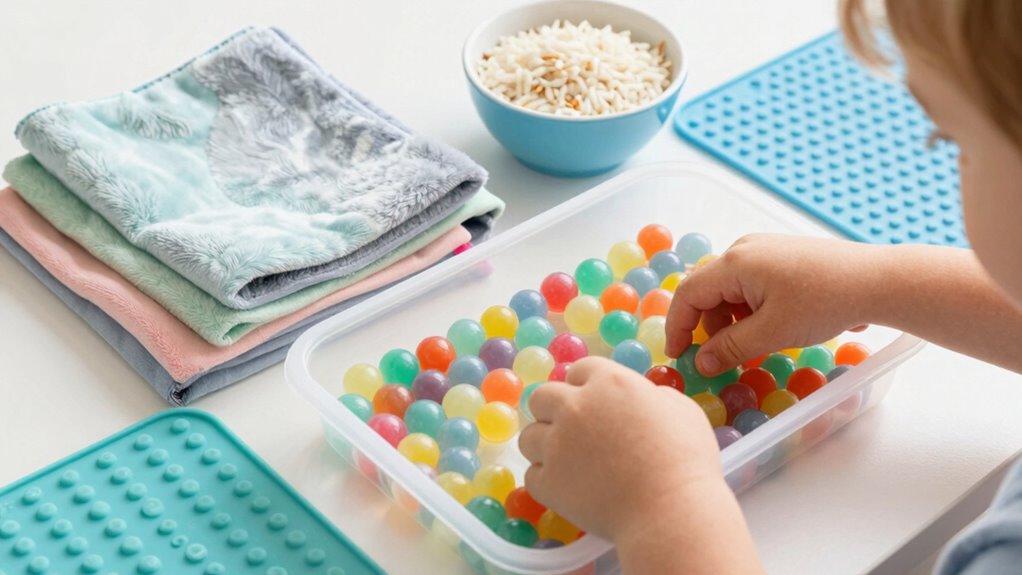
For kids who dislike sticky textures, sensory play can seem intimidating, but there are plenty of ways to make it enjoyable without the discomfort. The key is to focus on sensory integration and tactile therapy methods that avoid sticky substances while still engaging your child’s senses. Instead of traditional slime or glue-based activities, consider options that emphasize smooth, firm, or malleable textures that don’t leave a sticky residue.
Many children find tactile therapy effective when exploring different textures in a controlled and comfortable way. You can start by introducing objects with varied but non-sticky surfaces, like soft fabrics, rubbery balls, or textured silicone toys. These materials help develop sensory integration by stimulating touch receptors without overwhelming your child. For instance, squishy stress balls or textured foam mats provide satisfying tactile feedback without the stickiness that causes discomfort. You might also incorporate activities like finger painting with washable, non-sticky paints or playing with kinetic sand, which offers a satisfying sensory experience without the mess and stickiness.
Another idea is to use sensory bins filled with dry, smooth materials such as rice, beans, or small pebbles. These materials provide tactile input while remaining non-sticky, allowing your child to explore different textures comfortably. You can add scoops, funnels, or small toys to make the activity more engaging. For children sensitive to certain textures, controlling the temperature of these materials—using warm or cool options—can further enhance sensory integration without causing distress. Incorporating tactile differentiation activities like these can help children build resilience and reduce aversion to unfamiliar textures over time. Additionally, introducing non-sticky sensory materials can help children gradually become more comfortable with different tactile experiences. Exploring a variety of textures can also serve to enhance sensory processing skills, which are crucial for overall development. Incorporating varied sensory stimuli can further support your child’s tactile development and help diversify their sensory experiences.
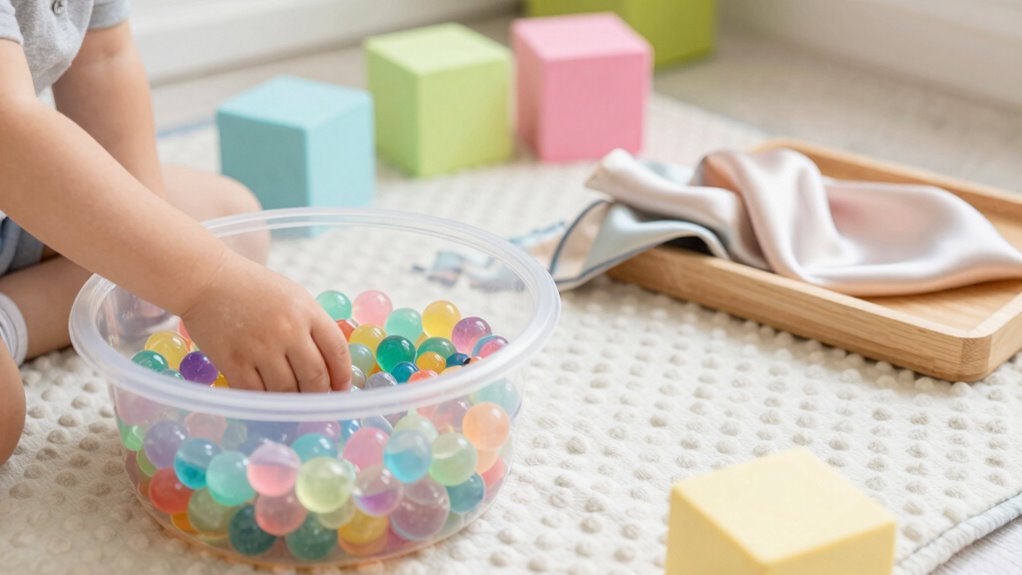
If your child is open to it, you can also explore activities involving water. Playing with water beads, for example, offers a squishy, smooth texture that’s both calming and engaging, minus the stickiness. Using tools like brushes or sponges, your child can practice tactile therapy techniques that promote comfort and sensory awareness. These activities help desensitize your child to various textures gradually, building confidence and comfort in a safe environment.
Ultimately, the goal is to create sensory experiences that stimulate touch without causing discomfort or aversion to sticky textures. By choosing non-sticky materials and focusing on sensory integration techniques, you make tactile therapy approachable and enjoyable. This approach not only helps your child develop better sensory processing skills but also encourages a positive attitude toward exploring new textures, all while sidestepping the discomfort that sticky substances can cause.
washable non-sticky finger paints
As an affiliate, we earn on qualifying purchases.
As an affiliate, we earn on qualifying purchases.
Frequently Asked Questions
How Can I Introduce Sticky Textures Gradually to My Child?
To introduce sticky textures gradually, start with small amounts during tactile desensitization activities, like applying a tiny dab of a sticky substance on their skin or hands. Use gentle, positive reinforcement, and increase exposure slowly over time. This gradual exposure helps your child build comfort and trust, making sticky textures less intimidating. Patience is key—allow them to explore at their own pace, turning the experience into a positive sensory journey.
Are There Alternative Sensory Activities for Kids Avoiding Sticky Materials?
Yes, there are plenty of alternative sensory activities you can try. Non-sticky sensory options include playing with water, sand, or rice, which provide tactile stimulation without discomfort. You can also explore activities like finger painting with non-sticky paints, using textured fabrics, or engaging with playdough. These options help your child enjoy sensory play while avoiding sticky materials, encouraging comfort and exploration in a gentle, enjoyable way.
What Are Signs My Child Is Overwhelmed by Sticky Textures?
If your child shows signs of texture aversion, they might avoid touching sticky surfaces, turn away, or become visibly distressed. They may also react with fussiness or try to escape sensory experiences involving sticky textures. These responses indicate sensory integration challenges. Recognizing these signs helps you adapt activities, providing comfort and gradually helping your child build tolerance, supporting their sensory development without overwhelming them.
How Can I Make Sticky Sensory Play Less Mess-Friendly?
Think of making sticky sensory play less messy as taming a wild stallion—use mess-free alternatives and non-sticky substitutes to keep things manageable. You can try cornstarch and water mixtures, or sensory bins with dry materials like rice or pasta. Cover surfaces with plastic or trays, and wear aprons or gloves. These strategies help you enjoy sensory fun without the stress, making cleanup a breeze and your child’s experience enjoyable.
Are There Specific Age-Appropriate Sticky Textures for Sensitive Kids?
Yes, there are age-appropriate sticky textures that support texture development and sensory integration for sensitive kids. You might try safe, non-toxic slime or gel-based materials that are less tacky and easier to clean. For younger children, consider using textured silicone or soft, pliable materials that encourage exploration without overwhelming their senses. These options help kids gradually adapt to different textures while ensuring comfort and safety during sensory play.
sensory bins with rice and beans
As an affiliate, we earn on qualifying purchases.
As an affiliate, we earn on qualifying purchases.
Conclusion
Now that you have these innovative sensory play ideas, you’re all set to transform your child’s experience with sticky textures. But what if one of these methods sparks an unexpected reaction or opens the door to a whole new sensory world? The possibilities are endless, and the journey into sensory play is just beginning. Stay curious, and who knows—your next discovery might surprise you both in ways you never imagined.
As an affiliate, we earn on qualifying purchases.
As an affiliate, we earn on qualifying purchases.
Fall Picks
fall essentials
As an affiliate, we earn on qualifying purchases.