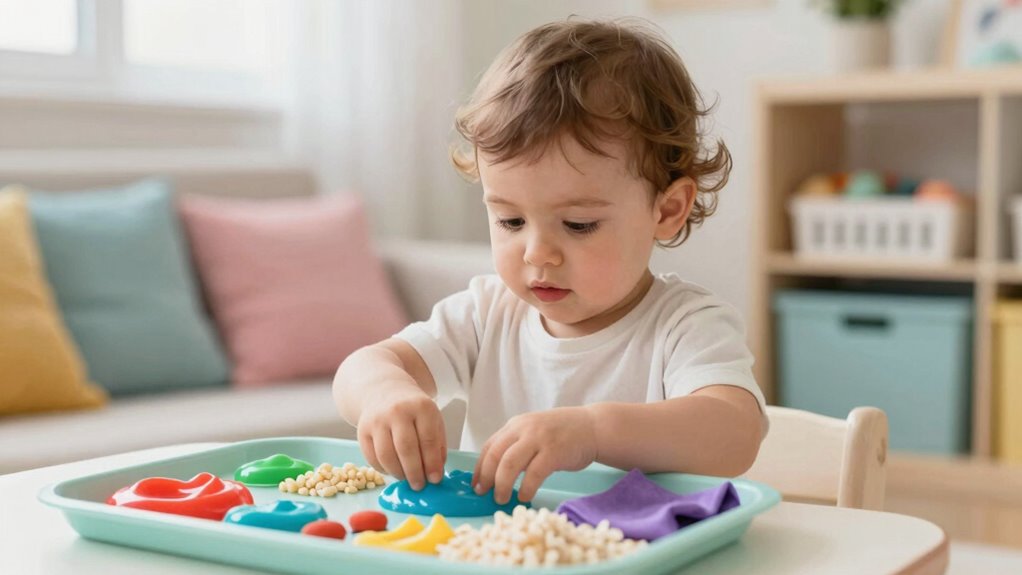

To introduce sensory play to reluctant toddlers, start by using familiar, non-intimidating textures like soft fabrics or smooth stones. Make activities fun and low-pressure, like splashy bath times or exploring colorful pasta, and let your child choose what interests them. Keep routines positive and relaxed, offering gentle encouragement without forcing participation. Be patient and respect their pace, gradually expanding their comfort zone. Keep exploring different sensory experiences, and you’ll see their curiosity grow over time.
Key Takeaways
- Start with familiar textures and objects to build comfort gradually.
- Make sensory activities fun and low-pressure, emphasizing exploration over participation.
- Incorporate sensory play into daily routines like bath time or snack time.
- Offer choices to empower the toddler and respect their comfort level.
- Be patient and consistent, gradually increasing exposure as the child shows readiness.

Start by observing what your child already enjoys. If they love touching things, then you could introduce simple textured objects like soft fabrics, rough sponges, or smooth stones during playtime. Keep these items nearby so your toddler can explore them whenever they feel curious, rather than pushing them into a structured activity. By incorporating familiar objects into sensory play, you reduce any feelings of unfamiliarity or discomfort. This way, you gently encourage sensory exploration without overwhelming your child.
Observe what your child enjoys and introduce familiar textured objects to encourage gentle sensory exploration.
Make sensory play fun and low-pressure. For instance, you might introduce a small tray of water with floating toys or colorful pasta for them to touch and manipulate. You can also add a few drops of food coloring to make the experience more visually stimulating. Remember, the goal is to create an inviting environment where your toddler feels in control. Let them decide what to touch, smell, or explore. When they’re ready, they may start to engage more deeply. Keep your tone light and encouraging, offering praise for their curiosity rather than insisting they participate.
Another effective strategy is to incorporate sensory activities into daily routines. For example, during bath time, let your toddler splash and play with bubbles and soap. During snack time, introduce textured foods like crunchy crackers or smooth yogurt. These familiar moments become opportunities for sensory exploration without it feeling like a formal activity. This approach helps your child associate sensory play with positive experiences, building toddler engagement over time.
Additionally, understanding the importance of sensory processing can motivate you to be patient and encouraging as your child explores new sensations. Recognizing that sensory development is a gradual process can help set realistic expectations and foster patience. Incorporating developmental milestones into your expectations can also provide helpful guidance. Lastly, be patient. Some toddlers take longer to warm up to sensory activities, but that’s perfectly normal. Respect their pace, and avoid any pressure or negative reactions if they’re hesitant. Instead, keep offering opportunities for exploration in a relaxed manner. Over time, your toddler will likely become more comfortable with sensory play, discovering new textures and sensations that fuel their curiosity and support their overall development.
As an affiliate, we earn on qualifying purchases.
Frequently Asked Questions
How Can I Tell if My Toddler Enjoys Sensory Play?
You can tell if your toddler enjoys sensory play by observing their reactions and preferences. If they enthusiastic explore textures, touch objects with curiosity, or smile during activities, it shows sensory enjoyment. Notice which sensory experiences they gravitate toward and how engaged they are. Their enthusiasm or reluctance reveals their preferences, helping you tailor activities to boost their comfort and enjoyment, making sensory play a positive experience for your little one.
Are There Any Safety Concerns With Sensory Activities?
Safety is essential during sensory activities. You should always prioritize sensory safety by choosing non-toxic, age-appropriate materials and supervising your toddler closely. Respect toddler boundaries by observing their comfort levels, and don’t force participation. Keep small objects out of reach to prevent choking, and monitor for allergies. Regularly inspect toys and materials for damage. By maintaining these precautions, you guarantee a safe, enjoyable sensory experience for your little one.
How Often Should Sensory Play Be Incorporated?
Did you know that regular sensory play supports a child’s sensory integration skills? You should incorporate sensory activities 3 to 5 times a week, giving your toddler consistent opportunities for tactile stimulation. This frequency helps build their comfort and responsiveness to different textures and sensations. Keep sessions short and engaging, ensuring they enjoy the experience without feeling overwhelmed, fostering a positive attitude toward sensory exploration.
Can Sensory Play Help With Specific Developmental Delays?
Sensory play can indeed support children with developmental delays by enhancing sensory integration skills. As you introduce activities like textured materials or water play, you help your toddler process sensory information more effectively. These activities promote developmental benefits such as improved motor skills, communication, and emotional regulation. By engaging in regular, gentle sensory experiences, you can foster your child’s growth and help them navigate their environment more confidently.
What Are Quick Ways to Introduce Sensory Play at Home?
Start by offering simple, engaging sensory activities like finger painting, textured toys, or water play, which quickly capture your toddler’s interest. Keep sessions short and fun to encourage toddler engagement, emphasizing sensory play benefits like improved focus and development. Use your child’s favorite colors or materials to make activities inviting. You’ll notice them becoming more curious and willing to explore, making sensory play a natural, enjoyable part of your daily routine.
familiar textured objects for sensory exploration
As an affiliate, we earn on qualifying purchases.
As an affiliate, we earn on qualifying purchases.
Conclusion
As you gently guide your little one into the world of sensory play, remember that patience and persistence pave the path to progress. Embrace each tiny step, celebrating their curiosity and courage, even if they’re hesitant at first. By fostering fun, freedom, and familiarity, you’ll help turn reluctant toddlers into willing explorers. Keep nurturing their natural wonder, and watch as their sense of discovery, delight, and development dramatically deepen, drawing them closer to a world of endless exciting experiences.
water sensory play tray for toddlers
As an affiliate, we earn on qualifying purchases.
As an affiliate, we earn on qualifying purchases.
As an affiliate, we earn on qualifying purchases.