
You can teach kids basic coding concepts through fun, hands-on activities like robot storytelling and puzzle solving. These play-based methods help children understand sequences, commands, and algorithms in an engaging way. They learn patience, problem-solving, and debugging while creating stories or steering through mazes. Using play makes complex ideas simple and exciting. Keep exploring these activities to discover more ways to make coding both easy and enjoyable for kids.
Key Takeaways
- Kids learn sequencing by giving robots step-by-step instructions in storytelling activities.
- Problem-solving skills are developed through algorithm puzzles like sorting and maze navigation.
- Play-based activities introduce basic programming concepts such as commands, loops, and conditionals.
- Debugging and iteration are practiced by testing and refining robot instructions during hands-on play.
- Creative storytelling and puzzles foster critical thinking and persistence in understanding coding fundamentals.
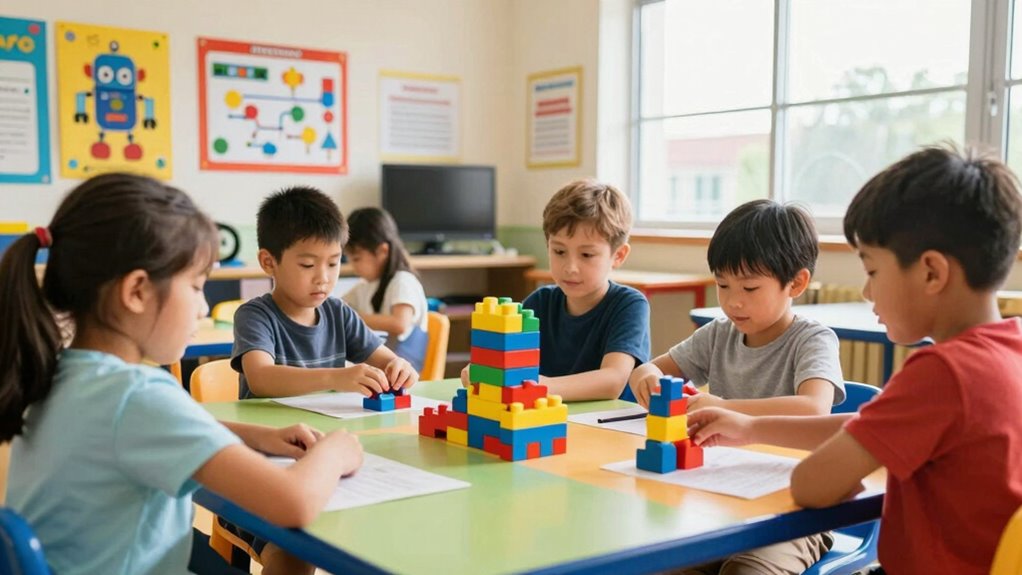
Learning to code doesn’t have to be complicated or boring. In fact, you can introduce kids to programming in a fun, engaging way by using play-based activities. For example, robot storytelling is a fantastic activity that captures kids’ imaginations while teaching core coding concepts. You can encourage children to create stories where robots follow specific instructions to reach a goal or complete a task. This hands-on approach helps them understand how commands and sequences work, all while sparking their creativity. Kids quickly see that giving clear, step-by-step instructions makes the robot perform the desired action, which is a fundamental idea in coding.
Another way to make learning to code exciting is through algorithm puzzles. These puzzles challenge children to think logically and develop problem-solving skills. For example, you might give them a scenario like sorting a pile of different-colored blocks or guiding a character through a maze. As they work through the puzzle, they learn about breaking down a problem into smaller steps and designing a plan — just like creating an algorithm. Playing these puzzles helps kids grasp abstract concepts in a concrete way, making the leap to more advanced coding ideas much easier.
When you use play to teach coding, you’re also helping kids develop important skills like patience, persistence, and critical thinking. They learn to test their solutions, see what works, and adjust when things don’t go as planned. For example, if their robot doesn’t reach its destination, they can troubleshoot and modify their instructions, gaining insight into debugging and iteration. This process mirrors real-world programming, where errors are common, and fixing them is part of the journey.
As an affiliate, we earn on qualifying purchases.
Frequently Asked Questions
What Age Is Best for Introducing Coding to Children?
You can start introducing coding to children as young as five, using age-appropriate tools designed for early learners. At this stage, focus on simple coding milestones like understanding sequences and basic logic. By age seven or eight, kids can grasp more complex concepts and use block-based programming platforms. The key is to match the tools and activities to their developmental stage, making learning fun and engaging.
Are There Free Resources for Teaching Kids Coding Through Play?
Yes, there are plenty of free resources for teaching kids coding through play. You can explore interactive games like Blockly or Code.org, which make learning fun and engaging. Additionally, many websites offer free tutorials designed specifically for children, helping them grasp basic coding concepts while playing. These resources are perfect for parents and teachers wanting to introduce coding in an accessible, enjoyable way without any cost.
How Can Parents Support Kids Learning Coding at Home?
You can support your kid’s coding journey by engaging in coding games together and showing active interest. Parental involvement boosts their confidence and motivation. Set aside regular time for coding activities, encourage problem-solving, and celebrate their successes. Use free online resources and coding apps to make learning fun and accessible. Your encouragement and participation make a big difference in helping your child develop essential coding skills at home.
What Are Some Common Challenges Kids Face When Learning Coding?
Kids often stumble over abstract concepts, struggling to turn visual learning into real problem-solving skills. They might find syntax confusing or get frustrated when code doesn’t work—cue the dramatic sighs. The challenge is helping them see coding as a puzzle, not a monster. With patience, playful activities, and encouragement, you can turn those hurdles into stepping stones, making tech mastery feel less like climbing Everest and more like a fun game.
How Does Learning Coding Benefit Kids Beyond Technology Skills?
Learning coding boosts your child’s problem-solving skills and sparks their coding creativity, which benefits many areas beyond technology. As they tackle challenges and develop logical thinking, they become better at analyzing situations and finding solutions. These skills foster resilience and adaptability, helping them excel academically and socially. By engaging in coding early, your child builds a strong foundation for future success, empowering them to approach life’s problems with confidence and innovation.
block programming toys for children
As an affiliate, we earn on qualifying purchases.
As an affiliate, we earn on qualifying purchases.
Conclusion
By exploring these playful coding concepts, you open the door to a world where learning becomes an adventure, not a chore. Just as a key unlocks a treasure chest, these activities release your child’s potential, making complex ideas feel like child’s play. Remember, the journey of discovery is as important as the destination—so encourage curiosity, celebrate small wins, and watch as your little one’s confidence and creativity grow with every line of code they explore.
As an affiliate, we earn on qualifying purchases.
As an affiliate, we earn on qualifying purchases.