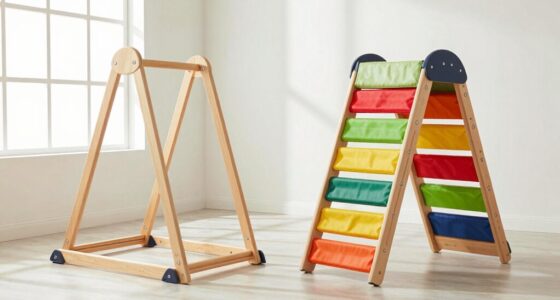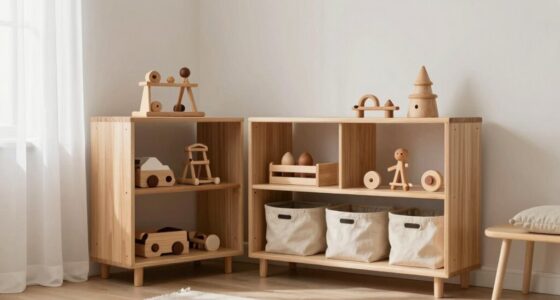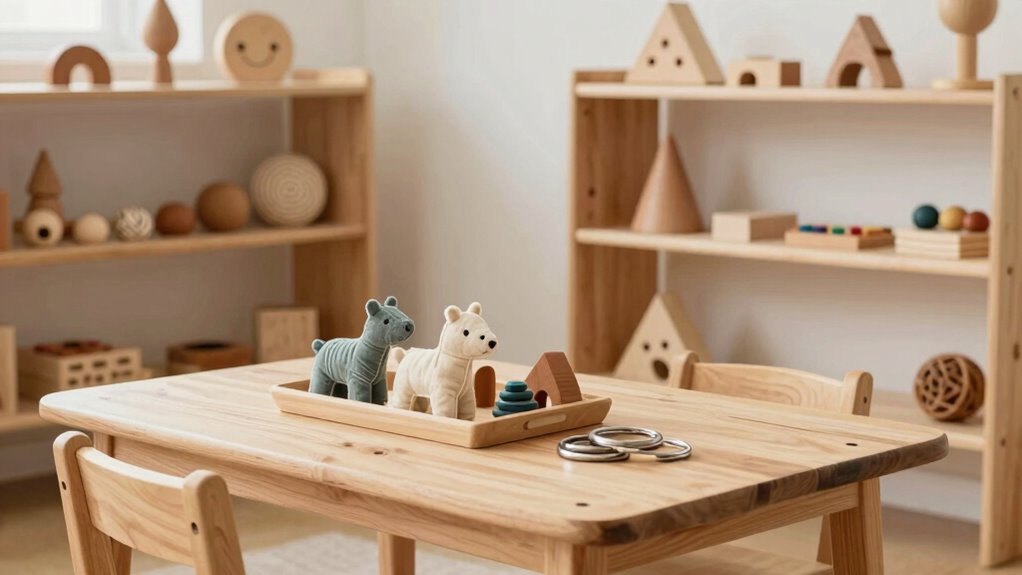
A Montessori-inspired toy encourages your child’s independence, critical thinking, and real-world skills through open-ended play and simple, natural materials. Unlike trendy toys, which often focus on fleeting entertainment and overstimulate with bright colors or sounds, Montessori options emphasize durability, minimal design, and purposeful exploration. These toys foster deeper engagement and skill development instead of just temporary fun. Keep exploring to discover how these thoughtful toys truly support your child’s growth and learning journey.
Key Takeaways
- Montessori-inspired toys prioritize open-ended exploration and skill development over flashy, preset outcomes.
- They are made from high-quality, natural, and durable materials designed for long-term use.
- Minimalist design reduces overstimulation, fostering focus, concentration, and imaginative play.
- These toys support independence, problem-solving, and critical thinking aligned with educational goals.
- They avoid bright colors and sounds common in trendy toys, emphasizing meaningful engagement over superficial entertainment.
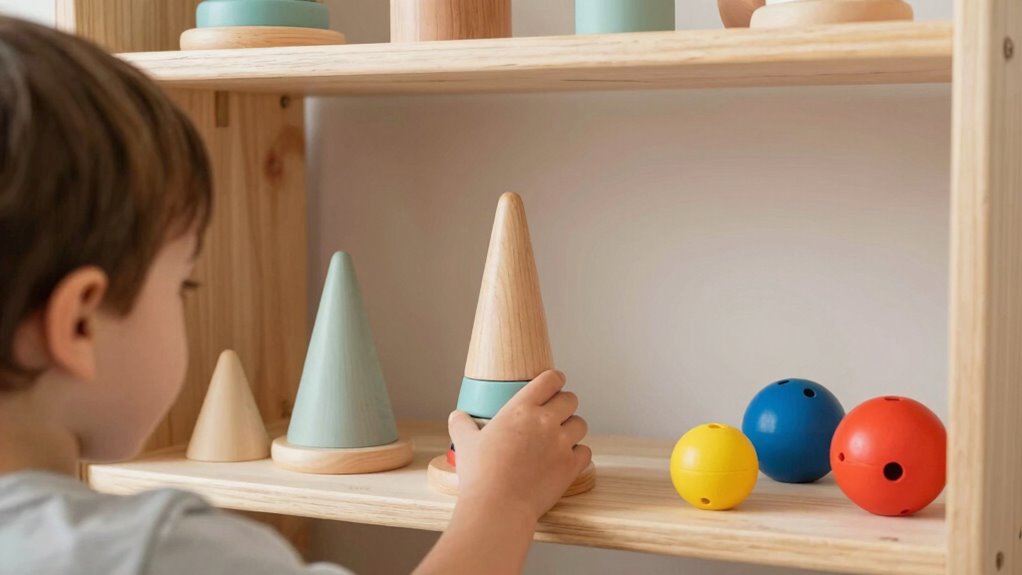
When choosing toys for your child, it’s easy to get caught up in the latest trends, but understanding the differences between Montessori-inspired toys and trendy options can help you make more intentional decisions. Montessori-inspired toys are designed with specific educational principles in mind, focusing on fostering independence, concentration, and real-world skills. These toys typically prioritize open-ended play, allowing your child to explore and create without strict guidelines or preset outcomes. Their educational value lies in encouraging problem-solving, critical thinking, and fine motor skills. Unlike many trendy toys that may be flashy but limited in scope, Montessori-inspired options tend to promote deeper engagement and understanding.
Montessori toys foster independence, critical thinking, and open-ended exploration for lasting developmental growth.
Durability factors are also a key aspect that sets Montessori-inspired toys apart. You’ll notice that these toys are often made from high-quality, natural materials like wood, metal, or durable plastics that withstand rough handling. Their solid construction means they won’t easily break or wear out, offering long-term value for your investment. This durability not only saves you money over time but also aligns with the Montessori philosophy of sustainability—choosing toys that can be passed down or reused rather than discarded after a few uses. Durable materials and thoughtful design are essential in supporting this longevity. Incorporating environmentally conscious materials is a common practice among Montessori-inspired toy makers, emphasizing eco-friendly choices in product development.
Another marker of Montessori-inspired toys is their simplicity. They tend to have minimal design elements, avoiding overstimulation and encouraging your child to use their imagination. This simplicity helps your child focus on the task at hand and develop concentration. Trendy toys, on the other hand, often come with bright colors, sounds, and flashing lights meant to capture attention quickly but can do so at the expense of meaningful play. While these features might entertain momentarily, they don’t necessarily support deep learning or skill development. Additionally, the focus on simplicity and minimalism aligns with the educational goals of fostering independence and concentration. Recognizing the importance of educational principles in toy design can guide parents toward more enriching choices for their children.
As an affiliate, we earn on qualifying purchases.
Frequently Asked Questions
How Can I Identify Authentic Montessori-Inspired Toys?
You can identify authentic Montessori-inspired toys by focusing on their promotion of sensorial exploration and practical life skills. Authentic toys are made from natural materials like wood or fabric, avoiding plastic or loud noises. They encourage open-ended play, allowing your child to explore textures, shapes, and functions. Look for simple, well-crafted designs that foster independence and focus on real-life activities, ensuring the toy aligns with Montessori principles rather than just passing trends.
Are Montessori Toys Suitable for All Age Groups?
Yes, Montessori toys suit all age groups, supporting growth at every stage. Studies show children engaged in sensory exploration and creative expression develop essential skills faster. For infants, soft sensory toys stimulate early awareness, while older kids benefit from puzzles and tools that foster independence. These toys encourage curiosity, problem-solving, and fine motor skills, making them versatile. You can find age-appropriate options that nurture your child’s development, no matter their age.
What Materials Are Best for Montessori-Inspired Toys?
You should choose natural materials like wood, cotton, and silk for Montessori-inspired toys, as they promote sensory exploration and open-ended play. These materials are safe, durable, and provide rich textures that engage your child’s senses. Avoid plastic or overly bright toys, which can be distracting. By selecting simple, natural materials, you encourage creativity and focus, helping your child develop essential skills through meaningful, hands-on interactions.
How Do Montessori Toys Support Child Development?
Montessori toys support your child’s development by encouraging sensorial exploration and enhancing fine motor skills. When you offer these toys, you’re helping your child learn through touch, sight, and sound, fostering independence and concentration. As they manipulate the toys, they refine their coordination and dexterity. This hands-on approach promotes cognitive growth, problem-solving, and a deeper understanding of the world around them, all while nurturing a natural love for learning.
Can Trendy Toys Be Adapted to Fit Montessori Principles?
Yes, trendy toys like fashionable accessories or digital gadgets can be adapted to fit Montessori principles. You can choose accessories that promote independence and self-care, encouraging your child to explore and develop motor skills. For digital gadgets, opt for educational apps that foster curiosity and problem-solving. By selecting age-appropriate, open-ended options and limiting screen time, you guarantee these trendy items support your child’s natural learning process.
natural materials Montessori toys
As an affiliate, we earn on qualifying purchases.
As an affiliate, we earn on qualifying purchases.
Conclusion
When choosing toys, focus on those that encourage independence, curiosity, and real-world skills—key Montessori principles. Instead of chasing fleeting trends, invest in timeless, thoughtfully designed toys that foster genuine learning. Did you know that children who play with Montessori-inspired toys show improved concentration and problem-solving skills? By selecting toys rooted in these principles, you’re supporting your child’s development in a meaningful way, creating a foundation for lifelong learning and confidence.
open-ended Montessori toys for toddlers
As an affiliate, we earn on qualifying purchases.
As an affiliate, we earn on qualifying purchases.
durable minimalist children's toys
As an affiliate, we earn on qualifying purchases.
As an affiliate, we earn on qualifying purchases.