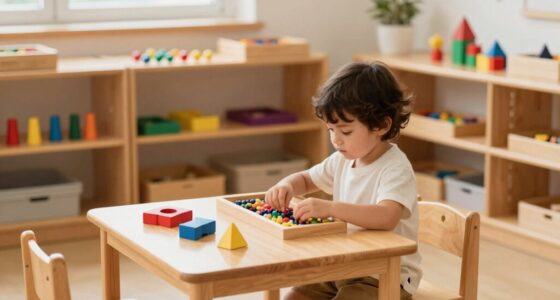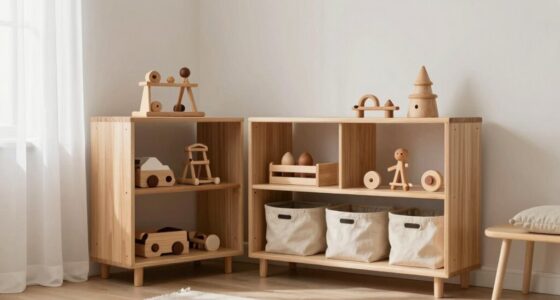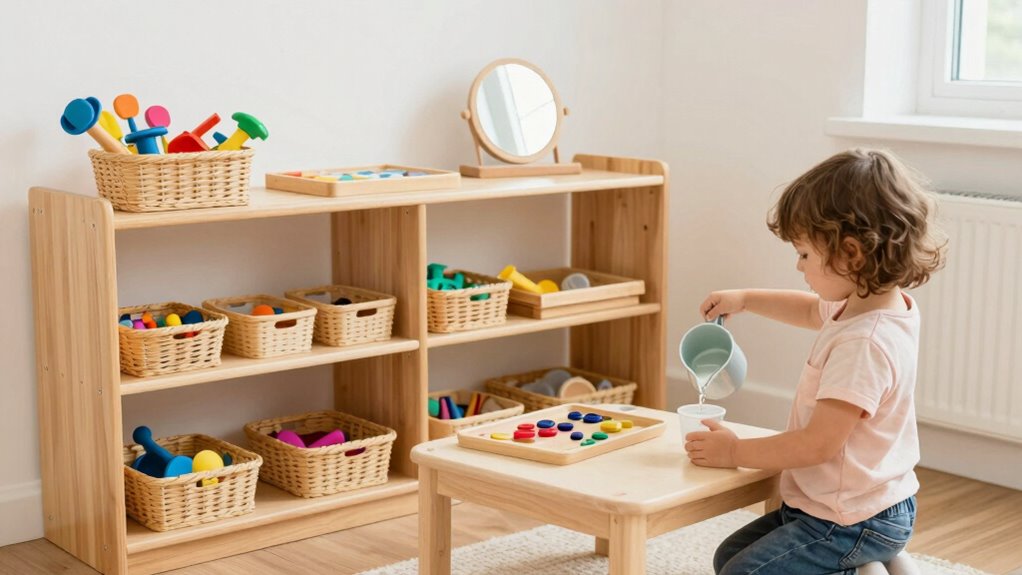
Implementing simple Montessori-inspired routines at home can make daily life easier by establishing consistent schedules for tidying, dressing, and chores. Involving your child in preparing snacks or setting the table builds confidence and responsibility. Using visual cues and creating an organized environment helps your child follow routines independently. Clear, manageable tasks and choices promote decision-making and self-reliance. Keep routines predictable and simple, and you’ll foster independence and security—if you keep exploring, you’ll discover more helpful strategies.

Get health and wellness essentials delivered free — and shop member deals
- Fast, free delivery on millions of items
- Access to Prime Big Deal Days deals on October 6–7
- Prime Video, Amazon Music and more included
Key Takeaways
- Establish consistent routines for daily tasks to create predictability and reduce resistance.
- Use visual cues and environmental design to support routine adherence and independence.
- Involve children in household responsibilities to boost confidence and responsibility.
- Incorporate choices in daily activities to enhance decision-making and self-reliance.
- Keep routines simple and manageable, fostering a secure and structured home environment.
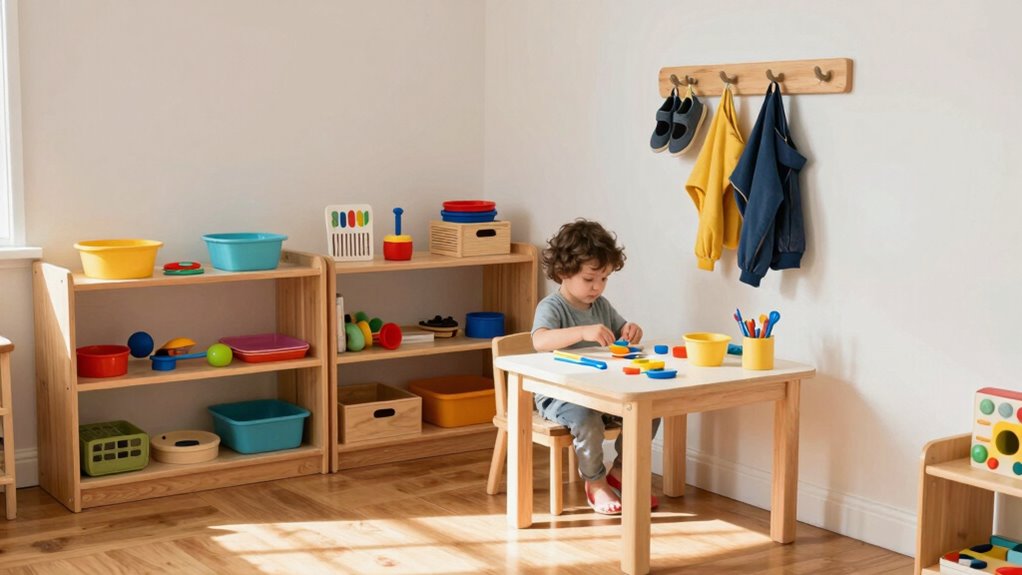
Have you ever wondered how to create a home environment that encourages your child’s independence and natural curiosity? Implementing Montessori-inspired habits can make everyday life smoother and more enriching for both of you. One effective way is establishing practical routines that your child can easily follow. These routines help your child understand what to expect and foster a sense of security, while also promoting independence skills. For example, setting specific times for tidying up toys, dressing, or helping with simple household chores teaches your child responsibility and self-reliance. When routines are consistent, your child learns to anticipate tasks, reducing resistance and making transitions less stressful.
Establishing consistent routines fosters security, responsibility, and independence in your child’s daily life.
Incorporating practical routines into your daily schedule also encourages your child to participate actively in their environment. Letting them choose their clothes, assist in preparing snacks, or set the table not only builds confidence but also strengthens their decision-making skills. Keep instructions simple and clear, and provide step-by-step guidance until they grasp the task. Over time, they’ll start completing these activities independently, which boosts their sense of competence and autonomy. These routines don’t have to be complicated; even small, regular responsibilities can have a meaningful impact on their independence skills. Additionally, engaging in routine consistency helps children develop a reliable sense of structure and predictability in their daily lives. Incorporating visual cues can also help children remember and follow routines more effectively. Furthermore, understanding the importance of contrast ratio in visual clarity can inspire you to create a home environment where visual cues are clear and easy to interpret for your child. Paying attention to visual environment design can significantly enhance your child’s ability to follow routines with ease.
Frequently Asked Questions
How Do I Start Implementing Montessori Habits at Home?
To start implementing Montessori habits at home, focus on fostering child independence through practical routines. Begin by organizing your space to be accessible and safe for your child, encouraging them to participate in daily tasks like dressing or tidying up. Introduce simple, consistent routines that your child can follow, which build confidence and independence over time. Consistency and patience are key as you gradually integrate these habits into your daily life.
Are Montessori Habits Suitable for All Ages?
Yes, Montessori habits are suitable for all ages because they promote child independence and are adaptable to any age. You can tailor routines and activities to fit your child’s developmental stage, encouraging self-reliance and confidence. Whether you’re working with a toddler or an older child, these habits foster growth by respecting individual needs. By adjusting your approach, you guarantee that Montessori principles support your child’s ongoing development at every age.
How Long Does It Take to See Results?
Like planting a seed, your efforts in Montessori home habits grow gradually. Usually, you’ll see initial progress indicators within a few weeks, but meaningful change takes a few months. The development timeline varies based on consistency and the child’s individual pace. Patience is key—trust that, with steady nurturing, you’ll notice your child’s independence and confidence blossoming over time, revealing the true fruits of your dedication.
Can Montessori Habits Be Adapted for Small Living Spaces?
Yes, you can adapt Montessori habits for small living spaces. Focus on space optimization by decluttering regularly and choosing furniture with built-in storage. Opt for multi-purpose furniture that serves more than one function, like a bed with drawers underneath. Use wall-mounted shelves to keep essentials accessible yet out of the way. These strategies help create an organized environment that fosters independence and makes daily routines smoother, even in compact areas.
What Common Mistakes Should I Avoid When Practicing Montessori at Home?
Ever wonder if you’re hindering your child’s independence? Avoid common mistakes like excessive parental interference, which can undermine their confidence. Let your child explore and complete tasks at their own pace, fostering independence. Don’t micromanage or take over activities—they need space to learn. Remember, supporting their growth means stepping back sometimes. Stay patient, observant, and encourage autonomy to cultivate a truly Montessori home environment.
Conclusion
By incorporating these Montessori home habits, you’ll notice daily life becoming smoother and more joyful. Sometimes, the simplest routines—like tidying up or encouraging independence—align perfectly with your child’s growth, almost like a happy coincidence. When your home naturally supports their development, everyone benefits. Embrace these habits, and watch how effortlessly your days flow, making life easier and more rewarding for both you and your little one. Sometimes, the best routines just happen to fall into place.
Fall Picks
fall essentials
As an affiliate, we earn on qualifying purchases.