When planning your playroom budget, you might overlook safety features like outlet covers, corner protectors, or securing furniture to prevent accidents. You could also focus on big items like toys and furniture but forget about essential storage solutions that keep the space organized. Small investments in safety and organization save money and promote a safe, functional environment. Keep exploring to discover ways to balance fun and safety without overspending.
Key Takeaways
- Safety measures like outlet covers and corner protectors are often underestimated in cost and importance.
- Adequate toy storage solutions are frequently overlooked, leading to clutter and disorganization.
- Securing furniture and adding safety features are essential but sometimes neglected in the initial budget.
- Long-term planning for safety and storage can prevent costly future modifications.
- Balancing large furniture purchases with investments in safety and organization is often ignored.
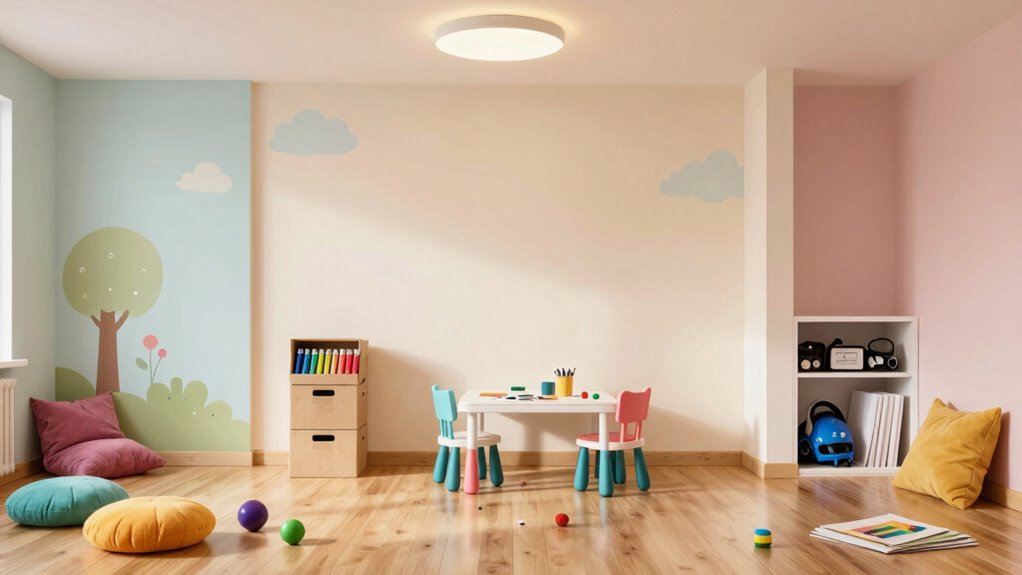
Planning a playroom budget might seem overwhelming, but breaking it down into manageable steps can make the process much easier. When you’re setting your budget, it’s tempting to focus on the big-ticket items like toys and furniture but overlook essential details like toy storage and safety measures. These smaller investments are crucial for creating a functional, safe, and organized space your child will love.
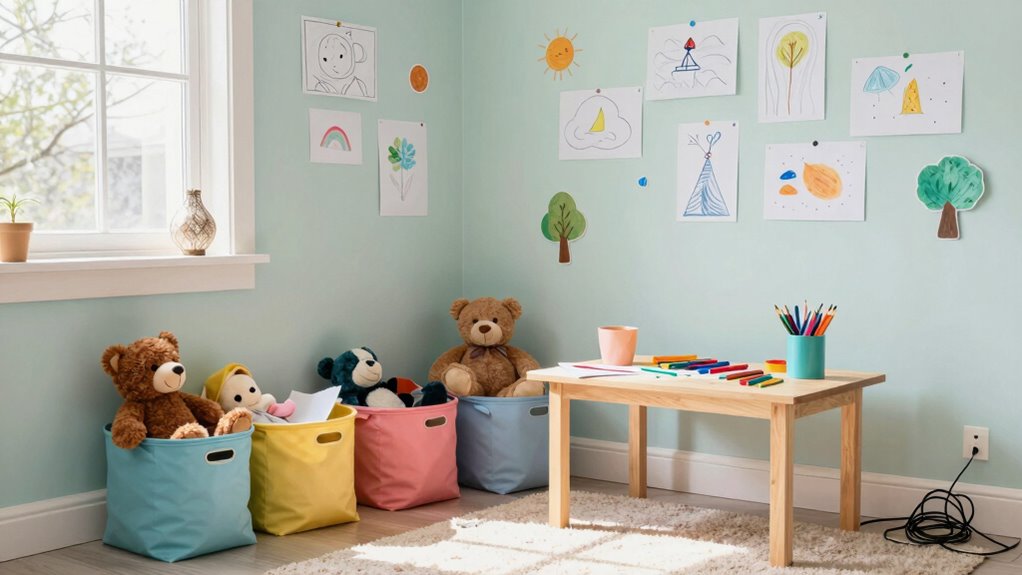
One common mistake is underestimating the importance of toy storage. Without proper storage solutions, your playroom can quickly become cluttered, making it hard for your kid to find their favorite toys or clean up after playtime. Budgeting for versatile storage options—like bins, shelves, or toy chests—can prevent chaos and teach your child organization skills. Remember, investing in quality storage that’s easy to access and safe to use is worth it, even if it slightly increases your initial costs. This foresight saves you money in the long run, as you won’t need to replace flimsy or unsafe storage solutions frequently.
Proper toy storage prevents clutter, teaches organization, and saves money by avoiding frequent replacements.
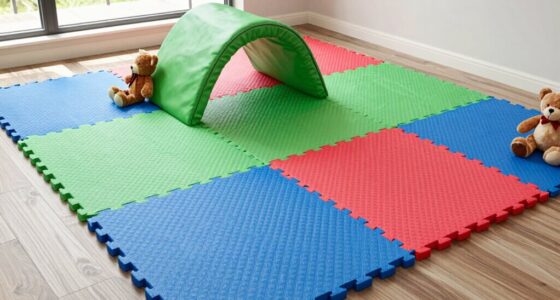
Safety measures are another often overlooked aspect of playroom planning. It’s easy to get caught up in buying colorful toys and fun furniture but neglect the importance of child-proofing the space. Budget for safety items such as outlet covers, corner protectors, non-slip rugs, and secure furniture to the wall. These small expenses significantly reduce the risk of accidents and injuries. Keep in mind that safety isn’t just about the toys but also about creating an environment where your child can explore freely without hazards. Installing safety gates or window locks may add to your initial costs but can prevent costly emergencies later on. Incorporating playroom safety elements from the start ensures peace of mind for parents and a safer environment for children. Additionally, understanding the importance of child development can help you select age-appropriate toys and furniture that support your child’s growth and learning. Being aware of childproofing techniques can guide you in making informed decisions about the space and its components, further enhancing safety and functionality. Staying informed about safety standards can also help you choose products that meet recognized safety criteria, providing extra reassurance for your family.
Ultimately, successful playroom budget planning involves more than just buying toys and furniture. You need to allocate funds for toy storage that keeps the room organized and safety measures that protect your child. By thinking ahead about these details, you avoid surprises and create a space that’s safe, organized, and fun — a true haven for your little one to learn and play.
outlet covers for child safety
As an affiliate, we earn on qualifying purchases.
As an affiliate, we earn on qualifying purchases.
Frequently Asked Questions
How Can I Prioritize Safety in My Playroom Budget?
To prioritize safety in your playroom budget, focus on playroom safety essentials like soft flooring, rounded-edge furniture, and secure storage. Allocate funds first to items that prevent injuries, then consider budget considerations for age-appropriate toys and safety gear. By emphasizing safety, you guarantee your child’s well-being without overspending. Keep an eye on quality and durability, making smart choices that balance safety features with your overall budget.
What Are Cost-Effective Ways to Add Educational Elements?
Think of your playroom as a treasure trove of learning adventures without breaking the bank. You can add educational elements by incorporating cost-effective educational toys that foster curiosity and skill development. DIY learning projects, like homemade puzzles or art stations, offer personalized fun while saving money. These simple, creative touches turn your playroom into a vibrant space for growth, all while respecting your budget and encouraging your child’s independent exploration.
Should I Allocate Funds for Future Growth or Current Needs?
You should allocate funds for future growth, considering potential future expenses like bigger furniture or additional storage solutions. Planning ahead guarantees you from frequent upgrades and helps you manage costs better. Balance current needs with future needs by investing in versatile storage solutions now, which can adapt as your child’s playroom evolves. This approach ensures your playroom remains functional and organized, without constantly needing new purchases.
How Can I Involve My Child in Budgeting Decisions?
To involve your child in budgeting decisions, encourage child involvement by explaining the process in simple terms. Show them your budget plan to promote transparency, and ask for their input on what they value most. Let them choose between options or set spending limits together. This approach teaches financial responsibility, helps them understand priorities, and makes them feel empowered, fostering a sense of ownership and trust in the process.
What Are Hidden Costs in Setting up a Playroom?
A penny saved is a penny earned, so watch out for hidden costs when setting up a playroom. Hidden fees like delivery charges or assembly fees can quickly add up. Don’t forget ongoing maintenance costs—replacing worn-out toys or furniture isn’t always budgeted. These unseen expenses can surprise you, so plan for them early. Being aware helps you avoid overspending and keeps your playroom fun and functional over time.
corner protectors for furniture
As an affiliate, we earn on qualifying purchases.
As an affiliate, we earn on qualifying purchases.
Conclusion
Remember, a penny saved is a penny earned, so don’t overlook those smaller expenses when planning your playroom budget. By carefully balancing quality with affordability and thinking long-term, you’ll create a space that sparks your child’s imagination without breaking the bank. Keep in mind that the best playrooms grow with your child, so plan wisely and stay flexible. After all, a well-thought-out plan today paves the way for joyful play tomorrow.
childproofing safety gates
As an affiliate, we earn on qualifying purchases.
As an affiliate, we earn on qualifying purchases.
toy storage bins for kids
As an affiliate, we earn on qualifying purchases.
As an affiliate, we earn on qualifying purchases.