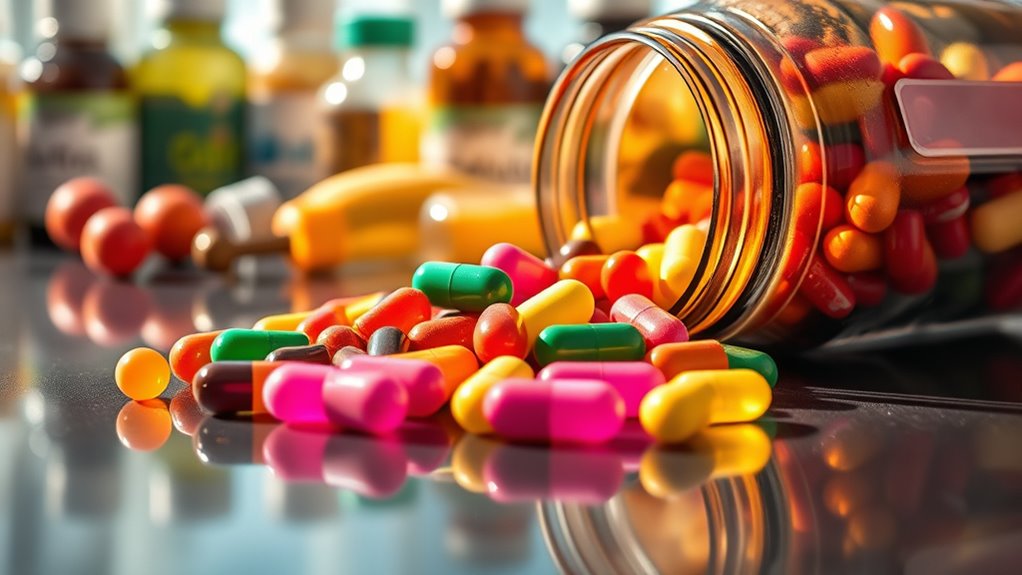

Taking high doses of vitamins and supplements can quickly address deficiencies and support specific health goals, but they also carry risks like toxicity and adverse reactions if used improperly. While they might offer short-term benefits, exceeding recommended amounts—especially for fat-soluble vitamins—can cause serious health issues. Understanding both the benefits and dangers is key to safe supplementation. To discover how to use these wisely and protect your well-being, keep exploring this important topic.
Key Takeaways
- High doses can quickly correct specific vitamin deficiencies and support targeted health goals.
- Excessive intake of fat-soluble vitamins may lead to toxicity and health risks.
- Overusing water-soluble vitamins like B6 and C can cause nerve or gastrointestinal issues.
- Following recommended dosages and consulting healthcare providers helps prevent overdose and adverse effects.
- Prioritizing balanced nutrition through natural foods reduces reliance on high-dose supplements and promotes long-term health.

Have you ever wondered if vitamins and supplements can truly boost your health? While many believe that popping high-dose vitamins can give them an edge, it’s essential to understand the potential benefits and risks involved. High doses of certain vitamins can sometimes provide a quick fix for deficiencies or support specific health goals. However, exceeding recommended amounts can lead to unintended consequences. This is where dosage safety becomes vital. Taking too much of a vitamin, especially fat-soluble ones like A, D, E, and K, can accumulate in your body and cause toxicity. Even water-soluble vitamins such as B6 and C aren’t entirely risk-free at high doses, as they can lead to nerve issues or gastrointestinal problems. It’s important to stick to guidelines provided by health authorities or consult with a healthcare professional to determine safe intake levels.
Many people turn to high-dose supplements in hopes of faster results or enhanced health, but it’s worth questioning whether this approach is always necessary or effective. Sometimes, natural alternatives can meet your nutritional needs without the added risk of overdose. For example, increasing your intake of fruits, vegetables, nuts, seeds, and whole grains can provide essential vitamins and minerals naturally. Not only do these foods offer a balanced mix of nutrients, but they also contain fiber, antioxidants, and phytochemicals that work synergistically to support your health in ways supplements can’t replicate. Choosing natural sources often guarantees a safer, more sustainable approach to meeting your nutritional requirements.
It’s tempting to believe that more is better, especially when it comes to health. But high-dose vitamins aren’t a magic bullet; they can sometimes do more harm than good if not taken carefully. Before jumping into high-dose supplementation, consider whether your diet already provides enough nutrients or if you might have a deficiency that requires targeted intervention. Consulting with a healthcare professional can help you evaluate your individual needs and prevent potential overdose risks. Remember, the goal is to support your health in a way that’s both effective and safe. Natural alternatives are often overlooked but can be a powerful, safer option for maintaining ideal health. Sometimes, the best approach is to focus on balanced nutrition rather than relying solely on high-dose pills. After all, your body is designed to get nutrients from food, and respecting those natural limits can help you avoid the pitfalls of excessive supplementation. Additionally, understanding the impact of supplement dosage is crucial for maintaining long-term health and avoiding toxicity.
As an affiliate, we earn on qualifying purchases.
Frequently Asked Questions
Are High-Dose Vitamins Safe for Pregnant Women?
High-dose vitamins aren’t usually safe for pregnant women, as they can pose risks to pregnancy health. You should stick to recommended daily allowances and consult your healthcare provider before taking any supplements. Excessive intake of certain vitamins, like A or D, can cause complications. Prioritize balanced nutrition and professional guidance to make certain of both your safety and your baby’s health during pregnancy.
Can Supplements Replace a Balanced Diet Entirely?
You can’t replace a balanced diet entirely with supplements because they can’t provide all the nutrients and benefits found in whole foods. Relying solely on supplements might lead to nutritional deficiencies and pose safety risks, especially with high doses. To stay healthy, focus on eating a variety of nutritious foods and use supplements only to address specific deficiencies or under medical advice. Balance is key for ideal health.
What Are the Signs of Vitamin Overdose?
Imagine taking excessive vitamin A supplements and experiencing dizziness, nausea, or blurred vision—these are signs of vitamin overdose and toxicity symptoms. You can prevent overdose by sticking to recommended doses and consulting your healthcare provider. Symptoms vary by vitamin but often include fatigue, skin changes, or stomach upset. Recognizing these signs early helps you avoid serious health issues, making overdose prevention essential for safe supplement use.
Are There Age-Specific Vitamin Dosage Recommendations?
Yes, there are age-specific vitamin dosage recommendations you should follow. Your age impacts your unique needs, so dosage guidelines vary for children, teens, adults, and seniors. For example, children require lower doses to prevent toxicity, while seniors might need more vitamins like D and B12. Always check official guidelines or consult a healthcare professional to make certain you’re taking appropriate amounts tailored to your age, avoiding overdose risks.
Do High-Dose Supplements Interact With Medications?
Yes, high-dose supplements can interact with medications, affecting drug interactions and potentially altering their efficacy. You should always consult your healthcare provider before taking high-dose vitamins, especially if you’re on prescription drugs. These supplements can either diminish medication effects or cause adverse reactions. Staying informed helps ensure your supplement use supports your health safely without compromising your medication regimen.
fat-soluble vitamin toxicity test kit
As an affiliate, we earn on qualifying purchases.
As an affiliate, we earn on qualifying purchases.
Conclusion
While high-dose vitamins and supplements might seem tempting, they’re not always the gentle path to health. Pushing your body too far with excessive intake can cast subtle shadows on your well-being, like a whisper of imbalance in an otherwise harmonious tune. It’s wise to listen carefully to your body’s quiet cues and consult with a healthcare professional. Remember, sometimes less truly is more when it comes to nurturing your health.
vitamin B6 nerve health supplement
As an affiliate, we earn on qualifying purchases.
As an affiliate, we earn on qualifying purchases.
natural multivitamin for balanced nutrition
As an affiliate, we earn on qualifying purchases.
As an affiliate, we earn on qualifying purchases.