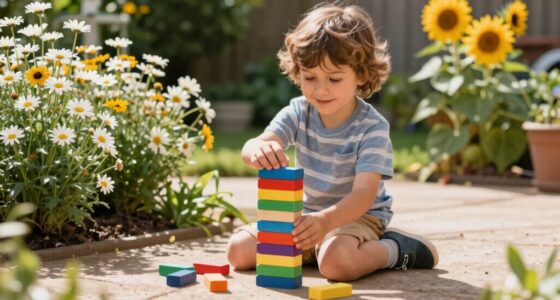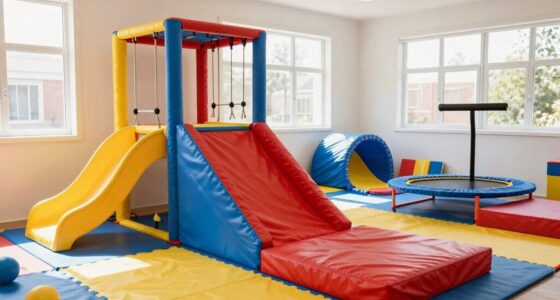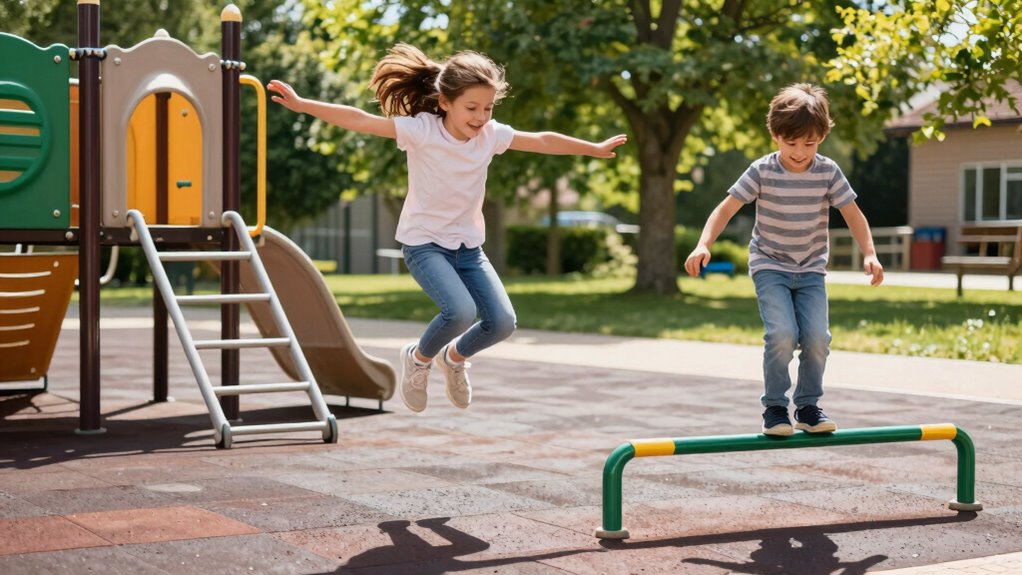

Gross motor play helps you manage emotions by channeling energy through activities like jumping, running, and climbing, which prevent feelings of frustration or anger from building up. It supports sensory processing, making you feel more grounded and in control. As you move, your brain interprets sensory signals better, reducing anxiety and boosting mood. Regular physical activity also enhances emotional resilience over time. Keep exploring, and you’ll discover even more ways movement can support emotional well-being.

Get health and wellness essentials delivered free with Prime
- Fast, free delivery on millions of items
- Prime Video, Amazon Music and more included
- Member-only deals all year
Key Takeaways
- Gross motor play helps children channel and release strong emotions like excitement or anger through physical activity.
- Movement and exploration improve sensory processing, reducing anxiety and emotional frustration.
- Engaging in active play boosts mood and emotional well-being through the release of mood-enhancing endorphins.
- Physical activities support self-regulation by helping children recognize and manage their sensory and emotional responses.
- Group play fosters social skills and emotional understanding, promoting emotional stability and resilience.
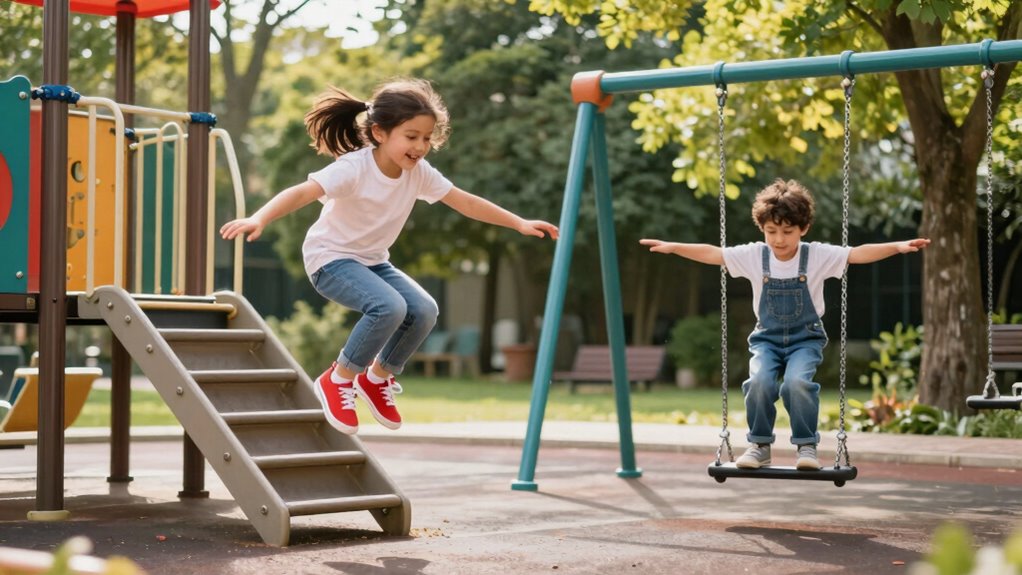
Engaging in gross motor play is more than just fun; it plays an essential role in helping children manage their emotions. When you encourage active play like running, jumping, or climbing, you’re supporting their sensory integration, which is key for processing and responding to sensory information. This process helps children feel more grounded and in control, reducing feelings of anxiety or frustration. As they move and explore their environment, their brains learn to interpret sensory signals more effectively, fostering emotional resilience over time.
Active gross motor play helps children feel grounded, manage emotions, and build resilience through sensory integration.
Physical development is closely linked to emotional regulation, and through gross motor activities, children build strength, coordination, and balance. These physical skills give them confidence and a sense of achievement, which can directly influence their mood and self-esteem. When kids master a new skill, they often experience a surge of pride that helps them handle setbacks or challenges better in other areas of life. Plus, the physical exertion involved in gross motor play releases endorphins—your body’s natural mood boosters—that can help lift spirits and reduce stress.
Beyond the physiological benefits, gross motor play offers children a safe outlet for expressing emotions. When they jump, run, or climb, they channel feelings like excitement, anger, or even sadness into physical activity. This active expression prevents emotions from bubbling up internally, which can lead to meltdowns or withdrawal. Instead, kids learn to self-regulate by engaging their bodies, gaining awareness of how movement influences their feelings. This awareness becomes a powerful tool for managing emotions in real-life situations, helping them stay calm and focused.
Furthermore, engaging in group play or outdoor activities enhances social skills, which are essential for emotional health. When children play together, they practice taking turns, sharing, and navigating conflicts, all within a context that promotes positive emotional experiences. These social interactions reinforce feelings of belonging and acceptance, which are fundamental for emotional stability. As they develop these skills, children gain a better understanding of their own emotions and those of others, fostering empathy and emotional intelligence. Additionally, research shows that physical activity can directly improve mood and emotional well-being. Recognizing the importance of sensory integration, children often become more aware of how their bodies respond to different stimuli, supporting their emotional growth.
As an affiliate, we earn on qualifying purchases.
Frequently Asked Questions
How Much Daily Gross Motor Activity Is Recommended for Children?
You should aim for at least 60 minutes of daily gross motor activity for children. This helps build physical endurance and enhances coordination skills. Active play, like running, jumping, or climbing, keeps kids engaged and strengthens their muscles. Regular movement also supports emotional regulation by reducing stress and boosting mood. Encouraging consistent outdoor play guarantees children develop essential motor skills while staying healthy and emotionally balanced.
Can Gross Motor Play Benefit Children With Emotional Regulation Challenges?
Think of gross motor play as a mighty ship sailing through stormy seas—helping children with emotional regulation challenges steady their course. It boosts emotional resilience and enhances social skills, giving them tools to navigate feelings and interactions. Active play encourages release of energy, reducing frustration and anxiety. By engaging in movement, children learn to manage emotions better, building confidence and resilience, making them better equipped to face daily challenges with calm and control.
What Are Some Simple Gross Motor Activities for Indoor Play?
You can set up simple indoor gross motor activities like an obstacle course using cushions, chairs, and tape to create a fun challenge. Dancing games, such as freeze dance or follow-the-leader, also promote movement and coordination. These activities help children burn off energy, improve motor skills, and regulate emotions. Plus, they’re easy to organize and adapt to your space, making indoor play both engaging and beneficial.
How Does Gross Motor Play Influence Brain Development?
Think of your brain as a flexible, ever-changing landscape; gross motor play boosts this brain plasticity by strengthening neural connections. When you move, you enhance motor coordination, which helps develop critical brain areas responsible for learning and emotional regulation. This active engagement sparks new pathways, improving focus and resilience. Fundamentally, through vigorous movement, you actively shape your brain’s growth, making it more adaptable and better equipped to handle life’s challenges.
Are There Age-Specific Gross Motor Activities That Support Emotional Regulation?
Yes, age-specific gross motor activities support emotional regulation by enhancing sensory integration and motor coordination. For young children, activities like crawling and jumping help process sensory input, calming or energizing them as needed. Older kids benefit from team sports and obstacle courses that challenge coordination and promote teamwork. These activities help children manage emotions by providing structured outlets for energy, building confidence, and improving their ability to regulate feelings effectively.
As an affiliate, we earn on qualifying purchases.
Conclusion
By engaging in gross motor play, you empower your child’s ability to manage emotions like a modern-day knight mastering his sword. Just as a knight trains tirelessly to face challenges, your child’s active play helps build resilience and emotional strength. Remember, this isn’t just about fun — it’s about preparing them for life’s battles ahead. So, keep encouraging movement; it’s their secret weapon for emotional balance in a world full of dragons and dilemmas.
outdoor active play equipment for children
As an affiliate, we earn on qualifying purchases.
As an affiliate, we earn on qualifying purchases.
sensory motor activity toys for kids
As an affiliate, we earn on qualifying purchases.
As an affiliate, we earn on qualifying purchases.
Evergreen bestsellers Picks
bestsellers
As an affiliate, we earn on qualifying purchases.