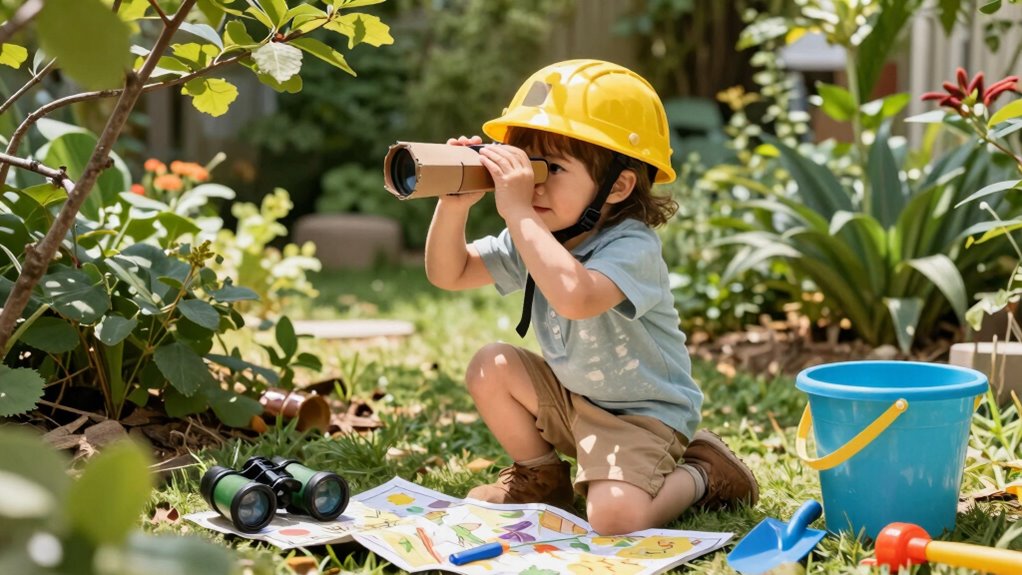

Imaginative play helps you understand the world by allowing children to explore different cultures, emotions, and problem-solving skills actively. When kids pretend to be different characters or mimic traditions, they become more aware of cultural diversity and develop empathy. Through storytelling and role-playing, they also strengthen language skills and learn to navigate challenges confidently. If you want to discover more about how these playful experiences shape a child’s understanding of the world, keep exploring!
Key Takeaways
- Imaginative play enables children to explore and experience different cultural stories and traditions, fostering cultural awareness.
- Role-playing helps children understand diverse perspectives and develop empathy for others.
- Creating scenarios and stories enhances cognitive skills like problem-solving and critical thinking.
- Engaging in pretend scenarios encourages children to interpret and make sense of the world around them.
- Exposure to diverse play themes increases awareness of global diversity and complex social dynamics.

Imaginative play is an essential part of childhood development, offering children a chance to explore the world around them and express their creativity. Through this kind of play, you can see how kids begin to understand different aspects of life, from cultural storytelling to emotional expression. When children engage in pretend scenarios, they often incorporate stories they’ve heard or seen, weaving them into their games. This process helps them grasp cultural differences and traditions, making the world feel more familiar and less foreign. Whether they’re pretending to be explorers, chefs, or superheroes, they’re naturally absorbing stories from various backgrounds, which broadens their understanding of diverse cultures and customs.
Imaginative play helps children explore cultures, express emotions, and develop critical thinking through storytelling and role-playing.
As they act out these stories, children also learn to communicate their feelings and ideas more effectively. Imaginative play becomes a safe space where they can explore emotions they might not yet fully understand or feel comfortable expressing in real life. When you see a child pretend to be sad, angry, or joyful, you’re witnessing their way of processing complex emotions. This emotional expression is vital because it helps them build emotional intelligence. They learn to identify their feelings, understand others’ reactions, and develop empathy—all through the stories they create and enact. The act of role-playing allows children to step into different perspectives, fostering compassion and social skills that will serve them well later on.
Furthermore, engaging in imaginative play encourages problem-solving and critical thinking. As kids invent scenarios and navigate challenges within their stories, they develop resilience and adaptability. They learn that stories can have different endings or solutions, which teaches flexibility and creativity. The act of storytelling itself—whether through dialogue, gestures, or props—also strengthens language skills and cognitive development. You might notice that children who participate in rich imaginative play often have a more vivid vocabulary and a better grasp of narrative structure. Additionally, incorporating elements like physical objects or props into their play can enhance their understanding of spatial relationships and cause-and-effect relationships, further supporting their cognitive growth. Recognizing the importance of emotional development in imaginative play is supported by research on childhood learning and growth.
A deeper understanding of cultural influences can also be gained through imaginative scenarios, as children often mimic traditions and customs they observe in their environment. Engaging in diverse scenarios allows children to become more aware of the world’s diversity, fostering open-mindedness and curiosity. In essence, when you support children in their imaginative play, you’re helping them interpret and make sense of the world. They’re not just playing; they’re learning about different cultures, developing emotional skills, and honing their problem-solving abilities. This kind of play serves as a powerful foundation for understanding life’s complexities, all while having fun and expressing themselves freely.
As an affiliate, we earn on qualifying purchases.
Frequently Asked Questions
At What Age Should Children Start Engaging in Imaginative Play?
You should encourage children to start engaging in imaginative play around age 2, as this marks a key play milestone in child development. At this stage, they naturally begin to pretend and explore roles. This type of play helps them understand the world, develop social skills, and boost creativity. Supporting their imaginative activities during early childhood fosters essential cognitive and emotional growth, making play a crucial part of their development journey.
How Can Parents Encourage More Creative Role-Playing Activities?
Think of yourself as a guiding lighthouse, illuminating the seas of imagination. You can encourage more creative role-playing by introducing imaginative storytelling and creative dress-up, turning everyday moments into adventures. Offer costumes, props, and open-ended prompts that spark curiosity. Join your child’s play, ask questions, and praise their ideas. By doing so, you create a safe harbor where their imagination sails freely, deepening their understanding of the world.
Are There Any Risks Associated With Imaginative Play?
There are some risks with imaginative play, especially concerning fantasy safety and creativity boundaries. Your child might get too absorbed in pretend scenarios, leading to confusion between fantasy and reality. To manage this, set clear boundaries and supervise play sessions. Encouraging safe, age-appropriate themes helps guarantee your child’s imaginative adventures are fun and educational without crossing into unsafe or overly complex fantasy worlds.
How Does Imaginative Play Differ Across Cultures?
Imagine you’re peeling back the layers of a cultural onion—each revealing unique stories and customs. Imaginative play differs across cultures through playground customs and cultural storytelling, shaping how children imagine and interpret their world. In some places, children reenact traditional tales, while others focus on games reflecting local values. These diverse playscapes help kids connect with their heritage, fostering understanding and respect for different ways of seeing and experiencing life.
Can Imaginative Play Improve Children’s Problem-Solving Skills?
Yes, imaginative play boosts children’s problem-solving skills by fostering creative cognition and cognitive flexibility. When you encourage kids to invent scenarios or role-play, they learn to think outside the box and adapt to new situations. These activities challenge them to find solutions, consider different perspectives, and develop critical thinking, all of which strengthen their ability to solve problems effectively in real-life contexts.
cultural role play costumes for children
As an affiliate, we earn on qualifying purchases.
As an affiliate, we earn on qualifying purchases.
Conclusion
So, immerse yourself in imaginative play with your children—you might just uncover the secrets of the universe or turn your living room into a magical kingdom! Every game, every story they create isn’t just fun; it’s a superpower that helps them understand the world in ways you could never imagine. By nurturing their creativity, you’re giving them the key to conquer galaxies of knowledge and build a future brighter than the sun itself!
storytelling and role-playing toys
As an affiliate, we earn on qualifying purchases.
As an affiliate, we earn on qualifying purchases.
emotional expression toys for kids
As an affiliate, we earn on qualifying purchases.
As an affiliate, we earn on qualifying purchases.