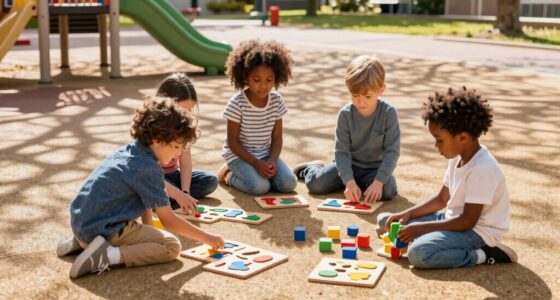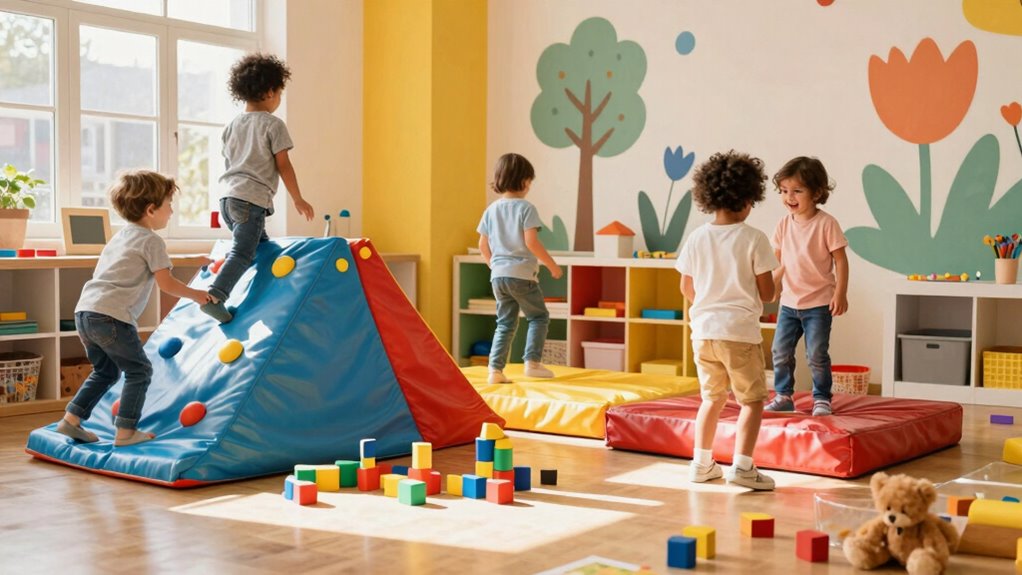

Play is crucial for healthy brain development because it actively encourages neural growth, helping you build essential connections for learning and problem-solving. It enhances cognitive skills like memory and attention, while also fostering social and emotional resilience. Through play, you explore ideas, express feelings, and develop independence. Engaging in various types of play strengthens brain pathways and promotes neuroplasticity. To discover how play shapes lifelong skills and growth, continue exploring this fascinating topic.

Get health and wellness essentials delivered free — and shop member deals
- Fast, free delivery on millions of items
- Access to Prime Big Deal Days deals on October 6–7
- Prime Video, Amazon Music and more included
Key Takeaways
- Play stimulates neural connections, supporting learning, problem-solving, and overall cognitive growth.
- Engaging in diverse play enhances neuroplasticity, improving brain adaptability.
- Play promotes development of executive functions like attention, memory, and self-control.
- Social and emotional play helps children understand emotions, navigate relationships, and build resilience.
- Imaginative and role-play activities reinforce emotional regulation and trust, essential for healthy development.
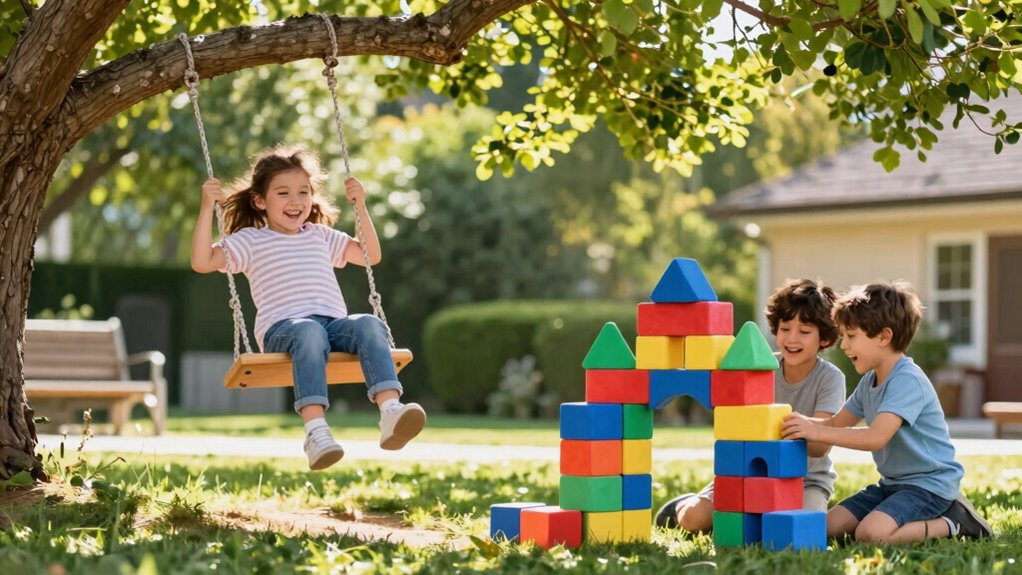
Play isn’t just fun—it’s essential for brain development. When you let children engage in play, you’re giving their brains a powerful boost. Play stimulates the growth of neural connections, which are the foundation for learning, problem-solving, and emotional regulation. Through play, children explore their environment, experiment with new ideas, and develop critical thinking skills. It’s during these moments that their brains are actively forming pathways that will support their future cognitive growth. This is why play therapy is often used by professionals; it helps children process emotions and develop social skills in a natural, engaging way. Play therapy leverages the innate desire to play as a means to foster emotional resilience and cognitive development, making it a vital tool for nurturing well-rounded growth.
As you watch children play, you notice how they learn to navigate social interactions, negotiate rules, and resolve conflicts. These experiences are not just about having fun—they’re shaping their brains to better handle real-world challenges. Play allows children to experiment with different roles and scenarios, which enhances their ability to think creatively and adapt to new situations. When children are actively involved in play, they are strengthening executive functions such as attention, memory, and self-control. These skills are crucial for academic success and lifelong learning. The more varied and complex the play, the more opportunities the brain has to develop these vital skills. Moreover, incorporating playful environments can foster cognitive flexibility, which is essential for adapting to changing circumstances. Research shows that diverse types of play can also promote neuroplasticity, further supporting brain growth.
Moreover, play provides a safe space for children to express their feelings and process experiences. This emotional component is just as important as the cognitive benefits. When children engage in imaginative play or role-playing games, they practice understanding different perspectives and managing their emotions. This emotional regulation is fundamental for healthy brain development. You can support this by encouraging open-ended play, where children have the freedom to create and explore without strict limitations. Such play fosters independence, confidence, and resilience, all of which contribute to a sturdy, adaptable brain. Interestingly, developing emotional bonds through play can further enhance neural pathways related to trust and social connection, emphasizing the importance of emotional security in development. Additionally, research suggests that familiar faces in dreams can symbolize comfort and connection, which highlights the importance of emotional bonds in development.
In essence, play is a cornerstone of healthy brain development. It nurtures cognitive growth, emotional maturity, and social skills, laying the groundwork for a successful, balanced life. Recognizing the influence of celestial bodies and personal traits can also shed light on individual differences in how children engage with play and their environment. By incorporating play-based activities into daily routines and understanding the broader influences on development, you help children build the neural foundation they need to thrive now and in the future. Play isn’t just a break from learning—it’s the very pathway through which a child’s brain develops its full potential.
educational toys for brain development
As an affiliate, we earn on qualifying purchases.
As an affiliate, we earn on qualifying purchases.
Frequently Asked Questions
How Does Play Influence Emotional Regulation in Children?
Playing helps you understand and manage your emotions better. When you play, you build emotional resilience by practicing coping skills and expressing feelings safely. It also provides stress relief, allowing you to relax and recharge. Through imaginative and social play, you learn how to handle challenges calmly, which strengthens your emotional regulation. Overall, play is an essential tool for developing a healthy, balanced emotional outlook in children.
Are There Specific Types of Play Better for Brain Growth?
Think of your child’s brain as a garden needing diverse seeds. Creative exploration and sensory engagement are particularly powerful types of play that foster growth. They encourage imagination, problem-solving, and neural connections. Activities like drawing, building, or exploring nature stimulate different parts of the brain, much like a symphony coming together. By prioritizing these play types, you nurture a resilient, innovative mind ready to flourish.
How Does Play Impact Social Skills Development?
Play boosts your social skills by encouraging peer interaction and cooperation. When you engage in peer interactions, you learn to share, take turns, and communicate effectively. Cooperative games especially teach teamwork, problem-solving, and empathy. These activities help you build trust and understanding with others, which are essential for healthy social development. Overall, play provides practical opportunities to develop social skills in fun, meaningful ways.
Can Play Help With Children’s Language Acquisition?
You might think play isn’t directly linked to language, but it actually boosts language acquisition. During play, you help children reach language milestones by encouraging conversations and storytelling. Play fosters vocabulary expansion as kids experiment with new words in engaging scenarios. This active use of language deepens their understanding, making learning natural and fun. So, through play, you’re helping children develop essential communication skills that last a lifetime.
What Role Does Play Have in Preventing Developmental Delays?
Play plays a crucial role in preventing developmental delays by encouraging play therapy and sensory exploration. When you engage children in these activities, you help strengthen their cognitive, social, and emotional skills early on. Play allows kids to practice problem-solving, improve motor skills, and develop resilience. By providing a safe space for exploration, you support their overall growth, reducing the risk of future delays and fostering healthy development.
As an affiliate, we earn on qualifying purchases.
Conclusion
As you watch children play, you might think they’re just having fun. But beneath the surface, their brains are busy wiring important connections, shaping their future. Play isn’t just a break—it’s a powerful tool for growth, resilience, and learning. What if the key to revealing their full potential lies in those simple, everyday moments of joy? Keep encouraging play—because what happens next could surprise you in ways you never imagined.
cognitive development games for children
As an affiliate, we earn on qualifying purchases.
As an affiliate, we earn on qualifying purchases.
play therapy toys for emotional resilience
As an affiliate, we earn on qualifying purchases.
As an affiliate, we earn on qualifying purchases.
Fall Picks
fall essentials
As an affiliate, we earn on qualifying purchases.