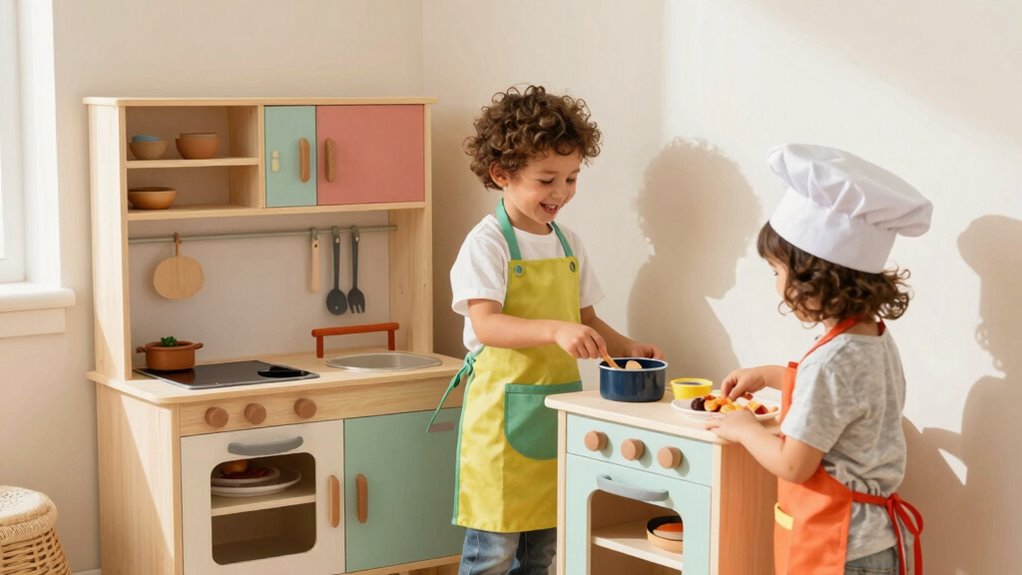

Pretend kitchens help you see how children develop language and social skills through imaginative play. As they create stories, describe actions, and negotiate roles, they expand their vocabulary and practice clear communication. Playing with others teaches sharing, taking turns, and understanding emotions like empathy. They also learn to listen and respond, building confidence in social situations. Keep exploring to discover more ways pretend kitchens support your child’s growth.
Open a free Amazon Business account
Business pricing, bulk buying and tax-exempt orders.
As an affiliate, we earn on qualifying purchases.
Key Takeaways
- Pretend kitchens encourage children to describe actions and objects, enhancing vocabulary and language fluency.
- Role-playing scenarios promote conversational exchanges, asking questions, and giving instructions.
- Sharing and taking turns during pretend play foster social cooperation and patience.
- Negotiating roles and responsibilities develop empathy and understanding of social cues.
- Interactive play supports emotional intelligence by practicing sharing, generosity, and understanding others’ feelings.

Pretend kitchens are more than just toys; they’re powerful tools for developing social skills in young children. When you let your child engage in pretend play, you’re opening the door to fostering their cognitive development and encouraging creative expression. As they pretend to cook, serve, or grocery shop, they’re actively practicing problem-solving and critical thinking. For example, they might decide which ingredients are needed for a recipe or figure out how to share utensils with a playmate. These activities help sharpen their ability to plan, organize, and understand cause-and-effect relationships, all essential aspects of cognitive development.
Pretend kitchens boost social skills, problem-solving, creativity, and cognitive growth through imaginative play and collaboration.
At the same time, pretend kitchens serve as a vibrant stage for your child to express their creativity. They imagine scenarios—baking a cake, hosting a dinner, or running a café—and in doing so, they create stories that reflect their understanding of the world. This kind of creative expression isn’t just about fun; it helps your child develop new vocabulary and language skills. As they narrate their actions or describe what they’re making, they practice using words in context, expanding their language fluency. When they tell a friend, “I’m making spaghetti,” or ask, “Can I have more juice?” they’re actively building their communication skills.
The social aspect of pretend kitchens is equally important. When your child plays with siblings or friends, they learn fundamental social skills like sharing, taking turns, and cooperating. They negotiate roles—who’s the chef? Who’s the customer?—which teaches them patience and empathy. These interactions require them to listen, respond, and adapt to others’ ideas, nurturing their ability to work as part of a team. Through role-playing, they also grasp social cues and develop emotional intelligence, understanding feelings like generosity or frustration.
Playing in a pretend kitchen naturally encourages conversation. Your child might ask questions, give instructions, or describe their pretend meal, all of which bolster their language abilities. As they switch roles and scenarios, they learn to express themselves more clearly and confidently. Additionally, understanding auditory processing can help children better interpret sounds and language during play, further enhancing their communication skills. Engaging in imaginative play like this also supports their overall social development by creating opportunities for interaction and cooperation. By actively engaging in this type of imaginative play, they’re not only having fun but also laying a foundation for effective communication and healthy social relationships. In essence, a pretend kitchen isn’t just a toy; it’s a dynamic space where your child develops essential skills that will serve them well throughout life.
pretend kitchen playset for kids
As an affiliate, we earn on qualifying purchases.
As an affiliate, we earn on qualifying purchases.
Frequently Asked Questions
How Do Pretend Kitchens Differ Across Cultures?
You’ll notice that pretend kitchens differ across cultures through their focus on cultural cooking traditions and language diversity in play. In some regions, kids might pretend to cook traditional dishes, using specific utensils or ingredients unique to their culture. Language diversity is reflected as children incorporate native words and phrases, enriching their vocabulary and cultural understanding. These variations help children connect with their heritage while developing social and language skills through imaginative play.
What Age Is Best for Introducing Pretend Kitchen Play?
You should introduce pretend kitchen play around ages 2 to 4, when children enthusiastic engage in role-playing scenarios and imaginative storytelling. At this stage, they develop language skills by mimicking real-life conversations and actions. Encourage their creativity by joining in and expanding on their scenarios. This play fosters social skills, cooperation, and vocabulary growth, making it a perfect activity to support their cognitive and emotional development during these formative years.
Can Pretend Kitchens Help Children With Language Delays?
Yes, pretend kitchens can help children with language delays by encouraging imaginative roleplay and expanding their cooking vocabulary. As you engage your child in pretend cooking, they practice new words and phrases, boosting their language skills. The playful environment also motivates them to communicate more, fostering social interaction. This hands-on, fun approach makes learning new words natural and enjoyable for children facing language delays.
How Do Pretend Kitchens Promote Emotional Development?
Pretend kitchens promote emotional development by encouraging imaginative expression, allowing you to explore different feelings and scenarios creatively. As you role-play cooking and caregiving, you develop empathy by understanding others’ perspectives and emotions. This imaginative play helps you process your own feelings, build emotional resilience, and foster compassion, all while having fun. Through these activities, you learn to connect with others on a deeper emotional level.
Are There Safety Concerns With Pretend Kitchen Toys?
Did you know that over 80% of pretend kitchen toys meet safety standards? You should always check these standards to guarantee your child’s safety. Most pretend kitchens are made from non-toxic, child-safe materials, but it’s essential to verify material safety before buying. Keep an eye out for small parts or sharp edges, and supervise your child during play to prevent accidents. Safety always comes first!
As an affiliate, we earn on qualifying purchases.
Conclusion
Just as the great chefs of old crafted more than meals, pretend kitchens nurture your child’s language and social skills, stirring imagination with every interaction. In these playful spaces, they learn to negotiate, share, and express—building a foundation that echoes the wisdom of ancient storytellers. So, let their creativity simmer and simmer, for in these moments of make-believe, they forge connections that will nourish their growth long after the last pretend dish is served.
As an affiliate, we earn on qualifying purchases.
children's imaginative play kitchen
As an affiliate, we earn on qualifying purchases.
As an affiliate, we earn on qualifying purchases.
NFL season / tailgating Picks
team gear
As an affiliate, we earn on qualifying purchases.