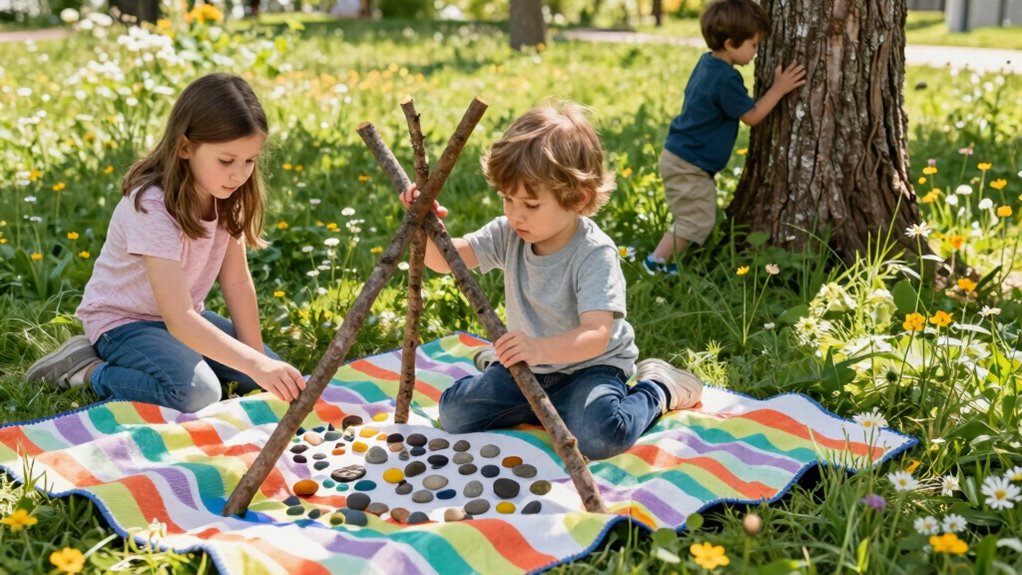

Self-directed play is essential for your child’s development because it boosts creativity, independence, and emotional resilience. It encourages them to explore interests, make decisions, and learn at their own pace. This type of play also teaches patience, problem-solving, and coping skills for setbacks. By allowing your child this freedom, you’re helping build confidence and a resilient mindset that benefits their future. To understand how to nurture these skills, discover more about its many advantages.
Key Takeaways
- Promotes cognitive growth by encouraging exploration, decision-making, and creative problem-solving at the child’s own pace.
- Builds emotional resilience by fostering independence, persistence, and confidence in managing setbacks.
- Enhances social and emotional skills through safe experimentation, risk-taking, and self-regulation.
- Prepares children for future challenges by developing adaptability, trust in judgment, and resilience.
- Sparks imagination and curiosity, supporting overall holistic development and emotional growth.

Self-directed play is an essential component of child development because it allows children to explore their interests, make decisions, and learn at their own pace. When kids engage in this kind of play, they develop crucial skills that serve them throughout life. One of these skills is creative problem solving. As they invent scenarios, manipulate objects, and steer through challenges on their own, they learn to think outside the box and come up with innovative solutions. For example, if your child is building a fort out of pillows and blankets, they might encounter structural issues or need to figure out how to keep their creation stable. These moments push them to analyze what works and what doesn’t, fostering a mindset that’s adaptable and resourceful.
Beyond cognitive growth, self-directed play also plays a fundamental role in building emotional resilience. When children decide what to play with and how to play, they experience a sense of control and independence. This autonomy helps them manage feelings of frustration or disappointment when things don’t go as planned. For instance, if their drawing or construction doesn’t turn out the way they envisioned, they learn to cope with setbacks and persist. Over time, these experiences build their confidence and ability to bounce back from challenges, which is the core of emotional resilience.
By creating a safe environment for experimentation, self-directed play encourages children to take risks and learn from their mistakes without fear of judgment. This process strengthens their self-esteem and teaches them that setbacks are part of growth. As they steer their own play scenarios, they also develop patience and self-regulation, learning to wait their turn or to pause when they’re overwhelmed. These skills are essential for managing emotions and handling social situations later in life.
Ultimately, when you allow children to lead their play, you’re providing them with opportunities to hone their creative problem solving and emotional resilience. They learn to trust their judgment, adapt to new situations, and handle setbacks with confidence. This form of play not only sparks their imagination but also lays the foundation for healthy emotional development. By supporting their independence and curiosity through self-directed play, you’re helping them build a resilient mindset that will benefit them well beyond childhood.
self-directed play toys for kids
As an affiliate, we earn on qualifying purchases.
As an affiliate, we earn on qualifying purchases.
Frequently Asked Questions
How Can Parents Encourage Self-Directed Play at Home?
To encourage self-directed play at home, create a safe, inviting space filled with open-ended toys and materials that spark imaginative exploration. Let your child lead, offering minimal guidance to foster independence. Encourage them to invent stories and solve problems, which builds emotional resilience. Support their ideas, celebrate their creativity, and resist the urge to intervene, allowing them to develop confidence and essential life skills through autonomous play.
What Are Common Barriers to Self-Directed Play in Children?
You might notice play deprivation or parental overcontrol as common barriers to self-directed play. When parents overly control play activities, children lose opportunities for independence and creativity. Play deprivation occurs when kids lack unstructured time or safe spaces to explore freely. To overcome these barriers, you should encourage open-ended play, minimize restrictions, and give your child space to choose activities, fostering confidence and natural curiosity.
How Does Self-Directed Play Differ Across Developmental Stages?
As children grow, their self-directed play changes with developmental milestones and play preferences. Young toddlers explore through sensory activities, focusing on simple, hands-on play. Preschoolers develop imaginative play, creating stories and role-playing. Older children prefer more complex, rule-based games and collaborative activities. These shifts reflect their cognitive, social, and emotional development, helping them build skills like problem-solving, creativity, and independence at each stage.
Are There Safety Concerns With Unstructured Play Environments?
Imagine your child exploring a backyard jungle, full of potential hazards. Safety concerns with unstructured play environments are real, but you can mitigate them with proper safety precautions and supervision strategies. Keep sharp objects out of reach, guarantee sturdy play areas, and stay nearby to guide their adventures. By actively monitoring, you empower your child to explore freely while minimizing risks, fostering confidence and independence safely.
How Is Self-Directed Play Linked to Creativity and Problem-Solving Skills?
You foster your child’s creativity and problem-solving skills through self-directed play by encouraging imaginative exploration. When children choose their activities, they develop cognitive flexibility, allowing them to adapt to new situations and think outside the box. This type of play promotes innovation, resilience, and critical thinking, helping your child build essential skills for future challenges. By supporting their curiosity, you set the foundation for lifelong learning and inventive problem-solving.
creative building blocks for children
As an affiliate, we earn on qualifying purchases.
As an affiliate, we earn on qualifying purchases.
Conclusion
By embracing self-directed play, you open the door to your child’s boundless potential, nurturing independence, creativity, and resilience. Remember, it’s not just about play; it’s about planting seeds of confidence and curiosity that will grow long into their future. Like a gentle river carving valleys over time, your support shapes their development in profound ways. So, let them lead their own adventures—because in their freedom, they find their true strength.
emotional resilience toys for kids
As an affiliate, we earn on qualifying purchases.
As an affiliate, we earn on qualifying purchases.
As an affiliate, we earn on qualifying purchases.