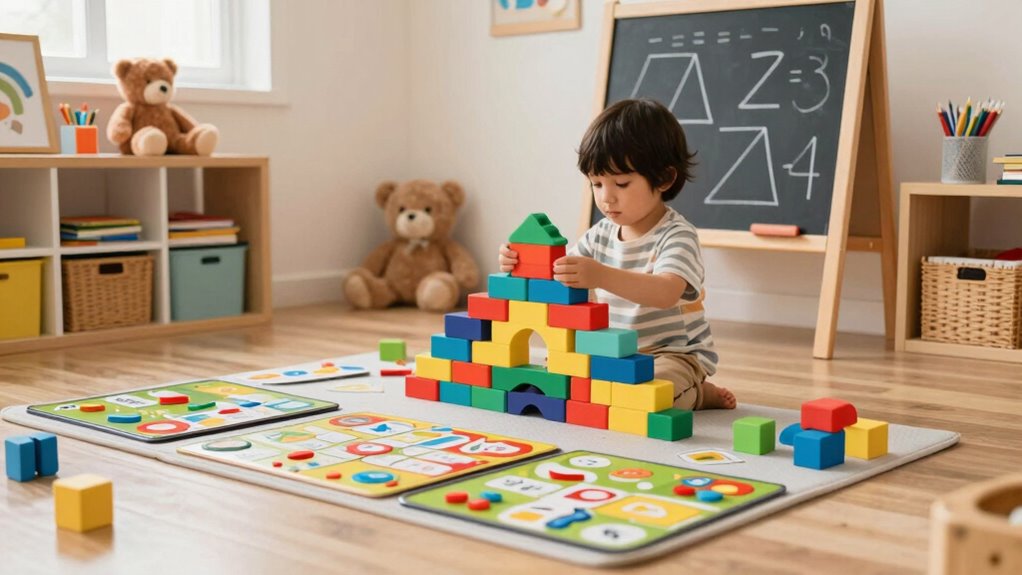

To encourage creative play in kids who prefer rules, blend structure with flexibility. Offer simple, adaptable rules that let them expand their ideas and explore different outcomes. Use open-ended activities like building blocks or role-playing, adding personal touches within clear boundaries. Show them that rules are tools for creativity, not limits. Gently encourage thinking outside the box within a safe framework. Keep exploring ways to make rule-based play inspiring, and you’ll discover more strategies to help their imagination flourish.

Get health and wellness essentials delivered free — and shop member deals
- Fast, free delivery on millions of items
- Access to Prime Big Deal Days deals on October 6–7
- Prime Video, Amazon Music and more included
Key Takeaways
- Introduce flexible rules that allow kids to interpret and modify game outcomes creatively.
- Use open-ended activities like building blocks or storytelling to inspire imagination within structured frameworks.
- Praise and reinforce their creative ideas, showing rules as supports rather than limits.
- Gradually expand rules to encourage comfort with flexibility and independent problem-solving.
- Demonstrate how rules can be adapted or reimagined to foster confidence in creative exploration.

Kids who prefer rules often thrive on structure, but that doesn’t mean they can’t enjoy creative play too. As someone guiding their development, you can help them see that rules and imagination go hand in hand. Encouraging creative play doesn’t mean abandoning structure; instead, it’s about fostering a flexible approach to rules that sparks their imagination development. When you introduce playful activities with clear boundaries but room for interpretation, you give kids the confidence to explore their ideas within a safe framework.
Start by setting simple, adaptable rules that leave room for creative thinking. For example, if you’re playing a storytelling game, provide a basic plot or characters, but let them decide what happens next. This encourages rule flexibility, which helps kids feel secure while still engaging their inventive minds. When they see that rules can be bent or expanded, their imagination blossoms, and they learn that rules are tools, not restrictions. It’s important to praise their creativity and reassure them that rules are there to guide, not stifle, their ideas. Recognizing that structured play can support creativity helps them build confidence in balancing rules and imagination. Incorporating creative boundaries can further enhance their ability to think outside the box within a safe structure. Understanding the value of rule flexibility can help children develop a positive attitude toward both structure and imagination.
Incorporate activities that blend structure with open-ended elements. Building blocks, for example, offer a framework but allow endless variations. Challenge them to create a castle or a spaceship within a certain number of blocks or specific colors, then encourage them to add their unique twists. This approach promotes imagination development by giving clear goals but inviting personal expression. It also demonstrates that rules can be a springboard for creative thinking, reinforcing that flexibility enhances play rather than limits it. You can also introduce role-playing games with defined roles or scenarios, but let the child decide how to act within that context. For example, if you’re pretending to run a store, they choose what to sell and how to interact with customers. This helps them see that rules can serve as a foundation for their own stories and ideas. Over time, you can gently suggest modifications to the rules, such as adding new roles or changing scenarios, to nurture their comfort with rule flexibility and deepen their imagination.
Ultimately, your goal is to show children that structure and creativity are not mutually exclusive. By respecting their natural preference for rules while gently encouraging them to think outside those boundaries, you help nurture their imagination development. When they understand that rules can be adapted, expanded, or reimagined, they gain confidence in their ability to create, problem-solve, and explore with joy and independence.
open-ended building blocks for kids
As an affiliate, we earn on qualifying purchases.
As an affiliate, we earn on qualifying purchases.
Frequently Asked Questions
How Can I Gently Challenge a Child’s Strict Adherence to Rules?
You can gently challenge your child’s strict rule-following through creative discipline by introducing playful boundaries. Use games or storytelling to show that rules can be flexible and fun, encouraging your child to explore beyond strict limits. Show understanding and patience, praising their curiosity. This approach helps your child see rules as a framework, not a restriction, fostering flexibility while maintaining structure in a playful way.
What Are Some Age-Appropriate Creative Activities for Rule-Focused Kids?
You can spark your rule-focused kid’s imagination with age-appropriate activities like imaginative storytelling, where they create worlds within limits, or artistic exploration that gently pushes boundaries while respecting structure. These activities subtly encourage creativity without chaos, proving rules and imagination aren’t mutually exclusive. By blending order with play, you teach them that rules can guide, not hinder, their creative spirit—turning strictness into a canvas for wonder.
How Do I Balance Structure and Freedom in Playtime?
To balance structure and freedom during playtime, you should set clear boundaries but allow unstructured exploration and imaginative storytelling within them. Encourage your child to invent their own scenarios, while maintaining safety and rules. Offer open-ended toys and prompts that inspire creativity, then step back to let them lead the play. This approach nurtures independence and imagination, helping your child enjoy both the security of rules and the freedom of exploration.
What Signs Indicate a Child Is Resistant to Creative Play?
You might notice some subtle signs that your child is hesitant about creative play, like reluctance to engage in imaginative blocks or storytelling games. They may prefer sticking to familiar rules or seem uninterested when new ideas are introduced. If they avoid spontaneous activities or show little enthusiasm for open-ended play, it indicates resistance. Recognizing these signs helps you gently encourage their confidence and gradually expand their comfort zone.
How Can Parents Model Flexible Thinking During Play?
You can model flexible thinking during play by engaging in imaginative storytelling, where you adapt and invent new scenarios together. Show flexible problem solving by encouraging your child to find different solutions to challenges, even if they break the rules. Your openness to new ideas and willingness to change the story or approach demonstrates that creativity and adaptability are valuable, inspiring your child to explore their own imaginative and flexible thinking skills.
role-playing game sets for children
As an affiliate, we earn on qualifying purchases.
As an affiliate, we earn on qualifying purchases.
Conclusion
By embracing their love for rules, you open a world where imagination knows no bounds—imagine turning a simple game into an epic adventure that spans galaxies! When you gently encourage your rule-loving kid to add their twist, you create a magic portal to endless creativity. Before you know it, they’ll be inventing worlds so fantastic, even the universe will stand in awe. Get ready—your rules-loving kid is about to become a legendary creator!
creative storytelling toys for kids
As an affiliate, we earn on qualifying purchases.
As an affiliate, we earn on qualifying purchases.
flexible rule board games for children
As an affiliate, we earn on qualifying purchases.
As an affiliate, we earn on qualifying purchases.
Fall Picks
fall essentials
As an affiliate, we earn on qualifying purchases.