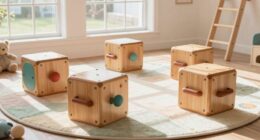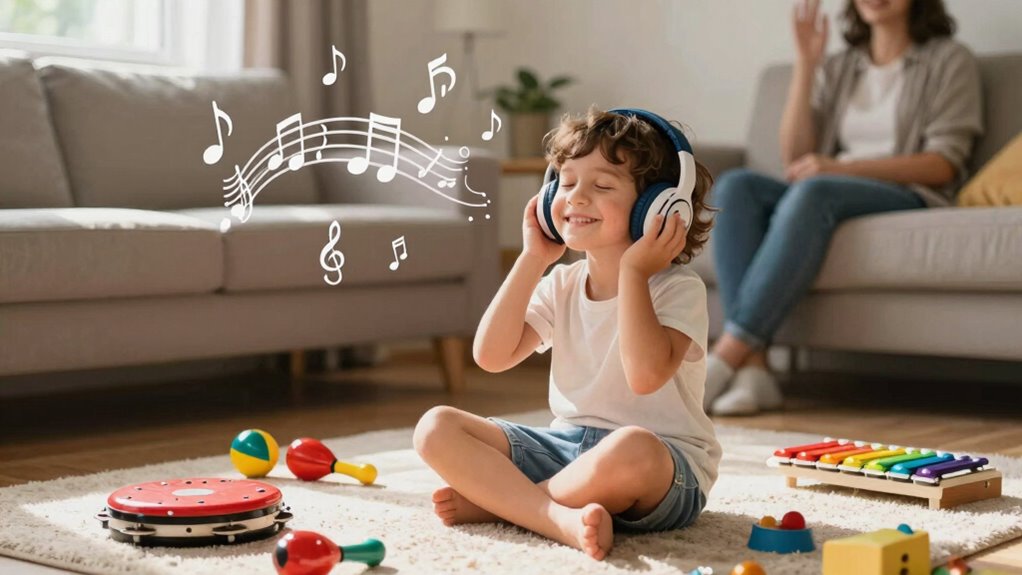

To use music to spark imaginative play, start by turning everyday activities into fun adventures through songs. Use rhythm, movement, and soundscapes to help children visualize stories and create their own narratives. Play musical games that assign sounds to characters or actions, encouraging active listening and creativity. Incorporate familiar household items or voices for personalized musical stories. Keep exploring different musical techniques, and you’ll find even more ways to inspire boundless imagination.

Get health and wellness essentials delivered free — and shop member deals
- Fast, free delivery on millions of items
- Access to Prime Big Deal Days deals on October 6–7
- Prime Video, Amazon Music and more included
Key Takeaways
- Incorporate songs and melodies to animate characters and scenes, making stories more vivid and engaging.
- Use rhythm activities like clapping or tapping to represent story elements and encourage movement.
- Create soundscapes with natural sounds or household items to set immersive environments.
- Assign musical signatures to characters or actions to enhance listening skills and storytelling involvement.
- Personalize play by improvising tunes or using everyday objects to add a fun, musical dimension to imaginary scenarios.

Music has a powerful ability to ignite a child’s imagination, transforming ordinary playtime into a world of endless possibilities. When you incorporate musical storytelling into play, you turn simple activities into engaging adventures. Instead of just talking or acting out stories, you can use songs to bring characters and scenes to life. For example, singing a song about a brave explorer or a friendly dragon helps your child visualize the story and feel more connected to it. You can create your own stories with melodies, making each tale unique and personal. This approach encourages your child’s creativity and helps develop their narrative skills.
Rhythm exploration is another effective way to spark imaginative play. When you introduce different rhythms and beats, you invite your child to move, dance, and create their own musical patterns. Clapping hands, tapping on surfaces, or using percussion instruments can become part of a sensory experience that fuels their imagination. As they experiment with various rhythms, they start to see music as a tool for storytelling and expression. For instance, a steady drumbeat can represent a galloping horse, while a soft, lilting melody might evoke a gentle breeze. By encouraging your child to explore rhythms freely, you help them develop a sense of musicality and improve their coordination. Incorporating natural sounds and soundscapes can further enrich their imaginative experiences. Understanding the role of soundscapes in creating immersive environments can deepen their appreciation for how music and sounds shape stories. Additionally, exploring different sound techniques can help children learn how various sounds evoke specific moods and settings.
You can also combine musical storytelling with rhythm exploration by creating musical games. For example, you might tell a story where each character has a signature sound or rhythm. As your child acts out the story, they can use different beats or melodies to represent different characters or actions. This not only makes storytelling more immersive but also teaches your child to listen carefully and respond creatively. Playing with musical instruments like drums, tambourines, or maracas adds a tactile element that enhances their engagement and imagination.
Furthermore, integrating music into imaginative play doesn’t require fancy equipment—your voice, clapping, and household items work just as well. Use spontaneous moments, like pretending to be animals or superheroes, and add musical elements to make those moments more vivid. Sing songs about their favorite characters or invent new tunes together, making each session a personalized adventure. This approach helps your child associate music with fun and discovery, fostering a lifelong love for musical exploration.
In short, by incorporating musical storytelling and rhythm exploration into your child’s play, you turn ordinary moments into extraordinary adventures that nurture their imagination, creativity, and love for music.
musical storytelling toys for children
As an affiliate, we earn on qualifying purchases.
As an affiliate, we earn on qualifying purchases.
Frequently Asked Questions
What Types of Music Are Best for Imaginative Play?
You should choose a variety of musical genres like classical, jazz, or world music to inspire different imaginative scenarios. Instrument choices matter too—consider drums, tambourines, or ukuleles to make playtime interactive and lively. Play music with different tempos and moods, encouraging your child to create stories or pretend characters based on the sounds. This mix helps spark creativity and keeps their imaginative play dynamic and engaging.
How Can I Tailor Music to Different Age Groups?
You tailor music to different age groups by selecting genres that match their play environments and developmental stages. For young children, choose lively, simple tunes like nursery rhymes and playful melodies. For older kids, explore genres like pop, world music, or instrumental pieces that foster creativity. Adjust volume and tempo to suit their activity levels, creating a playful atmosphere that encourages imagination and engagement across all age groups.
Should Music Be Played Loudly or Softly During Play?
You should adjust the volume control to a soft, gentle level during play, ensuring the sound doesn’t overpower your child’s imagination or distract them. Keep sound quality clear but not too loud, which helps create a calm, inviting atmosphere. Soft music encourages focus and relaxation, while loud music can be overwhelming. Striking the right balance enhances their imaginative play without causing discomfort or distraction.
How Long Should Music Sessions Last for Optimal Imagination?
You should aim for music sessions lasting about 15 to 30 minutes for ideal imagination, as this duration balances sensory stimulation without overwhelming your child. During this time, music therapy can enhance creative thinking and emotional expression. Keep the environment engaging yet calm, allowing your child to explore sounds freely. Short, focused sessions help maintain attention and encourage spontaneous imaginative play, strengthening their sensory and cognitive development.
Can Music Help Children With Special Needs Engage in Play?
It’s ironic how music therapy, often seen as a simple melody, actually helps children with special needs engage in play. You’ll find that rhythmic sounds enhance sensory integration, making it easier for them to connect and express. With tailored musical activities, children can explore their imaginations, improve focus, and develop social skills. Instead of just listening, they actively participate, transforming play into a meaningful, sensory-rich experience.
children's percussion instruments set
As an affiliate, we earn on qualifying purchases.
As an affiliate, we earn on qualifying purchases.
Conclusion
So, next time you want to ignite your child’s imagination, remember that all it takes is a simple playlist and a little creativity. Ironically, the power of music is often underestimated—yet it can turn an ordinary room into a world of endless adventures. Don’t be surprised if your little one suddenly becomes a pirate, a princess, or a space explorer, all thanks to a song. Who knew that the secret to limitless imagination was just a beat away?
soundscape musical toys for kids
As an affiliate, we earn on qualifying purchases.
As an affiliate, we earn on qualifying purchases.
As an affiliate, we earn on qualifying purchases.
Fall Picks
fall essentials
As an affiliate, we earn on qualifying purchases.