To reduce urban heat islands and protect your health, you can use strategies like green roofs and reflective surfaces. Green roofs add plants that absorb less heat and help cool the air around buildings. Reflective surfaces bounce sunlight away, preventing heat build-up. Combining these solutions effectively lowers city temperatures and improves air quality. Want to discover how these strategies work together to create cooler, healthier urban environments? Keep exploring for more insights.
Key Takeaways
- Implementing green roofs reduces urban temperatures and improves air quality, mitigating heat-related health issues.
- Reflective surface technology decreases heat absorption, lowering citywide temperatures and reducing heat stress among residents.
- Combining green roofs and reflective surfaces enhances overall urban cooling and promotes public health resilience.
- Urban planning that incorporates vegetation and reflective materials supports climate adaptation and reduces heat-related illnesses.
- Investing in these strategies can decrease energy use for cooling, improving air quality and safeguarding vulnerable populations.
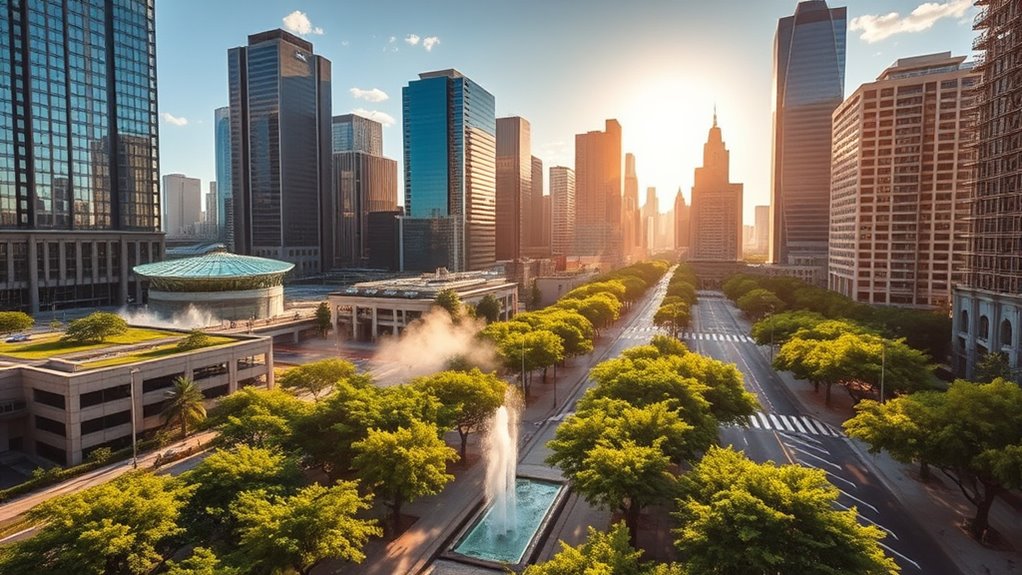
Have you ever noticed how cities often feel warmer than surrounding rural areas, especially during summer? That’s the urban heat island effect in action—concrete, asphalt, and other man-made surfaces absorb and retain heat, making urban environments notably hotter. To combat this, one effective strategy is green roof implementation. By installing vegetation-covered roofs, you introduce natural cooling to buildings. Green roofs absorb less heat than traditional roofs, provide shade, and release moisture through transpiration, which helps lower surrounding temperatures. Not only do they cool the air directly above, but they also improve air quality and promote biodiversity in city landscapes. Green roof projects are gaining popularity because they turn otherwise unused rooftop space into a valuable cooling resource, reducing the overall temperature of dense urban areas.
Alongside green roofs, reflective surface technology offers a straightforward way to curb urban heat. This approach involves using materials with high solar reflectance—often called cool roofing. These surfaces reflect a significant portion of sunlight instead of absorbing it, which means less heat is transferred into buildings and the environment. When you choose reflective surface technology for rooftops and pavements, you drastically reduce the heat stored in these surfaces. This not only keeps buildings cooler and reduces the need for air conditioning, but it also diminishes the heat being released into the environment, helping to mitigate the urban heat island effect on a larger scale. Reflective surfaces are often made from specially coated materials or lighter-colored surfaces that bounce solar radiation back into the atmosphere.
Both green roof implementation and reflective surface technology are practical, scalable solutions that complement each other. Green roofs actively cool the air through vegetation, while reflective surfaces minimize heat absorption from the outset. Together, they considerably contribute to lowering urban temperatures, making cities more comfortable and healthier for residents. Implementing these strategies requires some investment and planning, but the long-term benefits—reduced energy costs, improved air quality, and better public health—are well worth it. When you advocate for or participate in these initiatives, you’re helping to create more resilient urban environments that can withstand the increasing challenges posed by climate change. Additionally, integrating innovative cooling strategies like these can help cities meet sustainability goals and improve overall urban resilience. So, whether you’re a city planner, a homeowner, or a concerned citizen, supporting green roof projects and reflective surface technology can make a real difference in transforming your city into a cooler, healthier place to live.
As an affiliate, we earn on qualifying purchases.
Frequently Asked Questions
How Do Urban Heat Islands Affect Local Air Quality?
Urban heat islands increase local air pollution by raising temperatures, which accelerates the formation of ground-level ozone. This worsens air quality and can trigger heat-related illnesses like heat stroke or exhaustion. As temperatures climb, you’re more likely to breathe in harmful pollutants, putting your health at risk. To protect yourself, stay hydrated, limit outdoor activities during peak heat, and support urban cooling initiatives that reduce heat and improve air quality.
What Role Does City Planning Play in Heat Mitigation?
City planning plays a essential role in heat mitigation by shaping zoning regulations and urban design. You can implement zoning policies that promote green spaces, reflective surfaces, and shaded areas, reducing heat absorption. Urban design strategies like creating parks, green roofs, and tree-lined streets help lower temperatures. By prioritizing these elements, you actively reduce urban heat islands, improve air quality, and protect public health in your city.
Are There Specific Vulnerable Populations More Affected by Urban Heat?
You should know that vulnerable groups, such as the elderly, children, and low-income communities, face heightened heat susceptibility. These populations often lack access to cooling resources, making them more prone to heat-related health issues. Recognizing their risk helps you focus on targeted interventions. By addressing their specific needs, you can effectively reduce heat harm and promote healthier, safer urban environments for everyone.
How Effective Are Green Roofs in Reducing Heat Islands?
Green roofs are highly effective in reducing heat islands by providing urban cooling techniques that lower city temperatures. You’ll notice green roof benefits like improved air quality, insulation, and stormwater management. These roofs absorb less heat than traditional surfaces, helping to cool the surrounding environment. By implementing green roofs, you actively contribute to mitigating urban heat effects, making cities more comfortable and healthier, especially during hot summer months.
What Policies Can Governments Implement to Combat Urban Heat?
Governments can combat urban heat by implementing policy incentives that encourage green infrastructure, like tax credits for green roofs or cool pavements. You should also enforce zoning regulations that require shading, reflective surfaces, and increased green spaces in new developments. These policies help reduce heat absorption, improve air quality, and protect public health, making cities safer and more comfortable during hot weather.
As an affiliate, we earn on qualifying purchases.
Conclusion
By implementing these mitigation strategies, you can turn urban heat islands from fierce, scorching deserts into cooler, more comfortable spaces—like turning a blazing furnace into a gentle breeze. Your actions, such as planting trees and increasing green spaces, directly impact public health and quality of life. Remember, addressing urban heat islands is a collective effort that cools the city’s surface and warms the community’s well-being, creating a healthier environment you can truly thrive in.
As an affiliate, we earn on qualifying purchases.
urban heat island mitigation solutions
As an affiliate, we earn on qualifying purchases.
As an affiliate, we earn on qualifying purchases.