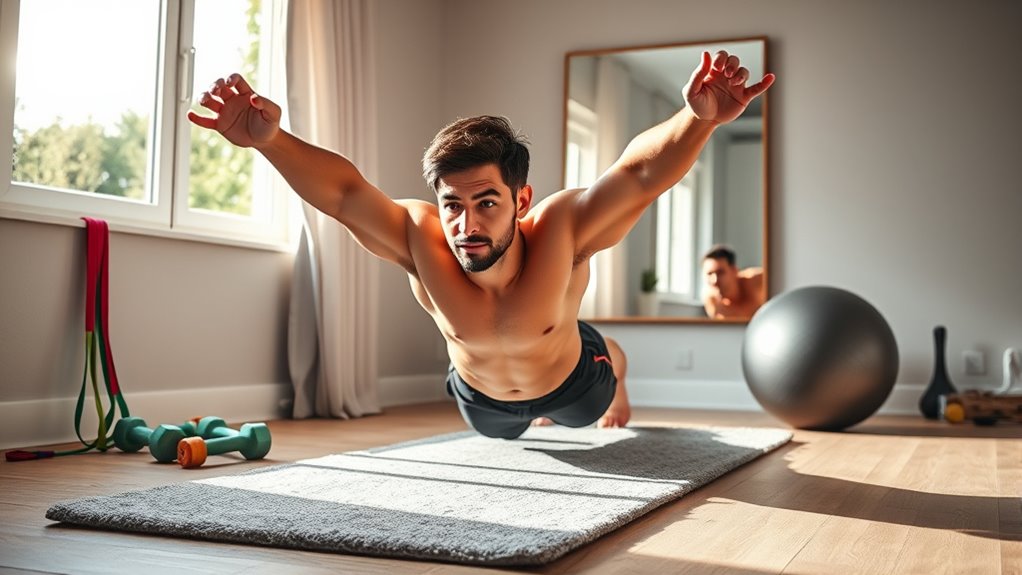

You can create effective home workouts using bodyweight exercises like push-ups, squats, lunges, planks, and dips. These moves boost strength, endurance, and flexibility without any equipment. You can modify exercises to match your fitness level or use household items like chairs or water bottles for added resistance. By customizing and progressing your routine, you’ll stay motivated and avoid workout boredom. Keep exploring to discover how to tailor these exercises to your needs and goals.

Get health and wellness essentials delivered free — and shop member deals
- Fast, free delivery on millions of items
- Access to Prime Big Deal Days deals on October 6–7
- Prime Video, Amazon Music and more included
Key Takeaways
- Bodyweight exercises effectively build strength, endurance, and flexibility without needing gym equipment.
- Modifications like knee or incline push-ups make exercises suitable for all fitness levels.
- Household items such as chairs, backpacks, and water bottles can serve as resistance tools.
- Creating personalized routines by combining different modifications and equipment keeps workouts engaging.
- Focus on gradual progression and proper form to stay injury-free and maximize results at home.
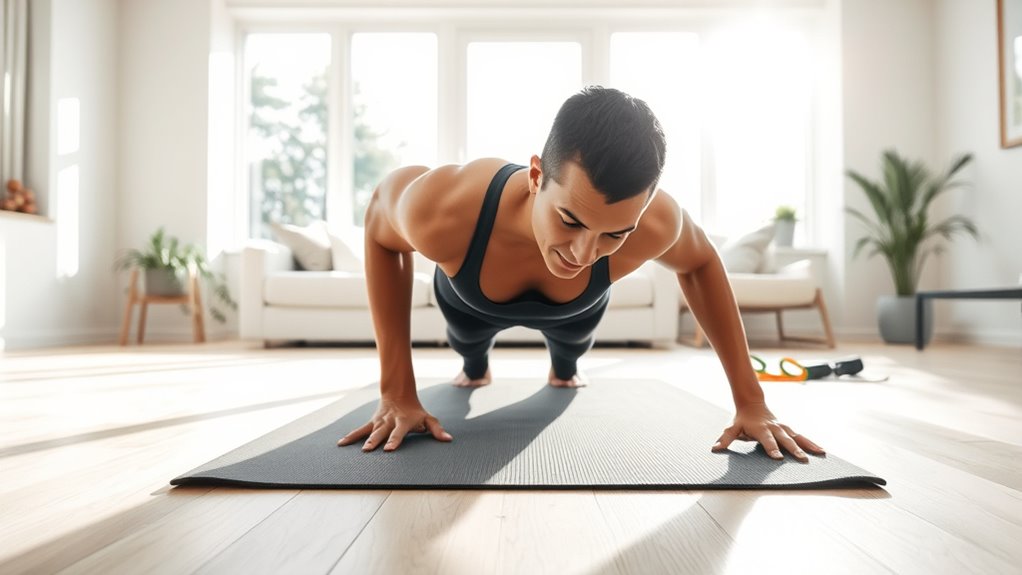
Have you ever wondered how to stay fit without needing equipment or a gym? The good news is, bodyweight exercises offer an effective way to build strength, improve endurance, and boost flexibility—all from the comfort of your home. You don’t need fancy machines or bulky weights; just your body and a little creativity. One of the key advantages of bodyweight workouts is the ability to make exercise modifications, which means you can tailor each move to your fitness level. For example, if a standard push-up feels too difficult, you can modify it by doing a knee push-up or incline push-up against a wall or sturdy surface. Conversely, if you want to increase the challenge, try decline push-ups or clapping push-ups. These exercise modifications keep your workout adaptable and engaging.
Another benefit is the use of equipment alternatives, which expand your options without requiring traditional gym gear. Items like a sturdy chair, a countertop, or even a backpack filled with books can serve as substitutes for weights or benches. For instance, a chair can be used for seated step-ups, tricep dips, or Bulgarian split squats. A backpack loaded with supplies can be worn during squats or lunges to add resistance. Resistance bands, if you have them, also provide a versatile, space-saving alternative to typical gym equipment. If you don’t have bands, everyday objects like water bottles or canned goods can serve as light weights for bicep curls or shoulder raises. These equipment alternatives allow you to diversify your routine and challenge your muscles in different ways, all without leaving your home.
Once you understand how to incorporate exercise modifications and equipment alternatives, you’ll find it easier to create a personalized, effective workout plan. You can switch between easier and more advanced versions of exercises depending on your progress or how you feel that day. For example, during a plank, you might start on your knees if a full plank is too strenuous, then progress to a straight-arm plank as your core gets stronger. Similarly, if you don’t have a pull-up bar, you can perform body rows under a sturdy table or doorframe. Georgia’s divorce records can sometimes be used as a resource to understand legal proceedings in different states, including how modifications can be made to suit individual circumstances. By using your environment creatively, you can sustain a consistent workout routine that challenges your muscles and keeps things interesting.
In short, staying fit at home is entirely doable with the right approach. Focus on exercise modifications and equipment alternatives to adapt each movement to your needs. This flexibility ensures you stay motivated, reduce the risk of injury, and steadily build strength—all without stepping foot in a gym.
home bodyweight exercise equipment
As an affiliate, we earn on qualifying purchases.
As an affiliate, we earn on qualifying purchases.
Frequently Asked Questions
Can Bodyweight Exercises Replace Gym Workouts Completely?
You can replace gym workouts with bodyweight exercises, but it depends on your goals. If you want to build substantial strength, you might need gym equipment or weights, especially for progressive overload. However, for cardio vs strength, bodyweight exercises are versatile, improving endurance and muscle tone. While they can be effective for many, complete replacement depends on your fitness targets and access to equipment.
How Often Should I Perform Bodyweight Exercises Weekly?
You should aim for at least three to five bodyweight workouts weekly to see results. Studies show that consistent exercise boosts overall health and fitness. Maintaining exercise frequency helps you develop a routine and maximize benefits. To stay on track, schedule workouts on specific days and vary exercises to keep it engaging. Staying consistent with your routine is key to achieving your fitness goals at home.
Are Bodyweight Exercises Effective for Building Muscle Mass?
Yes, bodyweight exercises can be effective for building muscle mass through muscle hypertrophy. By incorporating progressive overload and focusing on resistance training principles, you challenge your muscles enough to promote growth. Exercises like push-ups, squats, and planks target multiple muscle groups, and increasing repetitions or intensity over time enhances results. Consistency and proper form are key to maximizing muscle gains with bodyweight resistance training at home.
What’s the Best Time of Day to Do Bodyweight Workouts?
You should do bodyweight workouts in the morning if you seek morning motivation and want to start your day energized. If you prefer evening energy and a way to unwind, working out in the evening is ideal. Choose a time that fits your schedule and feels right, so you stay consistent. Both morning and evening sessions can boost your fitness, but listening to your body’s rhythm helps you get the most out of each workout.
How Can Beginners Modify Exercises for Progress?
Feeling like a fish out of water? Don’t worry—modification techniques are your secret weapon! Start with beginner adaptations like knee push-ups instead of full ones or wall sits instead of squats. These tweaks build strength gradually, preventing frustration. As you progress, challenge yourself with more advanced moves. Remember, every expert was once a beginner, so be patient and celebrate small wins on your fitness journey!
resistance bands for home workouts
As an affiliate, we earn on qualifying purchases.
As an affiliate, we earn on qualifying purchases.
Conclusion
Now that you’ve discovered these bodyweight exercises, imagine what you could achieve with just a little consistency. Every push-up, squat, or plank brings you closer to a stronger, healthier you—right in the comfort of your home. But here’s the catch: the real transformation begins when you decide to start today. Are you ready to open your potential and feel the difference? The power is in your hands—what’s stopping you?
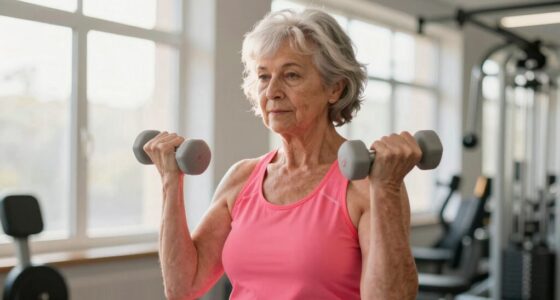
adjustable dumbbells for strength training
As an affiliate, we earn on qualifying purchases.
As an affiliate, we earn on qualifying purchases.
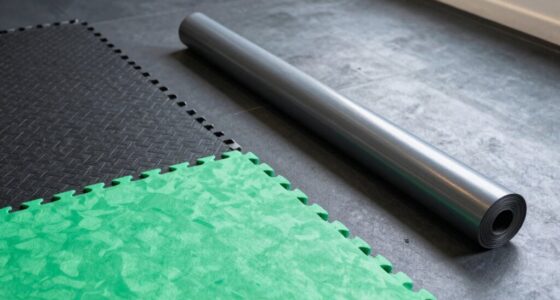
exercise mats for bodyweight workouts
As an affiliate, we earn on qualifying purchases.
As an affiliate, we earn on qualifying purchases.
Fall Picks
fall essentials
As an affiliate, we earn on qualifying purchases.