
TL;DR

Get health and wellness essentials delivered free with Prime
- Fast, free delivery on millions of items
- Prime Video, Amazon Music and more included
- Member-only deals all year
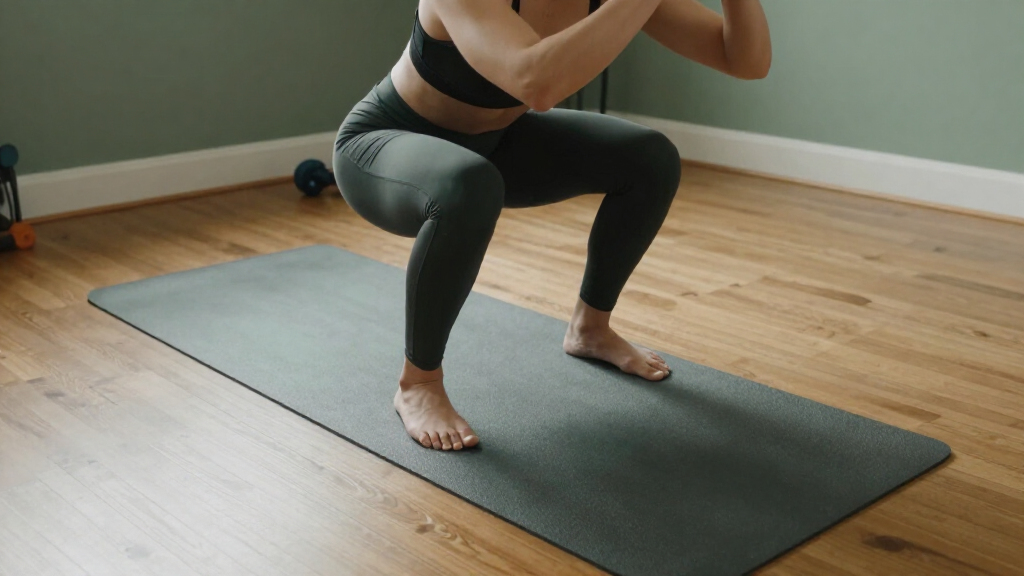
A Fit&Well report says heels rising during a squat can be linked to limited ankle dorsiflexion, but may also reflect hip mobility or strength limitations. It recommends three scaled squat variations—using suspension straps, a chair, or heel supports—to practice range and control gradually.
Fit&Well has outlined three scaled squat exercises for people whose heels lift as they lower into a squat, noting that the movement can be associated with limited ankle dorsiflexion or, for some people, limitations in hip mobility or strength. The advice matters because it cautions against assuming calf and ankle stretching alone will address every case, while presenting supported variations that let people practice the movement progressively.
The report says tight calves or ankle joints can restrict the shin from moving forward over the foot during a squat, making it harder to descend while keeping the heels down. It also says that, particularly for people with weak or tight hips, heel lifting may act as a protective response. These are explanations offered by the report, not a diagnosis of the cause for any individual.
The three suggested regressions are a suspension-trainer squat, a slow sit-to-stand from a sturdy chair, and a deep squat with the heels supported on thin plates or wedges. The first uses the straps for balance and support; the second emphasizes a controlled descent and return to standing; the third allows practice in a deeper position while the heels remain elevated.
Fit&Well advises beginning by practicing each variation and exploring range gradually rather than focusing on repetition counts. Once the movements feel controlled, it suggests working toward three sets of one minute per exercise, with one minute of rest between sets. The report presents this as general exercise guidance, not as a guaranteed fix or a substitute for an individualized assessment.
Why Supported Squat Practice Matters
Squats require coordinated movement through the ankles, knees and hips, so a visible change in heel position does not by itself identify which joint or muscle is limiting a person. The report’s distinction matters: if someone assumes the issue is always tight calves, they may focus only on stretching and overlook the role that hip range, strength, balance or movement control could play.
The suggested regressions change the task rather than requiring a person to force a deeper unassisted squat. Straps can provide balance support, a chair gives a clear target for a controlled sit-to-stand, and heel supports modify the starting position for a deep hold. Practiced carefully, those options may help people work within their current ability while building familiarity and control. The source does not report clinical testing or evidence that the routine resolves the problem for everyone.
Products Worth Considering

Levoit Core 600S-P Smart Air Purifier for Large Rooms

Withings BPM Vision Blood Pressure Monitor with Wi-Fi and Bluetooth

Withings BPM Connect Smart Blood Pressure Monitor
As an affiliate, we earn on qualifying purchases.
How the Three Regressions Work
The first exercise uses a suspension trainer, such as a TRX-style system. The person holds the handles, leans back slightly, and bends the knees, with the straps helping reduce the balance challenge. The report recommends pausing briefly at a comfortable depth and, as ability improves, relying less on the straps. Its instructions emphasize keeping the bodyweight toward the heels and allowing the knees to open outward.
For the second variation, the person starts seated near the edge of a sturdy chair with feet around hip-width apart. They stand without pushing off with their hands, then lower back down slowly. The proposed progression is to control the descent until the person can lightly tap the seat before standing again, rather than fully sitting between repetitions.
In the third variation, thin plates or wedges sit under the heels during a deep squat hold. The report says to keep the back flat, chest facing forward and knees apart, while using only as much heel support as needed. It suggests reducing the support height over time, with the eventual aim of holding the position with the heels on the floor.
“For some, however, especially those with particularly weak or tight hips, the heels lifting could actually be a protective mechanism to safeguard the body from injury.”
— Fit&Well report
What Heel Lift Cannot Diagnose
The report does not establish why any particular person’s heels rise during a squat. It offers possible explanations involving ankle movement and hip mobility or strength, but does not provide a diagnostic test, study results, or a way to distinguish among causes based on heel position alone. It also does not specify how quickly a person should expect progress beyond saying to practice regularly over a few weeks.
The source does not address whether the exercises are suitable for people with pain, a recent injury, or a medical condition, and it does not provide individualized coaching. Anyone experiencing pain or uncertainty about safe exercise should seek advice from a qualified health or fitness professional rather than force a deeper position.
Progress Only as Control Improves
The progression described by Fit&Well is gradual: practice the supported versions first, then reduce assistance as strength and mobility improve. For suspension squats, that means using the straps less; for chair sit-to-stands, it means controlling the lowering phase; and for heel-elevated holds, it means lowering the heel support over time. The report gives no formal follow-up assessment or measured outcomes, so readers should treat these steps as exercise suggestions rather than a promised result.
Key Questions
Does lifting my heels mean my ankles are tight?
Not necessarily. Fit&Well says limited ankle dorsiflexion from tight calves or ankle joints can be one reason, but hip mobility or strength may also play a role for some people. Heel lift alone does not identify the cause.
What are the three exercises in the report?
The report suggests a suspension-trainer squat, a slow sit-to-stand from a sturdy chair, and a deep squat hold with the heels supported on plates or wedges.
How often should I do the exercises?
The source advises practicing the movements regularly and says that, once technique feels confident, a person can aim for three one-minute sets of each exercise, resting one minute between sets. It does not give a specific weekly schedule.
Should I force my heels to stay down?
The report recommends scaling the squat and progressing gradually, rather than forcing a position. If the movement causes pain or you have concerns about your ability to exercise safely, consult a qualified professional.
Source: fitandwell.com