

Functional fitness involves movements that mirror daily activities like bending, lifting, and twisting, making it easier and safer for you to handle everyday tasks. By strengthening your core and improving balance, you build a stable foundation that supports better posture and reduces injury risk. Incorporating exercises like planks and balance drills helps activate stabilizer muscles and boost coordination. Keep exploring to discover how these simple movements can transform your daily comfort and confidence.
Key Takeaways
- Functional fitness emphasizes exercises that mimic real-life movements like bending, lifting, and twisting for daily task ease.
- Core stability exercises, such as planks and bird-dogs, enhance posture and support safe movement during daily activities.
- Balance training improves coordination and reduces fall risk, supporting stability during routine tasks.
- Integrating functional movements increases strength, mobility, and confidence for everyday tasks like reaching and climbing.
- Consistent practice of functional exercises promotes overall body efficiency and injury prevention in daily life.
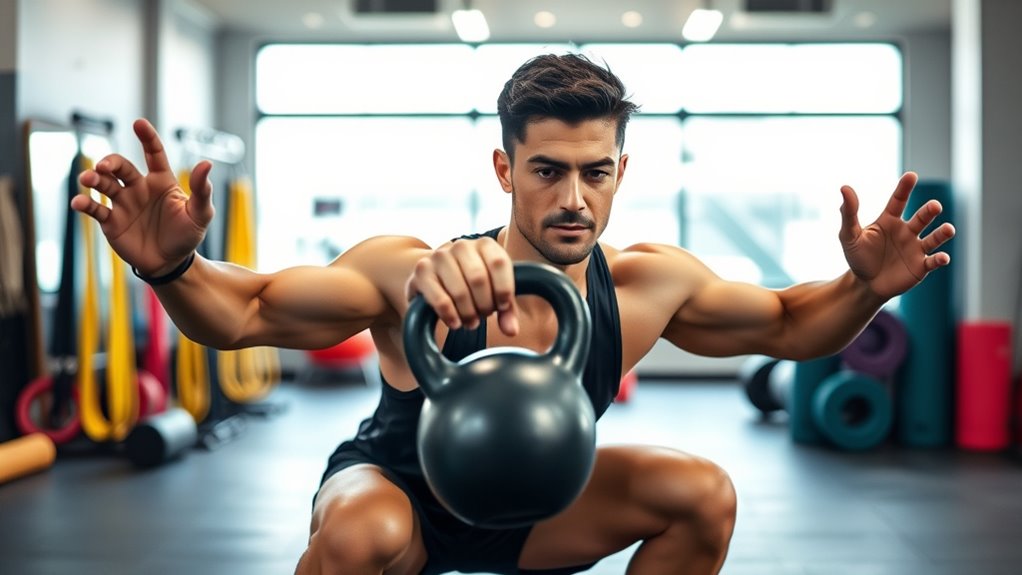
Have you ever wondered how to improve your strength and mobility for everyday activities? The secret often lies in focusing on functional fitness — exercises that mimic real-life movements and make daily tasks easier. One of the foundational aspects of this approach is building core stability, which acts as the central support system for your entire body. When your core is strong and stable, you can perform movements like bending, lifting, and twisting with less risk of injury and more efficiency. Incorporating balance training into your routine is equally important, as it enhances your ability to maintain control during everyday actions, reducing the likelihood of falls or mishaps. These two elements work hand-in-hand to create a solid base for improving overall function.
To develop core stability, you should prioritize exercises that engage your abdominal muscles, lower back, and hips. Planks, for example, are excellent because they require sustained engagement of your core to keep your body aligned and stable. Incorporating variations like side planks or bird-dogs can challenge your muscles in different ways, making your core more resilient. When you focus on core stability, you not only improve your posture but also strengthen muscles that support your spine, which is essential for lifting groceries or getting out of bed without discomfort. Balance training, on the other hand, involves exercises that challenge your proprioception and coordination. Simple activities like single-leg stands, heel-to-toe walks, or using a balance board can considerably improve your stability. These exercises activate stabilizer muscles that aren’t typically used in daily movements but are indispensable for maintaining control. Additionally, understanding the importance of muscle awareness can enhance the effectiveness of your training.
Both core stability and balance training help develop coordination and muscle awareness, which are essential for performing functional movements safely and effectively. When you incorporate these into your routine, tasks like reaching for objects on high shelves, bending down to tie your shoes, or climbing stairs become more natural and less taxing. You’ll notice an increase in your confidence and safety during everyday activities because your body learns to move as a cohesive unit rather than relying on isolated muscle groups. It’s about creating a balanced, well-coordinated physique that can handle the demands of daily life with ease. Consistency is key, so aim to dedicate a few minutes each day to core and balance exercises. Over time, you’ll experience improved strength, better posture, and enhanced mobility, making your daily routines smoother and less demanding.
Frequently Asked Questions
How Often Should I Perform Functional Fitness Exercises?
You should perform functional fitness exercises about three to five times a week. This exercise frequency allows your muscles to recover while maintaining progress. For effective workout scheduling, alternate between different movement types to target various muscle groups and prevent boredom. Consistency is key, so find a routine that fits your schedule and adjust intensity as needed. Remember, regular practice helps improve strength, flexibility, and daily movement efficiency.
Can Beginners Safely Start Functional Fitness Routines?
Yes, beginners can safely start functional fitness routines if they focus on beginner safety and proper progression. Start with simple, low-intensity exercises to build a solid foundation. Listen to your body, avoid overexertion, and gradually increase intensity and complexity. Consulting a trainer can help guarantee proper form and progression. This approach minimizes injury risk and helps you develop strength and mobility effectively for daily life.
What Equipment Is Needed for Functional Fitness?
You only need a few pieces of equipment to conquer functional fitness—think of it as arming yourself with the ultimate home workout gear! Essentials include a pair of dumbbells, a resistance band, a stability ball, and a sturdy mat. These tools turn your living room into a gym, making it easy to perform versatile movements that mimic real-life tasks. No fancy equipment needed—just a little space and your determination!
How Does Functional Fitness Prevent Injuries?
Functional fitness helps prevent injuries by improving your core strength and joint mobility, making your body more resilient to daily stresses. When you focus on core strengthening, you enhance stability, reducing the risk of falls and strains. Increased joint mobility allows smoother movement and better support, preventing overuse injuries. Regularly practicing functional movements prepares your body for real-life activities, keeping you safer and more agile in everyday life.
Are There Specific Exercises for Improving Balance and Stability?
Like a tree rooted firmly in the ground, you can improve your balance and stability with specific exercises. Focus on core stability through planks, bridges, and single-leg stands. Incorporate proprioception drills such as balance board exercises or standing on uneven surfaces. These movements challenge your body’s awareness and strengthen stabilizer muscles, helping you stay steady during daily activities and reducing fall risk.
Conclusion
Think of functional fitness as your sturdy bridge, connecting daily challenges to strength and ease. Each movement you master is a brick, building resilience for life’s unpredictable currents. When you invest in these exercises, you’re not just training muscles—you’re crafting a fortress of confidence and freedom. Embrace this journey, knowing that every step strengthens your foundation. In the end, your body becomes the vessel that carries you smoothly through life’s ebb and flow.