Recovery tools like foam rollers, massage guns, and mobility aids help you ease soreness, prevent injuries, and restore muscle function after workouts or injuries. Foam rollers break up knots and boost blood flow, while massage guns deliver deep tissue relief with customizable pulses. Mobility tools like resistance bands promote flexibility and resilience. When combined with proper hydration, nutrition, and rest, these tools can speed your recovery. Keep exploring to discover how to get the most out of each option.
Key Takeaways
- Recovery tools like foam rollers and massage guns help reduce soreness, improve circulation, and prevent injuries.
- Foam rollers break up fascia restrictions and increase blood flow to accelerate healing.
- Massage guns offer targeted, deep tissue relief, easing tight muscles and tension.
- Stretching and mobility tools, such as resistance bands, enhance flexibility and reduce re-injury risk.
- Combining recovery tools with proper hydration, nutrition, and rest optimizes healing and supports sustained activity.
Have you ever lost important files or experienced a device crash? It’s frustrating, right? The same feeling applies when you push your body hard during exercise or sports, and suddenly, you’re hit with muscle soreness or a sports injury. Recovery tools are essential to get you back on track quickly and prevent further damage. They help you manage soreness, reduce inflammation, and restore your muscles’ best function. Whether you’re an athlete or someone who stays active, these tools can make a significant difference in your recovery routine.
Pushing your body hard can cause soreness and injuries; recovery tools help you heal faster and stay active.
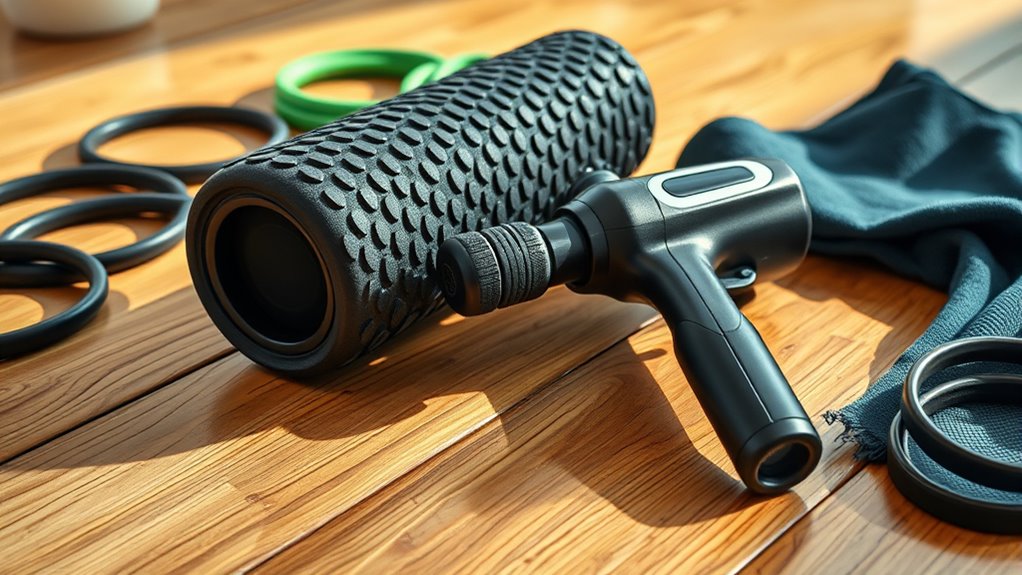
Foam rollers are perhaps the most popular recovery tool for muscle soreness. When used correctly, they help break up knots and fascia restrictions, increasing blood flow to sore areas. This process accelerates healing and relieves tightness. Imagine rolling out your legs after a long run or a tough workout; it might feel uncomfortable at first, but it’s effective. Foam rolling not only eases muscle soreness but also helps prevent future injuries by maintaining muscle flexibility and reducing strain during activity. It’s a simple, cost-effective way to keep your muscles loose and ready for the next session.
Massage guns have gained popularity because they offer targeted relief. These handheld devices deliver rapid pulses to specific muscle groups, providing deep tissue massage that’s difficult to achieve manually. If you’re dealing with a sports injury or persistent muscle soreness, a massage gun can help loosen tight muscles, improve circulation, and accelerate recovery. Plus, they’re easy to use at home, allowing you to customize the intensity and focus on problem areas. Regular use can prevent the buildup of tension and soreness, helping you stay active without discomfort.
Stretching and mobility tools are also essential parts of recovery. Resistance bands, for example, assist in gentle stretching and strengthening, reducing the risk of re-injury. They’re especially helpful if your muscles are tight or if you’re recovering from an injury. Incorporating these tools into your routine can improve flexibility, which is key for avoiding muscle strain and further sports injury. The key is consistency—using these tools regularly keeps your muscles supple and resilient.
In addition to physical tools, recovery also involves proper hydration, nutrition, and rest, but having the right equipment can speed up your healing process. These tools aren’t just for athletes; anyone who pushes their body can benefit from them. They help you stay active longer, recover faster, and keep discomfort at bay. When used properly, foam rollers, massage guns, and stretch bands become part of a smart strategy to deal with muscle soreness and prevent sports injuries, so you can return to your activities stronger and more prepared.
Frequently Asked Questions
Are Recovery Tools Suitable for All Fitness Levels?
Yes, recovery tools are suitable for all fitness levels. As a beginner, you can start with beginner-friendly routines that focus on gentle massage and stretching, helping your body adapt gradually. More advanced users can incorporate advanced recovery techniques like deep tissue massage or targeted foam rolling. These tools are versatile, allowing you to customize your recovery process, whether you’re just starting out or pushing your limits.
Can Recovery Tools Help With Injury Prevention?
Imagine you’re a knight preparing for battle—recovery tools like foam rollers and massage guns can help prevent injuries by reducing muscle soreness and improving flexibility. Regular use keeps muscles loose and resilient, lowering strain and the risk of tears. Think of them as your modern armor, helping you stay ahead of injury and maintain peak performance, so you can keep conquering your fitness quests without setbacks.
How Often Should I Use Foam Rollers or Massage Guns?
You should use foam rollers or massage guns 3-4 times a week, depending on your activity level and recovery needs. Incorporate them into your routine after workouts or on rest days for ideal results. Maintain consistent usage to improve flexibility, reduce soreness, and prevent injuries. Adjust the frequency based on how your body responds—if you feel discomfort, give yourself extra rest days and consult a professional if needed.
Are There Any Risks or Contraindications?
Yes, there are risks with using foam rollers or massage guns, especially if you have muscle soreness or joint mobility issues. You might cause bruising, irritation, or worsen soreness if you apply too much pressure or use them improperly. Always listen to your body, avoid painful spots, and consult a healthcare professional if you have joint problems or chronic pain. Proper use helps prevent injury and supports safe recovery.
Can Recovery Tools Replace Professional Physical Therapy?
Recovery tools can’t fully replace professional physical therapy, but they can support your self-myofascial release and muscle recovery routines. You should still see a therapist if you have persistent pain, injuries, or complex conditions. These tools help with muscle tightness and soreness, but a professional can diagnose underlying issues and create personalized treatment plans. Use recovery tools as complements, not substitutes, for expert guidance and holistic care.
Conclusion
So, next time your muscles scream for help, don’t forget those fancy foam rollers and massage guns. Who knew that squeezing, vibrating, and rolling could turn your post-workout misery into a quick fix? Ironically, the very tools designed to help you recover might just become your new favorite workout buddies. So go ahead, embrace the gadgets — because sometimes, the best recovery is just a foam roller away.