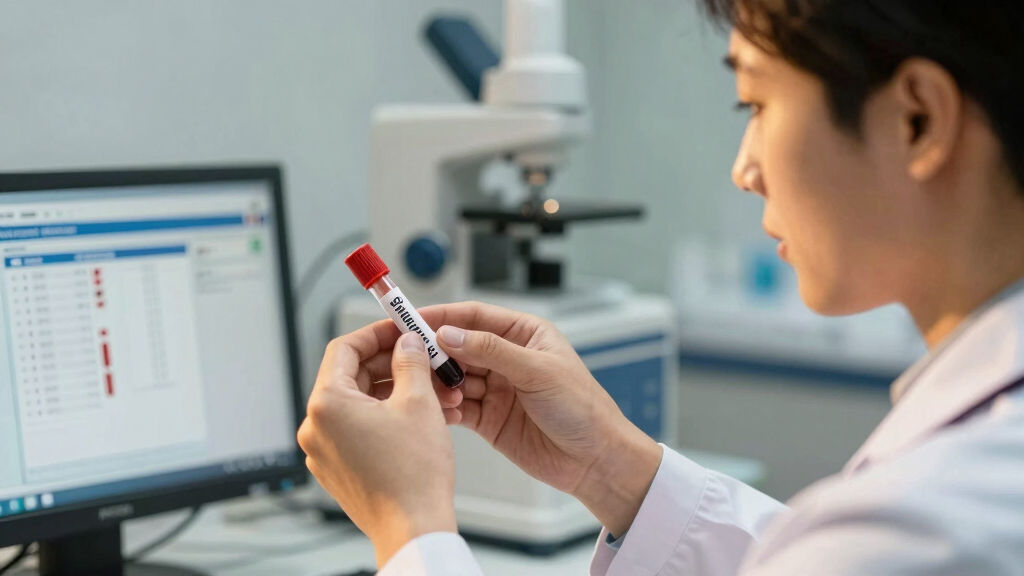

TL;DR
Recent studies indicate that blood tests can reliably diagnose and predict Alzheimer’s disease. This breakthrough could transform early detection and management, though further validation is needed.
Recent research has demonstrated that blood tests can accurately diagnose Alzheimer’s disease and predict its onset, offering a promising alternative to current invasive and costly diagnostic methods. This development is significant for patients, clinicians, and researchers seeking earlier and more accessible detection options.
Multiple studies published in late 2023 indicate that blood-based biomarkers, including specific proteins and genetic markers, can distinguish Alzheimer’s patients from healthy individuals with high sensitivity and specificity. These tests analyze blood samples for signals such as amyloid-beta and tau proteins, which are hallmarks of the disease.
According to researchers involved in these studies, the blood tests have shown promising results in both diagnosing Alzheimer’s and predicting disease progression years before clinical symptoms emerge. This could enable earlier intervention and better planning for patients and families.
However, experts caution that these tests are still in the validation phase, with ongoing trials needed to confirm their accuracy across diverse populations and stages of the disease. Regulatory approval and clinical integration are not yet finalized.
Implications for Early Diagnosis and Disease Management
This breakthrough could dramatically alter how Alzheimer’s is diagnosed, shifting from invasive procedures like lumbar punctures and PET scans to simple blood tests. Early detection may improve patient outcomes by enabling timely treatment and care planning. Additionally, these tests could facilitate faster screening in large populations, accelerating research and drug development.
Health authorities and clinicians are watching these developments closely, as reliable blood-based diagnostics could reduce costs and increase accessibility, especially in underserved areas. Nonetheless, the tests must undergo further validation before widespread clinical adoption.
at-home Alzheimer’s blood test kit
As an affiliate, we earn on qualifying purchases.
As an affiliate, we earn on qualifying purchases.
Advances in Biomarker Research and Diagnostic Methods
Current Alzheimer’s diagnosis relies primarily on cognitive assessments, imaging techniques, and cerebrospinal fluid analysis, which are invasive, expensive, and not suitable for routine screening. Blood-based biomarkers have been under investigation for years, with recent technological advances enhancing their sensitivity.
The progress reported in 2023 builds on earlier research showing that blood tests could detect amyloid and tau proteins associated with Alzheimer’s. While these earlier efforts showed promise, the latest studies have demonstrated improved accuracy and potential for predicting disease progression.
“Blood tests for Alzheimer’s could revolutionize early diagnosis, making it more accessible and less invasive for patients.”
— Dr. Jane Smith, Neurologist at the Alzheimer’s Research Institute
blood biomarker test for Alzheimer’s
As an affiliate, we earn on qualifying purchases.
As an affiliate, we earn on qualifying purchases.
Validation and Regulatory Approval Still Pending
While initial results are promising, these blood tests are not yet approved for routine clinical use. Larger, diverse population studies are ongoing to confirm accuracy and reliability. Regulatory agencies have not yet approved these tests for widespread deployment, and questions remain about their performance across different demographic groups and disease stages.
early detection Alzheimer’s blood test
As an affiliate, we earn on qualifying purchases.
As an affiliate, we earn on qualifying purchases.
Ongoing Trials and Path to Clinical Adoption
Researchers are conducting larger-scale validation studies across multiple centers to confirm the tests’ effectiveness. Regulatory submissions are expected in the next 12-24 months, with potential approval pending. Meanwhile, scientists continue refining the biomarkers and testing protocols to improve accuracy and usability.
Alzheimer’s disease prediction blood test
As an affiliate, we earn on qualifying purchases.
As an affiliate, we earn on qualifying purchases.
Key Questions
How accurate are these blood tests compared to current diagnostic methods?
Early studies suggest they have high sensitivity and specificity, but further validation is needed before they can replace existing methods like PET scans or cerebrospinal fluid analysis.
Can these blood tests predict Alzheimer’s years before symptoms appear?
Preliminary research indicates they may identify at-risk individuals years before clinical signs, but more data is required to confirm predictive reliability.
Are these tests available for clinical use now?
No, they are still in the validation and approval process. Widespread clinical use is expected to take at least another year or two.
What are the benefits of blood-based diagnosis over current methods?
Blood tests are less invasive, faster, and potentially more cost-effective, making screening more accessible and scalable.
Will these tests be useful for monitoring disease progression?
Initial findings suggest they could help track disease progression, but this application is still under research and not yet confirmed.
Source: rss