
TL;DR
A user on Hacker News claims that Apple’s Vehicle Motion Cues, introduced in 2024, helped eliminate their car sickness. The feature uses on-screen dots that move with vehicle motion, and the user reports significant relief. The effectiveness is based on personal experience, with no official scientific validation yet.
A user has reported that Apple’s Vehicle Motion Cues, a feature introduced in 2024, effectively eliminated their car sickness while using mobile devices in a moving vehicle. This personal account highlights a potential new tool for managing motion sickness, which affects many travelers and commuters.

Get health and wellness essentials delivered free with Prime
- Fast, free delivery on millions of items
- Prime Video, Amazon Music and more included
- Member-only deals all year
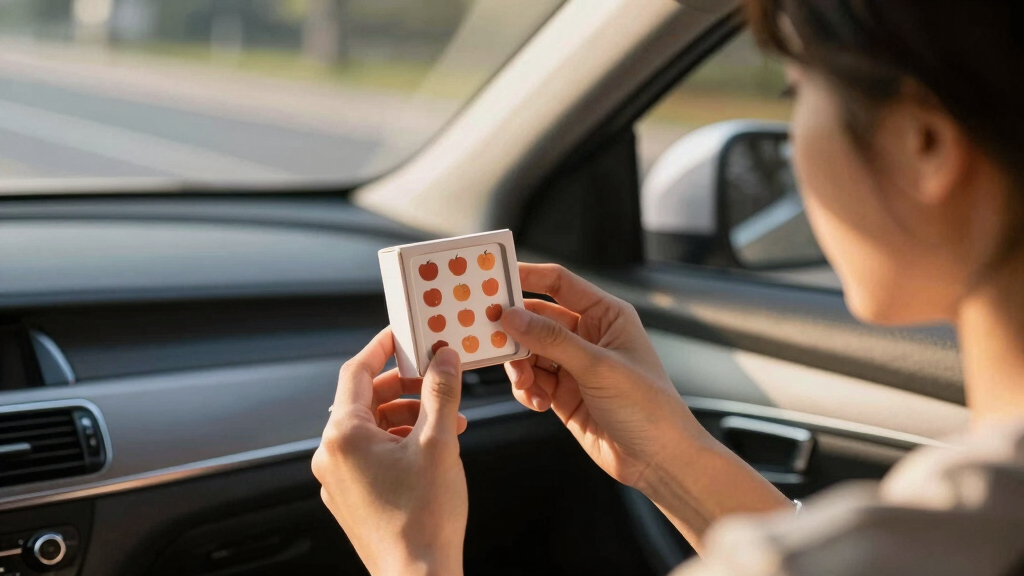
The user, who shared their experience on Hacker News, explained that enabling Vehicle Motion Cues, which displays moving black dots around the screen to match vehicle motion, helped them read and work comfortably during long drives. The feature is available in the accessibility settings of iOS, iPadOS, and macOS, and can be toggled on or off depending on user preference.
The user described how the dots move in response to vehicle acceleration, braking, and turns, aligning visual cues with physical motion. They noted that the dots are unobtrusive but can interfere with map or text reading on straight stretches, and suggested that Apple could improve the feature by dimming dots in such situations. The user also configured a quick toggle via the device’s back tap feature on iOS 18 and above.
Potential New Solution for Motion Sickness in Vehicles
This account suggests that Apple’s Vehicle Motion Cues could offer a practical, non-invasive way to reduce motion sickness for mobile device users in vehicles. If validated by further testing, this feature could benefit millions who suffer from vehicle-induced nausea, especially during long trips or commutes. The personal success story highlights the importance of accessibility features in improving user comfort and productivity on the road.
Products Worth Considering

Therabody Theragun Relief Massage Gun, 3-Speed, Navy

Theragun Therabody Relief Massage Gun – 3 Speed, Black

Garmin Venu 3S GPS Fitness Smartwatch, 41 mm, French Gray
As an affiliate, we earn on qualifying purchases.
Background on Apple’s Vehicle Motion Cues
Introduced in 2024, Apple’s Vehicle Motion Cues are designed to help users mitigate motion sickness by visually aligning on-screen cues with vehicle movements. The feature leverages the device’s accelerometer and gyroscope to display moving dots around the display, which simulate the vehicle’s motion. While the concept is based on scientific understanding that mismatched visual and inner ear signals cause motion sickness, there has been limited public testing or scientific validation of the feature’s effectiveness outside individual reports. The feature is part of Apple’s broader accessibility efforts, available in iOS, iPadOS, and macOS settings.
“Once enabled, I’ve comfortably read books in the Kindle app on my phone for a few hours at a go, and even written 1,000-word reviews while my wife drove our camper van to the next destination.”
— anonymous user on Hacker News
Lack of Scientific Validation and Broader Testing
It is not yet confirmed whether Apple’s Vehicle Motion Cues are universally effective beyond anecdotal reports. No peer-reviewed studies or official testing data have been publicly released to validate the claims of relief from motion sickness. The effectiveness may vary among users, and further research is needed to establish clinical efficacy.
Further User Reports and Potential Scientific Studies
Additional user experiences and independent testing are needed to assess the broader effectiveness of Vehicle Motion Cues. Apple may also release updates to improve the feature’s usability and reduce visual interference. Researchers could investigate the underlying mechanisms to verify if the moving dots genuinely mitigate motion sickness or if other factors contribute to the reported relief.
Key Questions
How do Apple’s Vehicle Motion Cues work?
The feature displays moving black dots around the screen that shift in response to vehicle acceleration, braking, and turns, aligning visual cues with physical motion to reduce sensory mismatch.
Is there scientific proof that Vehicle Motion Cues prevent motion sickness?
Currently, there is no published scientific validation. The effectiveness is based on individual user reports, and further research is needed to confirm its efficacy.
Can I customize the appearance of the dots?
Yes, users can configure the size, color, and density of the dots within accessibility settings.
Is this feature available on all Apple devices?
It is supported on devices running iOS 18 and above that support the accessibility Back Tap feature, including iPhone models with the latest software.
Will Apple improve the feature based on user feedback?
Apple may update the feature to address issues like visual interference, but specific plans have not been publicly announced.
Source: Hacker News