
TL;DR

Get health and wellness essentials delivered free with Prime
- Fast, free delivery on millions of items
- Prime Video, Amazon Music and more included
- Member-only deals all year
A man who lost his taste and smell after COVID-19 for years has regained these senses through a clinical trial using specially developed chewing gum. The trial involved 16 participants, with significant improvements reported. This could signal a new approach to treating post-COVID sensory loss.
A man who lost his sense of taste and smell after contracting COVID-19 in August 2022 has regained both senses after participating in a clinical trial involving specially developed chewing gum, according to researchers at the University of Nottingham. The trial’s success highlights a potential new treatment for long-term sensory loss caused by COVID-19.
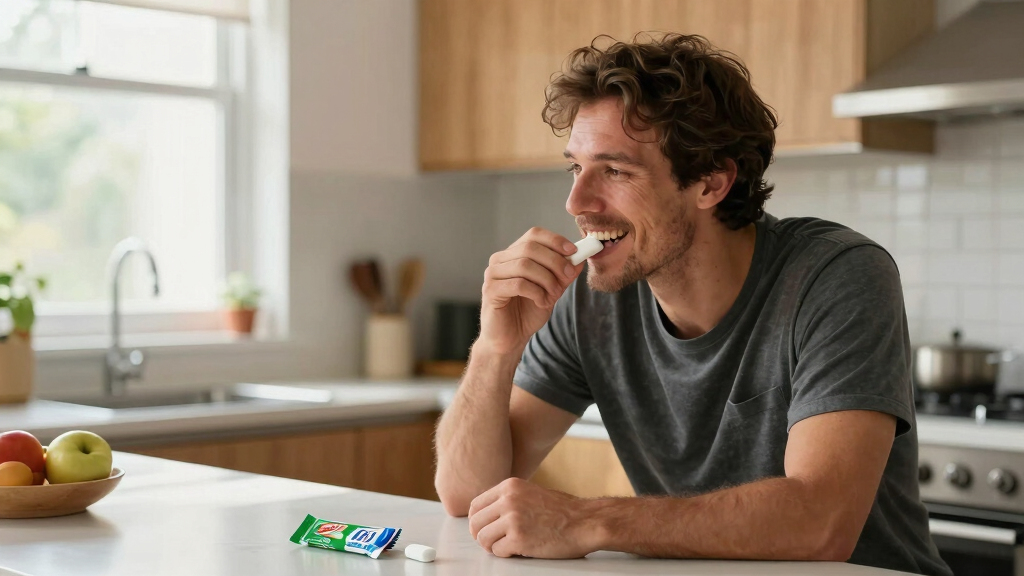
Dr. Paul Wicks, 44, from Litchfield, Staffordshire, lost his ability to taste and smell following COVID-19 infection and reported that these senses did not return for over two years. He participated in a 12-week decentralized clinical trial starting in November 2024, where he chewed flavoured gums designed to stimulate brain connections related to taste and smell.
The trial involved 16 participants, with 67% experiencing improved smell and 83% reporting enhanced taste. This innovative approach highlights how targeted sensory training can be effective. Dr. Wicks noticed initial signs of recovery after six weeks, first tasting a blueberry in his breakfast and later experiencing a broader return of sensory perception, including smelling his children’s hair and his deodorant. By the end of the trial, he described his senses as restored to pre-COVID levels.
The specially formulated chewing gums contained long-lasting, changing flavours such as spicy, minty, sour, and sweet, intended to train the brain to recognize different tastes and smells. Dr. Wicks chewed the gums twice daily, which he credits with his sensory recovery.
Why It Matters
This development is significant because it offers a potential non-invasive treatment option for individuals suffering long-term taste and smell loss after COVID-19, a condition known as anosmia. The ability to restore these senses can improve quality of life, emotional well-being, and memory formation, which are often affected by sensory impairment.
If further studies confirm these findings, this approach could become a widely accessible therapy, addressing a common and persistent post-COVID complication that currently has limited treatment options.
sensory retraining chewing gum for taste and smell recovery
As an affiliate, we earn on qualifying purchases.
As an affiliate, we earn on qualifying purchases.
Background
Loss of taste and smell has been a common symptom of COVID-19, with some patients experiencing long-term anosmia. Aromatherapy and natural remedies are also explored as potential supportive therapies for sensory recovery. Previous research has explored various therapies, but no definitive cure has been established. The University of Nottingham’s trial is among the first to demonstrate that targeted sensory training via specially formulated chewing gum can produce significant recovery, marking a potential breakthrough in post-COVID treatment.
The trial was designed by Dr. Nicole Yang and involved a decentralized approach, allowing participants to chew the gums at home. The concept is based on the idea that repeated exposure to different flavours can retrain brain pathways involved in sensory perception. For more on the science of sensory training, see this related research.
“When I tasted a blueberry at breakfast, I realized my senses were returning. It was like reconnecting with a part of myself I thought was lost forever.”
— Dr. Paul Wicks
“Our findings suggest that targeted sensory training with specially formulated chewing gum can stimulate brain pathways and potentially restore taste and smell in long-term COVID patients.”
— Dr. Nicole Yang
post-COVID taste and smell therapy gum
As an affiliate, we earn on qualifying purchases.
As an affiliate, we earn on qualifying purchases.
What Remains Unclear
It is not yet clear how broadly applicable these results are, as the trial involved only 16 participants. Larger, controlled studies are needed to confirm efficacy and safety before widespread adoption can be considered.
Additionally, the long-term durability of the restored senses remains unknown, and whether this approach can help other types of sensory loss is still to be determined.
flavored sensory training gum for anosmia
As an affiliate, we earn on qualifying purchases.
As an affiliate, we earn on qualifying purchases.
What’s Next
Researchers at the University of Nottingham plan to secure funding for larger clinical trials to validate these initial findings. For historical context, learn about the story of Francis I’s captivity. If successful, this treatment could be developed into a commercially available product within the next few years, offering hope to millions affected by long-term post-COVID anosmia.
Key Questions
How does the chewing gum help restore taste and smell?
The specially formulated gums contain long-lasting, changing flavours designed to stimulate brain pathways involved in sensory perception, effectively retraining the senses over time.
Is this treatment available to the public now?
No, the treatment is still in experimental stages. Larger clinical trials are needed to confirm its safety and effectiveness before it can be made widely accessible.
How long does it take to see results?
In the initial trial, some participants noticed improvements after six weeks of regular chewing, with full recovery reported at the end of the 12-week program.
Can this method help with other sensory impairments?
It is currently unknown if this approach can be effective for other types of sensory loss. Further research is required to explore its broader applications.
Source: Hacker News
Halloween Picks
halloween
As an affiliate, we earn on qualifying purchases.