
TL;DR

Get health and wellness essentials delivered free with Prime
- Fast, free delivery on millions of items
- Prime Video, Amazon Music and more included
- Member-only deals all year
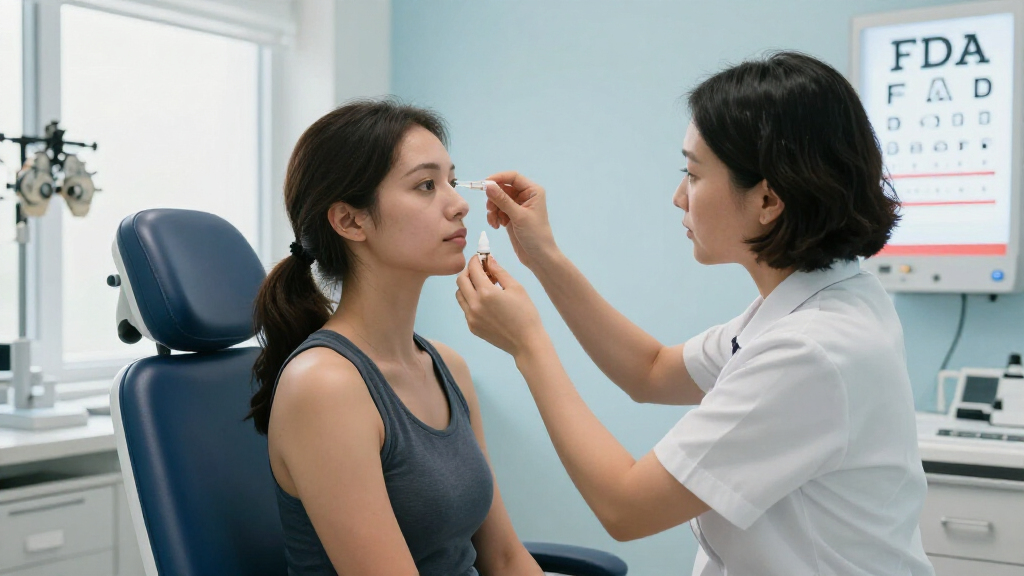
An FDA advisory committee questioned whether trial results for Sydnexis’ low-dose atropine eye drops, SYD-101, show a clinically meaningful and robust benefit for children with myopia. The panel did not vote on whether to recommend approval, leaving the product’s U.S. regulatory status unresolved.
An FDA advisory committee questioned whether Sydnexis’ SYD-101, a low-dose atropine eye drop intended to slow myopia progression in children, has sufficiently robust and clinically meaningful trial evidence to support approval. The committee did not vote for or against approval, so the product’s U.S. regulatory status remains unresolved.
The main evidence was the SYD-101-001 trial, also called STAR, which compared two atropine concentrations with vehicle in 852 patients aged 3 and older. Its primary endpoint was the share of participants whose myopia progressed by more than 0.75 diopters over 36 months. In the 0.01% group, 39.5% met that endpoint, compared with 49.3% in the control group; the difference was statistically significant at P=0.0452. The 0.03% dose did not reach statistical significance against control.
The observed difference for the 0.01% dose corresponded to 0.079 diopters less progression per year, or a cumulative 0.21-diopter difference over three years. FDA staff said the effect, despite statistical significance, was not clinically meaningful and appeared to diminish over time. Panelists also focused on missing primary endpoint data: it was unavailable for 26% of the 0.01% group and 23% of controls. Staff said sensitivity analyses varied depending on assumptions used to account for those missing results.
The trial did not find a significant reduction in axial length, a measure of eye growth. About half of the participating centers did not measure it, and practices differed among centers that did. Sydnexis argued in its submission that the trial met its prespecified primary endpoint and that analyses accounting for multiple comparisons and a key secondary endpoint also favored the 0.01% dose. The company said missing data and discontinuations were not meaningfully imbalanced between groups and that prespecified missing-data analyses favored treatment.
What the FDA Review Could Mean
The committee’s concerns leave a central question for regulators: whether a modest statistical effect is enough to establish a meaningful benefit for children when the evidence is sensitive to missing data and lacks confirmation from the trial’s axial-length results. The panel did not reject the finding that the primary endpoint was statistically significant; its discussion centered on how confidently that finding can be interpreted and how much it matters in practice.
For families and clinicians, the outcome matters because myopia can progress during childhood, while evidence supporting a particular treatment’s benefit can affect prescribing decisions. The meeting itself does not authorize SYD-101 for use in the United States, and panel discussion is not the FDA’s final regulatory decision. The agency will determine the application’s status after considering the committee record and other evidence.
Products Worth Considering

Therabody SmartGoggles 2nd Gen Heated Eye and Temple Massager

Fitbit Sense Health & Fitness Smartwatch (White/Gold, International Version)

Hyperice Hypervolt Go 3 Portable Percussion Massage Gun with Carry Case
As an affiliate, we earn on qualifying purchases.
How the STAR Trial Was Evaluated
The FDA’s Dermatologic and Ophthalmic Drugs Advisory Committee, known as DODAC, met on November 3, 2026, to discuss the application. It was a day-long meeting, and the committee answered questions from the agency but did not take a formal up-or-down vote on approval. Acting chair Michael X. Repka said the trial was positive but questioned whether its outcome met the standard presented by FDA staff.
FDA staff also pointed to a lack of confirmatory evidence in published studies, particularly trials involving non-Asian Western populations. Panelist Timothy G. Murray said he viewed the other studies as less rigorous than STAR and not sufficient to serve as substantial evidence for approval. Sydnexis, by contrast, emphasized that STAR was designed with FDA input and highlighted its randomized design and prespecified outcomes.
“Although the clinical trial is positive, it’s not a robust outcome that would meet the standard presented to us as the reason for approval by the FDA.”
— Michael X. Repka, MD, acting chair of DODAC
Questions Left After the Panel
The committee’s discussion did not resolve whether the observed reduction in progression is meaningful to patients or whether missing results materially affect confidence in the estimate. The size and direction of the effect in subgroups, including younger children and faster progressors, also remain uncertain based on the meeting material provided. Kaizer said more data would help clarify possible benefits in those groups.
It is also unclear from the available report what action the FDA will take on the application or whether the agency will seek additional analyses or evidence. The panel’s comments and lack of a recommendation are not a final agency decision. The meeting material does not establish when the FDA will announce its next step.
FDA Decision and Possible Further Evidence
The next regulatory step is for the FDA to consider the advisory committee’s discussion alongside the application and agency review. The committee’s concerns may inform that decision, but its meeting did not determine the outcome. Any agency decision, request for further evidence or change in the application’s status has not been specified in the source report.
Until the FDA acts, the evidence remains contested: the primary STAR result favored the 0.01% solution, while agency staff and panelists questioned the clinical value and robustness of that result. Further information about the agency’s decision, and any additional data Sydnexis may provide, will clarify whether the application can proceed.
Key Questions
Did the FDA advisory committee recommend approval of SYD-101?
No. The committee did not vote for or against approval. Its discussion raised concerns about the trial evidence, but the FDA retains responsibility for the regulatory decision.
What did the STAR trial find?
After 36 months, 39.5% of participants receiving 0.01% atropine had myopia progression exceeding 0.75 diopters, compared with 49.3% receiving vehicle. The difference was statistically significant; the 0.03% dose did not reach statistical significance versus control.
Why did panelists question the evidence?
They questioned whether the measured effect was clinically meaningful and robust, pointing to missing primary endpoint data, sensitivity to statistical assumptions and the absence of a significant axial-length finding.
What happens to SYD-101 now?
The FDA will consider the application and the committee’s discussion. No final FDA action or timeline was provided in the source report, so the product’s U.S. regulatory status remains unresolved.
Source: medpagetoday.com