
Neuroplasticity is your brain’s ability to rewire itself by creating new neural connections as you learn, experience, and recover from injury. When you practice new skills or face challenges, your brain forms fresh pathways and strengthens existing ones, increasing your mental flexibility. This ability isn’t just for kids — adults can also adapt and heal through neural rewiring. If you want to discover how to optimize this powerful process, keep exploring what neuroscience reveals.
Key Takeaways
- Neuroplasticity enables the brain to rewire and form new neural connections in response to experiences, learning, and injury.
- Practicing new skills strengthens existing pathways and creates new synapses, facilitating brain adaptation.
- Cognitive flexibility allows the brain to adjust, recover, and solve problems from different perspectives.
- Activities like puzzles, learning, and mindfulness promote neural growth and resilience.
- The brain’s ability to reorganize persists into adulthood, supporting lifelong learning and recovery.
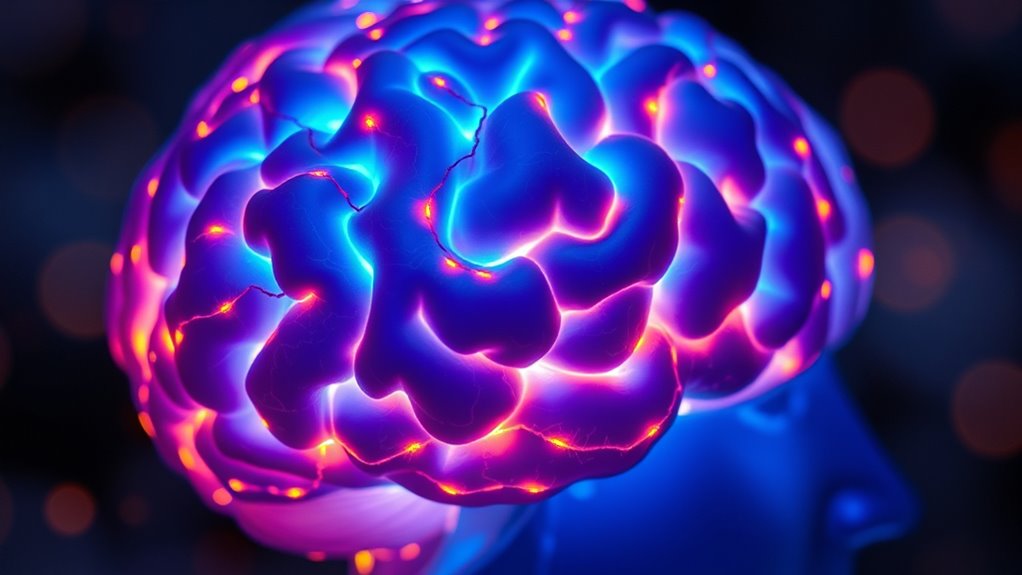
Neuroplasticity is the brain’s remarkable ability to adapt and rewire itself in response to experiences, learning, and injury. When you engage in new activities or challenge yourself with different tasks, your brain undergoes a process called brain rewiring. This isn’t just about acquiring new skills; it’s about reshaping neural connections to improve how you think, learn, and recover. By understanding this process, you can actively influence your brain’s capacity for change, enhancing your cognitive flexibility—the ability to switch between different thoughts and adapt to new situations seamlessly. This flexibility is essential for problem-solving, creativity, and resilience, and it relies heavily on your brain’s capacity to reconfigure itself.
Each time you practice a new skill or learn something fresh, your brain forms new synapses, strengthening pathways that weren’t as active before. These changes aren’t limited to childhood; adults also experience significant brain rewiring. This means that whether you’re trying to pick up a new language, recover from an injury, or simply improve your mental agility, your brain is constantly capable of reorganizing itself to support those goals. The more you challenge yourself, the more opportunities your brain has to develop new connections, making it more adaptable and resilient over time.
Cognitive flexibility plays an essential role here. It allows you to approach problems from different angles, adjust to changing circumstances, and recover from setbacks more efficiently. When you train your brain through varied activities—like puzzles, learning new skills, or mindfulness practices—you’re encouraging neural pathways to strengthen and diversify. This diversification makes your brain more efficient at handling complex tasks and adapting to unexpected challenges. Basically, your brain rewiring efforts foster a flexible mindset that can bounce back from stress or injury, ensuring continuous growth and recovery. Additionally, engaging in activities that promote brain rewiring can accelerate this process and improve overall mental adaptability.
Frequently Asked Questions
Can Neuroplasticity Reverse Severe Brain Damage?
Neuroplasticity can help you recover from some brain injuries by promoting neural regeneration, but it may not fully reverse severe damage. Your brain can rewire itself and form new connections, aiding recovery and functional improvements. However, the extent depends on the injury’s severity and location. Active therapy and rehabilitation support neuroplasticity, giving your brain the best chance to adapt and heal, even if complete reversal isn’t always possible.
How Quickly Can the Brain Adapt Through Neuroplasticity?
Ever wonder how fast your brain can change? It varies, but typically, your brain’s flexibility allows for noticeable adaptations within days to weeks, especially with consistent effort. Your learning speed accelerates as you practice new skills or recover from injury, thanks to neuroplasticity. The key is engaging in targeted activities; the more you challenge your brain, the quicker it adapts and rewires itself.
Does Neuroplasticity Decline With Age?
Yes, neuroplasticity does decline with age, but your brain still maintains a remarkable level of flexibility. As you get older, the rate of change slows, leading to an age-related decline in brain flexibility. However, you can still enhance your brain’s adaptability through activities like learning new skills, exercising, and staying mentally active. This ongoing stimulation helps counteract the natural decline and keeps your brain resilient.
Can Neuroplasticity Help Treat Mental Health Disorders?
Neuroplasticity is like a skilled gardener, helping your brain reshape itself. It can indeed aid in treating mental health disorders through techniques like mindfulness meditation and cognitive behavioral therapy. These methods encourage positive neural changes, rewiring pathways to reduce symptoms of anxiety, depression, and more. By engaging your brain actively, you promote healing and resilience, showing that your mind’s capacity to adapt remains powerful, regardless of age or circumstances.
Are There Lifestyle Changes That Enhance Neuroplasticity?
Yes, you can enhance neuroplasticity through lifestyle changes like practicing mindfulness and engaging in regular physical exercise. Mindfulness practices help you stay focused and reduce stress, which supports brain adaptability. Physical exercise increases blood flow and promotes the growth of new neural connections. By incorporating these habits into your routine, you actively boost your brain’s ability to adapt, heal, and improve overall mental health.
Conclusion
You might be surprised to learn that your brain can form over 700 new neural connections every day. This incredible capacity for change means that no matter your age or circumstances, you have the power to heal and adapt. By engaging in new activities or learning, you stimulate your brain’s plasticity, helping you recover from injuries or overcome challenges. Embrace the brain’s resilience—your mind is more adaptable than you might have ever imagined.