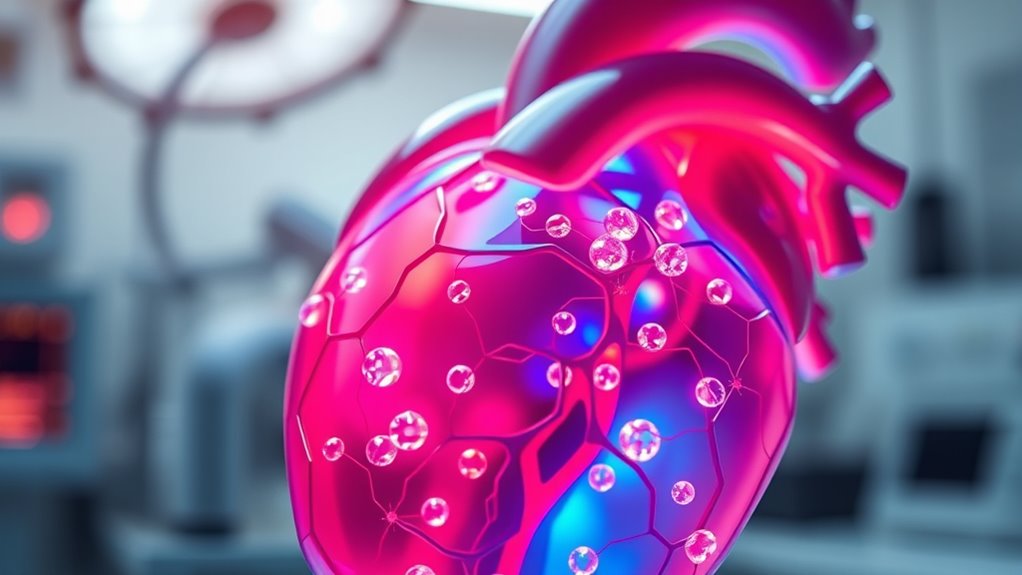

Regenerative medicine for heart disease involves using stem cells to repair damaged heart tissue, promoting healing and improving function. These therapies aim to replace scarred tissue, stimulate new blood vessel growth, and reverse damage caused by heart attacks or chronic conditions. By harnessing your body’s natural healing abilities, researchers have seen promising results that could soon become standard treatments. If you keep exploring, you’ll discover how these innovative approaches are transforming heart care and recovery.
Key Takeaways
- Regenerative medicine uses stem cell therapy to repair damaged heart tissue and restore heart function.
- Stem cells can differentiate into cardiac cells and release growth factors promoting blood vessel growth.
- The therapy activates natural healing processes, reducing scar tissue and improving heart performance.
- Combining stem cells with biomaterials or growth factors enhances tissue integration and regeneration.
- Ongoing research aims to make regenerative approaches a standard, less invasive treatment for heart disease.
Have you ever wondered if there’s a way to repair damaged hearts naturally? Advances in regenerative medicine are making that possibility more real than ever. One of the most promising approaches involves stem cell therapy, which aims to stimulate tissue regeneration within the heart. When heart tissue is damaged due to a heart attack or chronic disease, it often can’t heal on its own, leaving scars and reducing the heart’s ability to pump effectively. Stem cell therapy offers a way to reverse this damage by introducing healthy cells that can develop into cardiac tissue, helping to restore the heart’s structure and function.
You might be surprised to learn that stem cells have the unique ability to differentiate into various cell types, including cardiac muscle cells. In regenerative medicine, these cells are usually harvested from your own body, such as bone marrow or fat tissue, or from donor sources. Once introduced into the damaged heart tissue, they seek out injured areas and begin the process of tissue regeneration. This process doesn’t just replace lost cells; it also releases growth factors that encourage the growth of new blood vessels and improve blood flow. As a result, the heart can regain some of its lost strength and functionality.
The idea behind using stem cell therapy for heart repair is to jump-start the body’s natural healing processes. Instead of relying solely on medications or invasive surgeries, you’re activating your body’s innate ability to heal itself. Researchers are exploring different methods to enhance this process, including combining stem cells with biomaterials or growth factors to increase survival rates and improve integration into existing tissue. Clinical trials have shown promising results, with some patients experiencing improved heart function, reduced scar size, and better quality of life.
While this approach isn’t a magic cure yet, it’s a significant step toward more effective, less invasive treatments for heart disease. Tissue regeneration through stem cell therapy could eventually become a standard part of cardiac care, offering hope to millions who suffer from heart damage. It’s still early days, and ongoing research continues to refine techniques and improve outcomes, but the potential is undeniable. If future developments continue on this trajectory, you might someday have access to treatments that repair your heart naturally, harnessing your body’s own healing power to restore health and energy. Additionally, understanding ethical considerations surrounding stem cell use is crucial as these therapies advance toward widespread clinical application.

The Secret World of Stem Cell Therapy: What YOU Need to Know about the Health, Beauty, and Anti-Aging Breakthrough
As an affiliate, we earn on qualifying purchases.
As an affiliate, we earn on qualifying purchases.
Frequently Asked Questions
What Are the Risks Associated With Regenerative Heart Treatments?
You should know that regenerative heart treatments carry risks like ethical concerns, especially regarding cell sourcing and manipulation. Long-term safety is also uncertain, as the effects of stem cell therapies might not be fully understood for years. You could experience immune reactions or unintended tissue growth. It’s essential to discuss these risks thoroughly with your healthcare provider to make an informed decision about pursuing such innovative treatments.
How Long Does It Take to See Results From Regenerative Therapy?
Like planting a seed in a garden, you’ll start to see the blossoms of healing within a few months. The treatment timeline varies, but most patients notice improvements in heart function around 3 to 6 months post-therapy. Recovery duration depends on individual factors, yet patience pays off as your heart begins to mend, gradually filling your life with renewed strength and hope.
Are Regenerative Treatments Available for All Types of Heart Disease?
Regenerative treatments like stem cell therapy and tissue regeneration aren’t available for all types of heart disease. Your options depend on the specific condition and its severity. While some patients benefit from these advanced therapies, others may need traditional treatments. It is crucial to consult your cardiologist to determine if regenerative medicine is suitable for your situation, as ongoing research continues to expand its applications.
What Is the Success Rate of Current Regenerative Medicine Approaches?
Think of regenerative medicine like planting a hopeful seed; success rates vary, but many approaches show promise. Currently, success rates range from 30% to 70%, depending on the treatment and patient. You should consider ethical considerations and cost-effectiveness when evaluating these options. While some treatments improve heart function, ongoing research aims to boost these success rates, making regenerative medicine more reliable and accessible for you.
How Do Regenerative Therapies Compare to Traditional Heart Surgeries?
You’ll find regenerative therapies like stem cell therapy and tissue engineering often offer less invasive options compared to traditional heart surgeries. While surgeries directly repair or replace damaged tissue, regenerative treatments aim to stimulate your body’s healing process. These approaches may reduce recovery time and improve heart function over time, though they might not yet match the immediate, definitive results of conventional procedures. Overall, regenerative therapies complement traditional methods, providing new hope for heart disease patients.
cardiac regenerative medicine kit
As an affiliate, we earn on qualifying purchases.
As an affiliate, we earn on qualifying purchases.
Conclusion
You should be excited about regenerative medicine’s potential, as studies show it could improve heart function by up to 50% in some patients. Imagine a future where damaged hearts can heal themselves, reducing the need for transplants. By exploring these innovative treatments, you’re helping shape a healthier tomorrow. With ongoing advancements, the possibility of restoring heart health isn’t just a dream—it’s becoming a reality. Embrace the promise of regenerative medicine for a better, stronger future.
Stem Cell 100+: Multi-Pathway Anti-Aging & Rejuvenation Supplement Supports Stem Cells, Telomeres, Longevity Genes, Vascular Circulation, Neural Function, Autophagy, and More
Acts on Multiple Anti-Aging and Rejuventation Pathways to Promote Stem Cells, Telomeres, Longevity Genes, Vascular Circulation, Neural Function,…
As an affiliate, we earn on qualifying purchases.
As an affiliate, we earn on qualifying purchases.
Biomaterials for Cardiac Regeneration
As an affiliate, we earn on qualifying purchases.
As an affiliate, we earn on qualifying purchases.