
TL;DR

Get health and wellness essentials delivered free — and shop member deals
- Fast, free delivery on millions of items
- Access to Prime Big Deal Days deals on October 6–7
- Prime Video, Amazon Music and more included
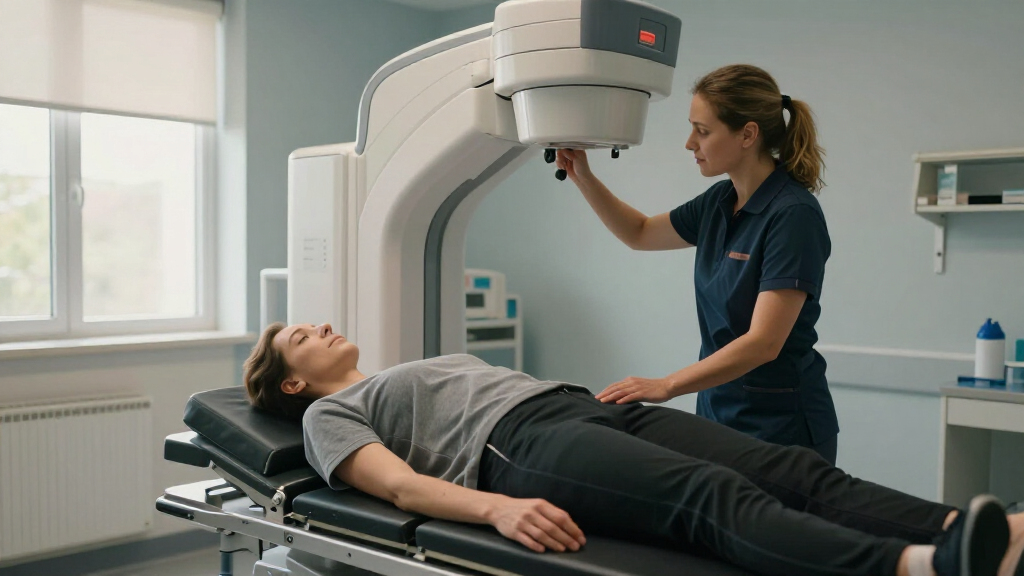
A prospective phase II study found that ultralow-dose radiation was followed by pain responses in 66% of evaluable patients at four weeks and 86% at six months. Researchers reported few treatment-related adverse events and no adverse effect on bone marrow status, but the trial had no comparison group and some patients needed further radiation.
A prospective phase II trial found that ultralow-dose radiation was followed by pain relief for many people with painful multiple myeloma bone lesions, with few treatment-related side effects and no reported adverse effect on bone marrow status. At four weeks, 66% of evaluable patients had a complete or partial pain response; the rate was 86% among those who returned questionnaires at six months, according to results presented by Leslie Ballas of Cedars-Sinai Medical Center at the American Society for Radiation Oncology meeting.
The 69 enrolled patients were assigned to receive either one 4-Gy treatment or two 2-Gy treatments. Both schedules deliver a total of 4 Gy, substantially below the 30 Gy in 10 fractions cited in the report as a usual regimen for bone pain. The study assessed pain and use of oral morphine-equivalent medication. A complete response meant no pain at the treated site and no increase in medication; a partial response required a pain reduction of at least two points or a medication reduction of at least 25%.
The reported response rate was 66% at four weeks, based on 61 completed questionnaires. It was 64% at eight weeks, based on 47 questionnaires, and 86% at six months, based on 42. The later figures describe patients who completed follow-up questionnaires, not all 69 people enrolled. Response rates were similar between the one- and two-fraction schedules at the measured time points, although Ballas said the median pain-score decrease at six months favored the two-fraction schedule: 4.1 points versus 2.2, with P=0.01.
Five of 69 patients had treatment-related adverse events. None were grade 3 or higher, and none led to treatment interruption or modification, according to the report. The investigators also reported no adverse effect on bone marrow status. Twelve of 63 patients, or 19%, underwent re-irradiation; the median time to that treatment was 61 days, and the reported pain response after re-irradiation was 69%.
Preserving Marrow for Future Treatment
The findings address a practical balance in myeloma care: relieving pain from bone lesions while limiting radiation exposure to marrow that patients may need for ongoing and later treatment. As Ballas explained at the meeting, people with myeloma can receive multiple lines of therapy over their lifetimes, and preserving blood counts and treatment options can matter. She said the approach may leave room for continued chemotherapy and future options such as transplant or CAR T-cell therapy.
The study’s results may support discussion of a lower initial radiation dose for selected patients with painful bone disease. ASTRO expert Chelsea Pinnix of MD Anderson Cancer Center said the findings suggest that many patients may get meaningful relief with a low dose, and that the convenience of a short course could help clinicians consider radiation earlier in care. These comments describe potential implications; the trial did not compare early treatment with later treatment or establish that this schedule is suitable for every patient.
radiation therapy pain relief for myeloma
As an affiliate, we earn on qualifying purchases.
As an affiliate, we earn on qualifying purchases.
Why Researchers Tested a Lower Dose
Earlier evidence on palliative radiation for myeloma bone pain was largely retrospective or observational, Ballas said. She cited prior prospective data comparing 30 Gy with 8 Gy, in which about 80% of patients achieved a complete or partial pain response. A later retrospective evaluation included 11 myeloma patients treated with low-dose radiation and reported a 95% pain response, but its small myeloma subgroup and retrospective design differ from the current prospective study.
The rationale for limiting exposure includes the relationship between radiation dose to marrow and blood-related adverse effects. Ballas said the volume of bone marrow receiving at least 10 Gy has been shown to correlate strongly with hematologic adverse events. The trial therefore tested whether a much lower dose could ease pain while retaining the option of additional radiation if pain persisted or returned. It was a single-arm phase II study: patients were randomized between two schedules with the same total dose, not between low-dose radiation and a standard-dose or no-radiation control.
“Only 19% of patients needed a second course, but it is still available to them at any point during their lifetime.”
— Leslie Ballas, MD
ultralow-dose radiation treatment for bone lesions
As an affiliate, we earn on qualifying purchases.
As an affiliate, we earn on qualifying purchases.
Limits of the Trial Evidence
The results do not establish how the low-dose schedules compare directly with standard-dose radiation or with no radiation, because the phase II study had no control group. Comparisons with earlier studies are historical and involve different study designs and patient groups. The six-month response rate is based on 42 completed questionnaires, fewer than the 69 patients enrolled, and the supplied report does not explain why other participants did not provide data at that point.
It is also unclear from the reported results how broadly the findings apply to patients excluded from the study. Eligibility rules excluded people with prior radiation or surgery, a long-bone pathologic fracture, spinal cord compression, or skull-base or orbital lesions. The report gives no longer-term follow-up beyond six months for pain response, marrow effects, or subsequent treatment. Ballas said more trials probably were unnecessary, but that is her assessment; the study itself does not settle whether further comparative research would change practice.
morphine equivalent pain medication for cancer
As an affiliate, we earn on qualifying purchases.
As an affiliate, we earn on qualifying purchases.
How Clinicians May Apply the Results
Ballas said clinicians could use either 4 Gy in one fraction or 2 Gy in two fractions for appropriately counseled patients, with the understanding that some may need another course. The report does not describe a formal guideline change or a new regulatory decision. Any adoption will depend on clinical judgment, patient circumstances, and discussion of the study’s limitations and the possibility of re-irradiation.
Further information about longer-term outcomes, the reasons for missing follow-up questionnaires, and how results compare with standard-dose treatment would help clarify the approach’s place in care. For now, the reported trial offers prospective evidence that a low-dose schedule can be followed by pain relief for many evaluable patients, while leaving those questions open.
bone marrow preservation radiation therapy
As an affiliate, we earn on qualifying purchases.
As an affiliate, we earn on qualifying purchases.
Key Questions
What radiation schedules did the study test?
Patients received either one 4-Gy fraction or two fractions of 2 Gy each. Both schedules delivered 4 Gy in total.
How many patients had a pain response?
A complete or partial response was reported in 66% at four weeks, based on 61 completed questionnaires, and 86% at six months, based on 42 questionnaires. The six-month figure is not a result for all 69 enrolled patients.
Were serious side effects reported?
Five of 69 patients had treatment-related adverse events. None reached grade 3 or higher or required a treatment interruption or modification, according to the study report.
Did patients sometimes need more radiation?
Yes. 12 of 63 patients, or 19%, received re-irradiation. The median time to another course was 61 days, and the reported pain response after re-irradiation was 69%.
Does the trial prove low-dose radiation is better than standard treatment?
No. It was a phase II study without a standard-dose or no-radiation control group. Its findings are prospective evidence for the tested schedules, but do not establish that they are superior to other approaches.
Source: rss
Fall Picks
fall essentials
As an affiliate, we earn on qualifying purchases.