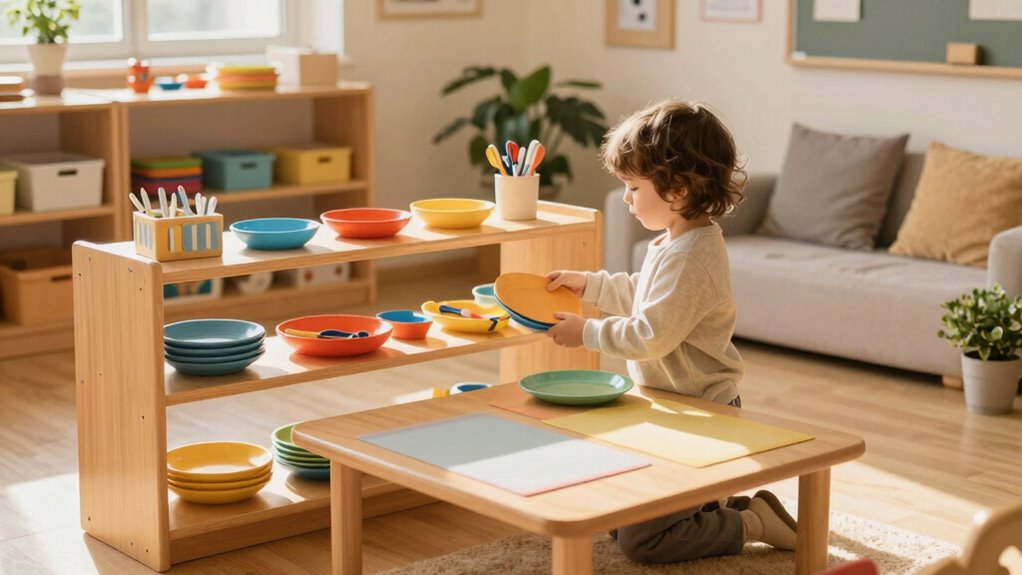
To build a Montessori morning routine, start with a clear, consistent sequence that includes activities like breakfast, hygiene, and planning for the day. Involve your child in simple tasks to foster independence and let them help with choosing clothes or preparing breakfast. Set up an organized, child-friendly space that encourages exploration. Incorporate calm rituals like stretching or deep breathing, and stay flexible to adapt as your child’s needs grow. Keep these principles in mind, and you’ll create a supportive, independent start to each day.
Open a free Amazon Business account
Business pricing, bulk buying and tax-exempt orders.
As an affiliate, we earn on qualifying purchases.
Key Takeaways
- Establish a consistent, predictable sequence of activities to promote security and independence.
- Involve children in simple morning tasks to foster decision-making and ownership.
- Create an organized, child-friendly environment that encourages exploration and self-directed activity.
- Incorporate calming rituals like deep breathing or stretching to set a positive tone.
- Observe and adapt routines based on children’s interests and developmental progress.
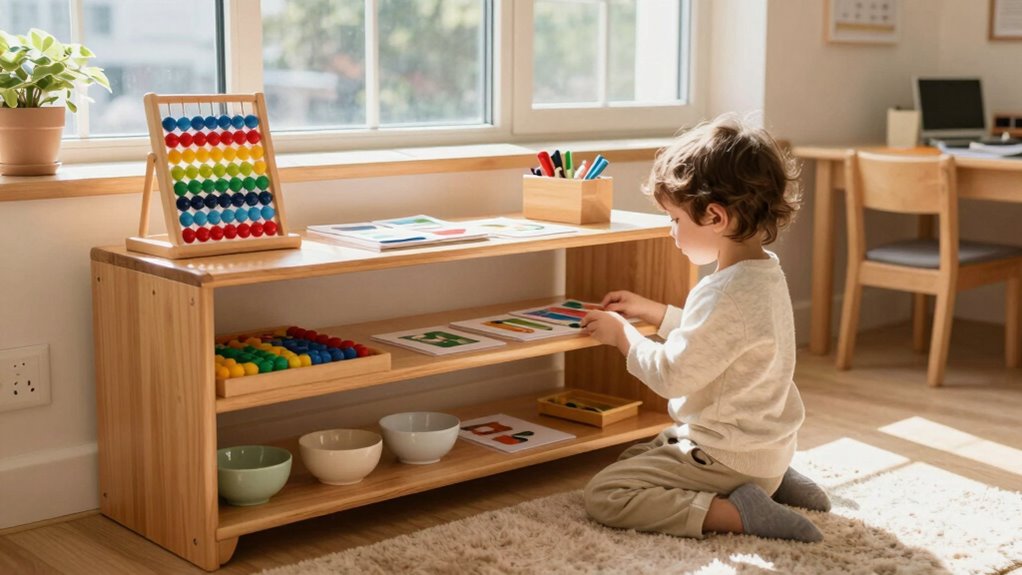
Starting your day with a well-structured Montessori morning routine can set a positive tone for both you and your child. When you prioritize a predictable and calm start, you help your child feel secure and ready to engage with their environment. One key aspect of this is fostering parental involvement in a way that respects your child’s independence. Rather than rushing through tasks, take the time to involve your child in simple morning activities like opening blinds, choosing their outfit, or preparing breakfast. This encourages autonomy and reinforces the Montessori principle that children are capable and responsible for their routines.
Creating a nurturing classroom environment begins right at home. Make sure your space is organized with accessible shelves, child-sized furniture, and materials that promote independence. When your child sees a tidy, inviting environment, they’re naturally motivated to explore and choose activities on their own. As a parent, your role is to observe and guide without dominating the process. Offer gentle prompts when needed, but allow your child to follow their interests and pace. This balance nurtures their natural curiosity and develops their decision-making skills while reinforcing a sense of ownership over their morning routine. Incorporating self-directed learning strategies can further enhance their confidence and engagement.
A tidy, inviting space encourages independence and curiosity, fostering confident decision-making in your child’s morning routine.
Incorporate consistent, calm rituals into your mornings. For instance, you might start with a short mindfulness activity like deep breathing or stretching, which helps your child transition from sleep to wakefulness. Follow this with a predictable sequence: breakfast, hygiene, dressing, and a brief review of the day’s plans. Keeping these routines consistent gives your child a sense of security and helps them become more independent over time. During these moments, your active involvement should focus on supporting and encouraging, rather than taking over. For example, if your child is brushing their teeth, offer guidance if needed but let them do most of the work to build their confidence.
Finally, a successful Montessori morning routine hinges on your ability to stay attentive to your child’s cues and adapt as they grow. Observe which activities they enjoy or struggle with, and adjust the environment or routine accordingly. Understanding neural interfaces and how they can enhance learning experiences can inspire innovative ways to support your child’s development. Additionally, incorporating sensory activities can further stimulate their curiosity and engagement. Developing a routine that prioritizes problem-solving skills can help your child become more confident in handling daily challenges and foster resilience. Recognizing that electric bikes and other innovative tools can serve as metaphors for adaptable and forward-thinking strategies might also encourage a growth mindset. Your involvement should always aim to empower your child, fostering a classroom environment at home that promotes independence, curiosity, and a love of learning. By integrating these elements into your mornings, you create a harmonious start that benefits both your child’s development and your daily life.
Montessori child-sized furniture
As an affiliate, we earn on qualifying purchases.
As an affiliate, we earn on qualifying purchases.
Frequently Asked Questions
How Early Should I Start the Montessori Morning Routine?
You should start the Montessori morning routine early enough to give your child plenty of time for morning preparations and foster independence. Typically, waking up 30 to 60 minutes before leaving the house works well. This allows your child to dress, pack their bag, and complete small chores independently, setting a calm tone for the day. Starting early encourages responsibility and helps your child feel more confident in their daily routines.
Can This Routine Work for Children With Special Needs?
Yes, this routine can work for children with special needs. You should incorporate inclusive strategies and adaptive activities tailored to each child’s abilities and needs. By observing and adjusting tasks, you foster independence and confidence. Use sensory tools, visual supports, or modified tasks to make the routine accessible. This personalized approach guarantees that every child feels comfortable, engaged, and supported within the Montessori morning framework.
How Do I Handle Transitions if My Child Resists?
Imagine a ship steering through stormy seas—you need calm, steady hands. When your child resists shifts, use gentle shift strategies like countdowns, visual cues, or offering choices to reduce resistance. Stay patient and consistent, managing resistance with understanding rather than force. This approach helps your child feel secure, making shifts smoother, just like a captain guiding a vessel safely through choppy waters.
What Supplies Are Essential for a Montessori Morning?
You need essential Montessori materials like a child-sized table and chair, practical life tools, and simple, engaging activities that foster independence. These supplies encourage your child’s self-directed learning, helping them become more autonomous. Focus on items that promote child independence, such as low shelves, open-ended toys, and daily living tools. Keep the environment organized and inviting to motivate your child to explore and develop skills at their own pace.
How Long Should Each Part of the Routine Take?
You should aim for each part of your child’s routine to flow smoothly, typically lasting around 10-15 minutes. This gentle rhythm encourages the use of Montessori materials, fostering child independence without feeling rushed. Keep the pace relaxed, allowing your child to engage meaningfully with activities. This approach nurtures their confidence and independence, making mornings calmer and more enjoyable for both of you.
As an affiliate, we earn on qualifying purchases.
Conclusion
Creating a Montessori morning routine is like planting seeds in a garden—you set the foundation with gentle guidance and consistent care. As your child learns to navigate their morning independently, watch how their confidence blossoms like flowers reaching for the sun. Remember, patience and routine are your tools, helping each day bloom into a nurturing, empowering start. With time, you’ll see your child flourish in a morning routine that’s as natural and beautiful as a well-tended garden.
Montessori morning routine materials
As an affiliate, we earn on qualifying purchases.
As an affiliate, we earn on qualifying purchases.
As an affiliate, we earn on qualifying purchases.
Flea & tick season Picks
flea and tick prevention
As an affiliate, we earn on qualifying purchases.