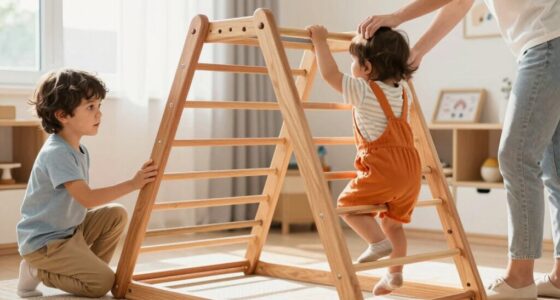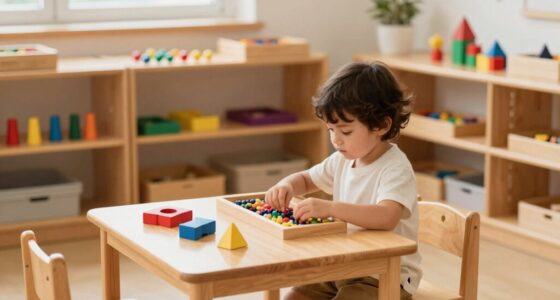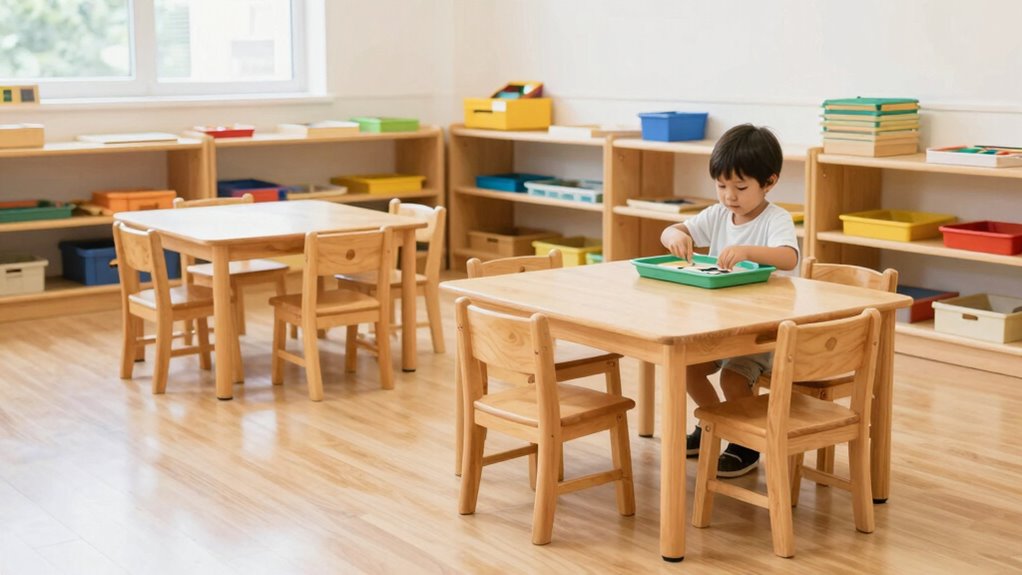

Order and predictability in Montessori spaces help you create a calm, organized environment where children feel safe and confident. When spaces are consistent, kids quickly learn expectations, promoting independence and emotional stability. Clear routines and designated areas reduce distractions, allowing children to focus and explore at their own pace. This thoughtful setup encourages decision-making, patience, and self-regulation. Keep exploring to discover how these principles foster lifelong skills and support overall development.

Get health and wellness essentials delivered free — and shop member deals
- Fast, free delivery on millions of items
- Access to Prime Big Deal Days deals on October 6–7
- Prime Video, Amazon Music and more included
Key Takeaways
- Creates a calm, organized environment that supports focus and reduces distractions for children.
- Promotes independence by establishing clear routines and designated spaces for materials.
- Enhances sensory development through predictable layouts that aid focus and differentiation.
- Builds emotional stability by minimizing decision fatigue and providing a sense of security.
- Fosters lifelong skills like self-regulation, confidence, and responsible exploration.

Creating a sense of order and predictability in Montessori spaces is essential for fostering independence and focus in children. When the environment is calm, organized, and consistent, children quickly learn what to expect and how to navigate their surroundings. This stability encourages them to take initiative, explore confidently, and develop a strong sense of responsibility for their actions. You’ll notice that when everything has a designated place, children feel empowered to choose activities and complete tasks with minimal confusion. This independence is crucial for their overall growth, as it builds confidence and nurtures decision-making skills.
In a well-ordered Montessori space, the layout is intentionally simple and predictable, which directly supports sensory development. When children can anticipate what’s next, they’re better able to focus their attention on engaging with materials rather than being distracted by chaos or uncertainty. This setup allows children to tune into their senses more deeply, as they can concentrate on exploring textures, colors, and shapes without distraction. For example, when materials are easily accessible and clearly arranged, children can use their tactile and visual senses to differentiate between objects, fostering sensory refinement and perceptual skills. The environment acts as a gentle guide, helping children develop keen sensory awareness through consistent exposure and interaction. Additionally, an environment with clear organization minimizes unnecessary choices, helping children develop their decision-making skills more effectively. Incorporating a predictable environment also supports children in developing routines that enhance their sense of security and independence.
Order also helps children establish routines, which are fundamental in Montessori education. Predictable routines give children a sense of security, making it easier for them to initiate activities independently. When they know what comes next, they’re more likely to engage in self-directed learning, choosing materials that interest them and working through tasks at their own pace. This autonomy nurtures intrinsic motivation, as children learn to trust their abilities and develop a sense of mastery. Additionally, a predictable environment reduces anxiety and behavioral challenges, creating a peaceful space where children can focus on their developmental tasks without unnecessary external stressors. A consistent environment also supports environmental stability and helps children develop trust in their surroundings.
Furthermore, fostering an environment of predictability and structure supports the development of self-regulation and patience, key skills in a child’s growth. Ultimately, maintaining order and predictability in your Montessori space isn’t just about tidiness; it’s about creating a nurturing environment that promotes child independence and sensory development. When children feel secure and know what to expect, they’re empowered to explore, learn, and grow at their own rhythm. This foundation not only supports their immediate engagement with their surroundings but also instills lifelong skills of self-regulation, curiosity, and confidence. By prioritizing order, you help children build a strong, stable base for their ongoing development, making the learning experience both meaningful and enjoyable.
As an affiliate, we earn on qualifying purchases.
Frequently Asked Questions
How Does Order Support Independence in Children?
Order supports independence by creating a structured environment where children can develop child autonomy and routine development. When spaces are organized, children easily find and return materials, fostering confidence in their abilities. This predictability helps them understand expectations and routines, encouraging self-directed activity. As a result, your child learns to manage tasks independently, building essential life skills and reinforcing their sense of control and competence within a consistent environment.
Can Too Much Predictability Limit Creativity?
Too much predictability can restrict creativity because it limits spontaneous exploration. When children always know what to expect, they might hesitate to try new ideas or take risks. You need a balance—structure provides safety, but allowing room for surprise fosters imagination. By creating an environment that encourages both order and flexibility, you help children develop confidence and creative thinking without feeling confined by strict routines.
How Is Flexibility Balanced With Structure in Montessori?
In Montessori spaces, you balance flexibility and structure by using adaptive routines that provide a consistent framework, allowing children to feel secure. You encourage spontaneous exploration within these routines, giving kids the freedom to follow their interests. This approach nurtures independence and creativity while maintaining order. By adjusting routines as needed, you create an environment where children learn confidently, knowing both structure and freedom support their growth.
Do All Children Thrive With the Same Level of Order?
Not all children thrive with the same level of order because individual learning styles and cultural influences shape their needs. Some kids flourish in highly structured environments, while others prefer more flexibility. As a caregiver or educator, you should observe each child’s preferences and adapt the environment accordingly. This personalized approach helps support their development, ensuring they feel comfortable and engaged, regardless of their unique learning style or cultural background.
How Does Environment Setup Influence Learning Outcomes?
Your environment setup directly influences learning outcomes by fostering sensory engagement and aesthetic appeal. When you create a space that is orderly and visually inviting, children are more likely to focus, explore, and develop independence. An environment that balances sensory stimuli and pleasing aesthetics encourages curiosity and concentration, making learning more effective. You help children thrive by thoughtfully organizing the space, ensuring it’s engaging, calming, and conducive to their natural desire to learn.
child-sized storage bins for Montessori classroom
As an affiliate, we earn on qualifying purchases.
As an affiliate, we earn on qualifying purchases.
Conclusion
When you create order, you foster independence; when you establish predictability, you build confidence. Order helps children know what to expect, reducing anxiety and encouraging exploration. Predictability provides a sense of security, enabling focus and growth. Together, they cultivate an environment where children feel safe to learn, to experiment, and to thrive. In your Montessori space, order and predictability aren’t just principles—they’re the foundation for lifelong love of learning.
Montessori sensory materials set
As an affiliate, we earn on qualifying purchases.
As an affiliate, we earn on qualifying purchases.
As an affiliate, we earn on qualifying purchases.
Fall Picks
fall essentials
As an affiliate, we earn on qualifying purchases.