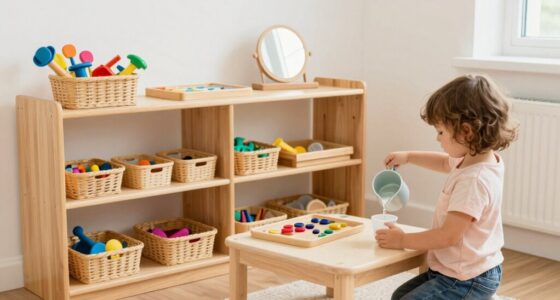

Montessori toys focus on purpose and simplicity because they encourage your child to engage in meaningful, focused play that supports natural development. By removing distractions and overly complex features, these toys help your child concentrate and explore at their own pace. They promote essential skills like sensory awareness, fine motor control, and problem-solving, laying a solid foundation for future learning. Keep exploring to discover how these intentional choices can benefit your child’s growth and confidence.

Get health and wellness essentials delivered free with Prime
- Fast, free delivery on millions of items
- Prime Video, Amazon Music and more included
- Member-only deals all year
Key Takeaways
- Purposeful toys promote independent learning and skill development rather than mere entertainment.
- Simplicity minimizes distractions, enabling children to focus on activity and its educational value.
- Focused, simple designs support sensory exploration and fine motor skill enhancement.
- Purpose-driven toys help children build confidence through meaningful, self-directed play.
- Minimalist features encourage concentration, problem-solving, and persistence essential for lifelong learning.

Montessori toys are designed with a clear purpose: to foster independence, focus, and natural development in children through simple, purposeful play. When you choose these toys, you’re giving your child tools that support their growth in meaningful ways, rather than just entertainment. One of the key reasons Montessori toys focus on purpose and simplicity is because they target essential developmental milestones, such as sensory development and fine motor skills. These toys help children engage their senses and refine their movements, setting a strong foundation for future learning.
Montessori toys promote independence, focus, and essential developmental milestones through simple, purposeful play.
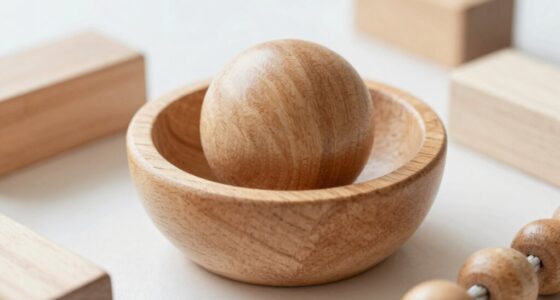
Sensory development is essential for young children because it helps them interpret and respond to the world around them. Montessori toys are often made from natural materials like wood, glass, or metal, which provide rich textures and subtle sensory cues. For example, a simple wooden shape sorter not only teaches shape recognition but also encourages children to explore different textures and weights. As your child manipulates these objects, they develop their tactile senses, improving their ability to distinguish between different sensations. This kind of sensory engagement also supports cognitive growth, as children learn to categorize and associate sensory inputs with their experiences.
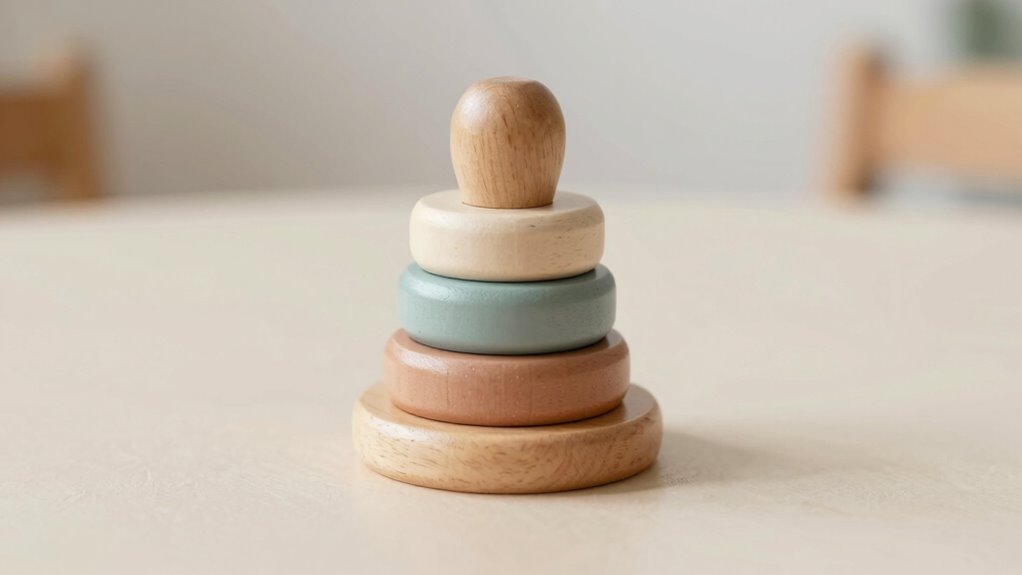
Focusing on fine motor skills is another core aspect of Montessori toy design. Fine motor development involves the coordination of small muscles in the hands and fingers, which are essential for tasks like writing, dressing, and everyday activities. Montessori toys are often carefully crafted to promote precise movements. Consider toys like peg boards, lacing beads, or stacking blocks—these encourage your child to grasp, hold, and manipulate objects with control and accuracy. Through repetitive play, they strengthen their hand-eye coordination and finger dexterity, which are indispensable for academic and practical skills later on. Moreover, research shows that precise manipulation during play significantly enhances neural development related to motor control.
The simplicity of Montessori toys ensures that your child isn’t overwhelmed or distracted by excessive features or bright colors. Instead, they focus on the activity itself, fostering concentration and intentional play. This simplicity also allows your child to explore at their own pace, building confidence and independence. When your child uses a straightforward toy designed with a specific purpose, they learn to problem-solve, make decisions, and persist through challenges. These skills are fundamental for lifelong learning and personal growth.
As an affiliate, we earn on qualifying purchases.
Frequently Asked Questions
How Do Montessori Toys Differ From Traditional Toys?
Montessori toys differ from traditional toys by emphasizing purpose and simplicity, encouraging sensory exploration and open-ended play. You’ll find these toys designed to foster independence, problem-solving, and creativity, rather than just entertainment. They often use natural materials and minimal design to help your child focus on exploring textures, shapes, and functions. This approach allows your child to engage deeply, learn at their own pace, and develop essential skills through meaningful, open-ended activities.
Are Montessori Toys Suitable for All Age Groups?
You’ll find Montessori toys are suitable for all age groups, from infants to older children. Notably, 85% of parents report using these toys across multiple stages of development. Their focus on safety ensures age-appropriate materials, while cultural relevance keeps children engaged and connected to their backgrounds. These toys promote independence and learning, making them a versatile choice that adapts to your child’s evolving needs at every stage.
Can Montessori Toys Be Used at Home Without Guidance?
Yes, you can use Montessori toys at home without guidance, encouraging your child’s independent exploration. These toys are designed to be simple and purposeful, allowing children to learn at their own pace. As they explore, you’ll foster parent-child bonding through shared discovery and support. Keep the environment calm and organized, and let your child naturally engage with the toys, promoting confidence and curiosity without needing constant supervision.
What Materials Are Typically Used in Montessori Toys?
You might be surprised to learn that Montessori toys often use simple, natural materials like wood, cloth, and metal. These materials encourage sensory exploration and highlight natural textures, fostering curiosity and learning. Instead of bright plastics, your child’s playthings focus on authenticity and purpose. This thoughtful choice helps develop fine motor skills, concentration, and independence—all while making playtime feel more genuine and less overwhelming.
How Do Montessori Toys Support a Child’s Development?
Montessori toys support your child’s development by encouraging sensory exploration and refining fine motor skills. You’ll notice they’re designed with purpose and simplicity, helping your child focus and engage deeply. As they manipulate the toys, they develop hand-eye coordination, concentration, and problem-solving abilities. These toys foster independence, curiosity, and confidence, providing a meaningful foundation for learning and growth while allowing your child to explore the world at their own pace.
natural material Montessori toys
As an affiliate, we earn on qualifying purchases.
As an affiliate, we earn on qualifying purchases.
Conclusion
By choosing Montessori toys, you’re not just picking colorful objects—you’re nurturing your child’s natural curiosity and independence. These simple, purposeful toys act as gateways to open a world of discovery, much like a gentle breeze guiding a sailboat through calm waters. When you prioritize purpose and simplicity, you help your little one develop confidence and focus, laying a foundation that encourages lifelong love for learning. It’s more than play—it’s shaping a bright, curious mind.
Montessori sensory toys for toddlers
As an affiliate, we earn on qualifying purchases.
As an affiliate, we earn on qualifying purchases.
Montessori fine motor skill toys
As an affiliate, we earn on qualifying purchases.
As an affiliate, we earn on qualifying purchases.
Cold & flu season Picks
humidifiers
As an affiliate, we earn on qualifying purchases.