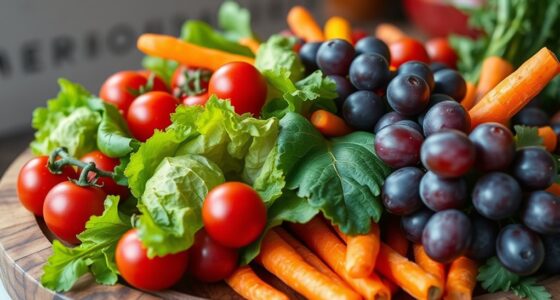
The Mediterranean diet is celebrated for its heart-healthy benefits, including reducing inflammation and lowering the risk of heart disease. It emphasizes fresh, whole foods like fruits, vegetables, nuts, grains, and especially olive oil. Seafood plays a key role as a rich source of omega-3s and lean protein. Simple, flavorful recipes like seafood salads and stews make it easy to enjoy. Keep exploring to discover how this balanced eating plan can boost your well-being and vigor.
Key Takeaways
- The Mediterranean diet emphasizes fresh, whole foods, healthy fats like olive oil, and seafood for optimal health benefits.
- Rich in monounsaturated fats and antioxidants, it reduces inflammation and supports heart health.
- Regular seafood consumption provides omega-3 fatty acids, enhancing brain and cardiovascular health.
- Simple recipes like seafood salads and stews promote easy, nutritious, and flavorful meals.
- The diet promotes balanced eating patterns, leading to improved energy levels and long-term health.

Have you ever wondered why the Mediterranean diet is often praised for its health benefits? The secret lies in its emphasis on fresh, wholesome ingredients and balanced eating patterns. At the heart of this diet is olive oil, which isn’t just a flavorful addition but a cornerstone of Mediterranean cuisine. Rich in monounsaturated fats and antioxidants, olive oil helps reduce inflammation and supports heart health. When you cook with it, you’re not only enhancing flavors but also nourishing your body with healthy fats that can lower bad cholesterol levels. You’ll find that many traditional Mediterranean recipes revolve around drizzling olive oil over vegetables, grains, and seafood, making every meal both delicious and nutritious. According to Fokos, the focus on quality ingredients is fundamental to the diet’s success. Seafood recipes form an essential part of this diet, offering a high-quality source of lean protein and omega-3 fatty acids. These healthy fats are vital for brain health, reducing inflammation, and supporting cardiovascular function. When preparing seafood, you don’t need complex techniques—you can simply grill, bake, or sauté your favorite fish or shellfish with a splash of olive oil, fresh herbs, and lemon. This keeps the dish light yet packed with flavor. Incorporating seafood into your meals regularly can make a noticeable difference in your overall health, especially if you replace red meats or processed foods with these nutrient-dense options. The beauty of the Mediterranean diet is that it’s easy to adapt to your tastes while maintaining its core principles. For example, you might prepare a simple seafood salad with cherry tomatoes, cucumbers, olives, and a drizzle of olive oil, or make a hearty seafood stew seasoned with garlic and herbs. These dishes are quick to assemble and satisfying, encouraging you to eat more whole foods and less processed fare. The focus on fresh ingredients means you’re naturally inclined to consume more fruits, vegetables, nuts, and whole grains, all of which contribute to better health and sustained energy levels.
extra virgin olive oil
As an affiliate, we earn on qualifying purchases.
As an affiliate, we earn on qualifying purchases.
Frequently Asked Questions
Can Vegetarians Follow a Mediterranean Diet Effectively?
Yes, you can follow a Mediterranean diet effectively as a vegetarian. You’ll find plenty of vegetarian options like fresh vegetables, fruits, nuts, and whole grains. Incorporate plant-based alternatives such as legumes, tofu, and tempeh to boost protein intake. Focus on healthy fats from olive oil and nuts, and enjoy delicious, nutrient-rich meals. This way, you maintain the diet’s benefits while staying true to your vegetarian lifestyle.
How Does the Mediterranean Diet Impact Mental Health?
You’ll notice that the Mediterranean diet boosts your brain health and mood improvement. Its rich intake of fruits, vegetables, healthy fats, and omega-3 fatty acids supports cognitive function and reduces stress levels. By avoiding processed foods, you can experience better mental clarity and emotional stability. Following this diet helps you feel more energized and focused, making it a smart choice for improving your overall mental well-being.
Are There Any Risks or Downsides to the Mediterranean Diet?
You might face some risks with the Mediterranean diet, like nutritional deficiencies if you don’t include enough variety or if you have food allergies. For example, avoiding certain foods could lead to lacking nutrients like iron or vitamin B12. Also, if you’re allergic to nuts, seafood, or dairy, you’ll need to find suitable alternatives to avoid health issues. Always tailor the diet to your needs to stay balanced and healthy.
How Can I Adapt the Mediterranean Diet for Meal Prep?
Did you know that meal prep can save you up to 10 hours a week? To adapt the Mediterranean diet, start with batch cooking staples like grains, roasted vegetables, and lean proteins. Use meal prep tips like dividing food into portions and storing them in airtight containers. This way, you’ll enjoy fresh, healthy meals all week, making it easier to stick to your diet while saving time and reducing waste.
Is the Mediterranean Diet Suitable for Children and Teenagers?
Yes, the Mediterranean diet suits children and teenagers, supporting their growth and overall health. It promotes good child nutrition by emphasizing fruits, vegetables, whole grains, and healthy fats. For teenager health, it encourages balanced eating habits and reduces processed food intake. You should tailor portions and include kid-friendly recipes to keep them engaged. This diet helps instill lifelong healthy eating habits, benefiting their development and future well-being.
seafood steamer basket
As an affiliate, we earn on qualifying purchases.
As an affiliate, we earn on qualifying purchases.
Conclusion
Embracing the Mediterranean diet gently guides you toward better health, subtly enriching your life with vibrant flavors and nourishing choices. It’s not just about food, but a way of caring for yourself that adds a touch of vitality and balance. As you weave these wholesome habits into your routine, you might find yourself quietly enjoying a more energized, joyful existence—an unspoken gift that comes from nourishing both body and soul with mindful, delicious eating.
Mediterranean diet cookbook
As an affiliate, we earn on qualifying purchases.
As an affiliate, we earn on qualifying purchases.
healthy cooking utensils set
As an affiliate, we earn on qualifying purchases.
As an affiliate, we earn on qualifying purchases.