

Micronutrient deficiencies affect people worldwide, across both developing and developed nations, often without obvious signs but causing serious health problems. Deficiencies in nutrients like iron, vitamin A, iodine, and zinc can lead to anemia, blindness, cognitive impairments, and increased infections. Vulnerable groups include pregnant women and children, especially in low-income areas. Understanding how these deficiencies vary by region and impact health can help you take steps to address them—if you want to learn more, keep exploring this important topic.

Get health and wellness essentials delivered free — and shop member deals
- Fast, free delivery on millions of items
- Access to Prime Big Deal Days deals on October 6–7
- Prime Video, Amazon Music and more included
Key Takeaways
- Micronutrient deficiencies affect both developing and developed countries, leading to widespread health issues unnoticed in many populations.
- Deficiencies in iron, vitamin A, zinc, and iodine impair immune function, growth, vision, and cognitive development globally.
- High-risk groups include pregnant women, children, and populations in low-income regions with limited dietary diversity.
- Detection challenges include limited diagnostic tools and subtle signs, requiring biochemical testing and targeted interventions.
- Global policies, fortification, and community programs are essential to reduce prevalence and mitigate health consequences worldwide.
As an affiliate, we earn on qualifying purchases.
The Scope of Micronutrient Deficiencies Worldwide

Micronutrient deficiencies affect more people worldwide than many realize, impacting both developing and developed countries. These deficiencies often go unnoticed but can cause serious health issues. To combat this, public health initiatives focus on fortification strategies, adding essential vitamins and minerals to common foods like flour and salt. Community education plays an essential role in raising awareness about nutrient-rich diets and proper supplementation. When you understand the scope of these deficiencies, you see how widespread they are, transcending economic boundaries. Implementing effective fortification strategies and increasing community awareness help reduce the prevalence of deficiencies. This combined approach empowers communities to make healthier choices and guarantees that micronutrients reach those who need them most, ultimately improving health outcomes worldwide.
vitamin A capsules for vision health
As an affiliate, we earn on qualifying purchases.
As an affiliate, we earn on qualifying purchases.
Key Micronutrients and Their Roles in Human Health

Understanding the essential roles of key micronutrients is critical for maintaining good health, as each nutrient supports specific bodily functions. For example, iron helps transport oxygen, vitamin A maintains vision, and zinc boosts immunity. Achieving dietary diversity is essential to meet these needs naturally. Fortification programs also play a role in addressing deficiencies across populations. Here’s a quick overview:
| Micronutrient | Primary Function | Food Sources |
|---|---|---|
| Iron | Oxygen transport | Red meat, beans, spinach |
| Vitamin A | Vision and immune health | Carrots, sweet potatoes |
| Zinc | Wound healing, immunity | Nuts, shellfish |
| Iodine | Thyroid function | Iodized salt, seafood |
Focusing on diverse foods and fortification helps guarantee you get these essential nutrients for ideal health. Micronutrient deficiencies remain a significant challenge worldwide, impacting populations across all age groups and socioeconomic statuses.
iodized salt for iodine deficiency
As an affiliate, we earn on qualifying purchases.
As an affiliate, we earn on qualifying purchases.
Populations Most at Risk of Deficiency

You need to be aware that pregnant women are especially vulnerable to micronutrient deficiencies, which can affect both their health and that of their babies. Low-income regions often face higher rates of deficiencies due to limited access to nutritious foods. Children are also at significant risk, as deficiencies can hinder proper growth and development.
Pregnant Women Vulnerability
Pregnant women are particularly vulnerable to micronutrient deficiencies because their bodies require higher amounts of essential nutrients to support fetal development. Without proper intake, risks like anemia, preterm birth, and developmental issues increase. To address this, focus on:
- Improving dietary diversity by including nutrient-rich foods like fruits, vegetables, and lean proteins.
- Participating in supplementation programs that provide crucial vitamins and minerals such as folic acid and iron.
- Ensuring regular health check-ups to monitor micronutrient levels and adjust interventions accordingly.
- Understanding how contrast ratios influence overall health outcomes related to nutrient absorption and visual perception.
Additionally, the horsepower of electric dirt bikes can impact energy needs, which may be relevant when considering dietary requirements for pregnant women.
Low-Income Regions Impact
Low-income regions face the highest risks of micronutrient deficiencies, as limited access to diverse and nutrient-rich foods hampers proper nutrition. Agricultural practices in these areas often lack modern techniques, reducing crop diversity and nutrient content. Poor harvests and reliance on staple crops further restrict nutrient intake. To address this, food fortification programs are essential; they add essential vitamins and minerals to commonly consumed foods, improving overall health. However, implementing effective agricultural practices can boost local production of nutrient-dense foods, reducing dependence on external aid. Limited infrastructure and resources challenge these efforts, making low-income populations particularly vulnerable. Promoting modern farming methods and expanding food fortification initiatives can markedly reduce micronutrient deficiencies among these at-risk groups.
Children’s Growth Risks
Children are among the most vulnerable to micronutrient deficiencies because their rapidly developing bodies require essential vitamins and minerals that are often lacking in their diets. Lack of dietary diversity and limited access to nutrient-rich foods increase their risk of growth delays and health issues. To address these risks, focus on:
- Promoting dietary diversity by including fruits, vegetables, and protein sources in meals.
- Implementing fortification programs to add crucial nutrients to staple foods like flour and rice.
- Ensuring targeted supplementation for at-risk children, especially in vulnerable communities.
These strategies help prevent deficiencies that impair growth, cognitive development, and immune function. By prioritizing diverse diets and fortification efforts, you can markedly reduce the growth risks faced by children worldwide.
zinc supplements for immune support
As an affiliate, we earn on qualifying purchases.
As an affiliate, we earn on qualifying purchases.
Regional Variations and Hotspots of Deficiency

Why do certain regions experience higher rates of micronutrient deficiencies than others? It often comes down to factors like limited access to diverse diets and local food production practices. Regions with low dietary diversity struggle to provide essential nutrients, especially where urban agriculture isn’t widespread or effective. In some hotspots, reliance on a narrow range of staple foods reduces micronutrient intake. Additionally, socioeconomic barriers and poor infrastructure hinder access to fortified foods or fresh produce. Climate and soil quality also impact local crop nutrient content, worsening deficiencies. These regional variations mean that some areas, especially in low-income countries, face persistent deficiency problems. Addressing these hotspots requires improving urban agriculture, promoting dietary diversity, and increasing local food availability to meet nutritional needs effectively. Incorporating natural materials and supporting traditional farming methods can also play a crucial role in enhancing local food systems and reducing micronutrient gaps. Furthermore, understanding how local food production practices influence nutrient availability can help target interventions more effectively.
Health Impacts of Iron and Iodine Deficiencies

Iron deficiency can lead to anemia, causing fatigue and impairing your ability to work or learn. Iodine deficiency affects brain development, especially in children, reducing cognitive abilities. Understanding these impacts highlights why addressing these deficiencies is essential for your health and development. Proper nutrition and supplementation can help prevent these deficiencies and promote overall well-being modern toilet. Additionally, ensuring an adequate intake of essential micronutrients supports overall immune function and long-term health. Recognizing the prevalence of these deficiencies worldwide emphasizes the importance of nutritional interventions for vulnerable populations.
Iron Deficiency Anemia Risks
Have you ever considered how a simple nutrient deficiency can profoundly affect your health? Iron deficiency anemia can cause fatigue, weakness, and reduced immunity. It’s a widespread issue, especially in vulnerable groups. Here’s what you should know:
- It impairs oxygen transport, leading to decreased energy levels.
- It increases susceptibility to infections due to weakened immune responses.
- It affects pregnancy outcomes, risking birth complications and developmental delays.
- Embracing creative practice by exploring new dietary approaches or community programs can foster innovative solutions to combat iron deficiency. Additionally, understanding AI’s role in healthcare can enhance strategies for diagnosis and intervention.
To combat this, fortification programs add iron to common foods, making it easier to meet daily needs. Additionally, dietary diversification—consuming iron-rich foods like lean meats, beans, and leafy greens—can help prevent anemia. Addressing iron deficiency is essential for maintaining overall health and preventing long-term consequences.
Iodine and Cognitive Development
Nutrient deficiencies like iron can substantially impact more than just physical health—they also affect brain development and cognitive function. Iodine deficiency, in particular, is a major cause of cognitive impairment worldwide. When you lack enough iodine, your brain’s development can slow, leading to learning difficulties, reduced IQ, and impaired memory. This deficiency is especially harmful during pregnancy and early childhood, when brain growth is rapid. Without sufficient iodine, cognitive processes become less efficient, affecting your ability to concentrate, problem-solve, and retain information. Addressing iodine deficiency through proper nutrition and fortification programs is essential to prevent these cognitive setbacks. Ensuring adequate iodine intake supports healthy brain development and sharpens cognitive performance across all ages. Efficient heat pumps transfer heat rather than generate it, leading to higher efficiency and lower operational costs, exemplifying how technological advancements can mitigate energy-related health and environmental issues. Additionally, understanding and addressing global nutrient deficiencies is crucial for improving overall public health outcomes worldwide. Proper iodine supplementation can help reverse many of these cognitive impairments and promote healthier development.
Consequences of Vitamin A and Zinc Deficiencies

Vitamin A and zinc deficiencies can substantially impair your health, leading to a range of serious consequences. Without enough vitamin A, you risk blindness, increased susceptibility to infections, and delayed growth. Zinc deficiency can cause weakened immunity, poor wound healing, and stunted development. To combat these issues, consider incorporating fortified foods into your diet and seeking nutritional education to make smarter choices. Here are three key impacts:
Vitamin A and zinc deficiencies impair health, causing blindness, infections, poor growth, and weakened immunity.
- Increased risk of infectious diseases
- Impaired growth and development
- Vision problems and blindness
Addressing deficiencies early can prevent lifelong health issues. Fortified foods provide essential nutrients, while nutritional education empowers you to identify and prioritize nutrient-rich options. Recognizing these consequences underscores the importance of maintaining adequate vitamin A and zinc levels for ideal health. Proper absorption of these nutrients depends on good digestive health, which is influenced by overall wellness and a balanced diet.
Challenges in Detecting and Diagnosing Deficiencies
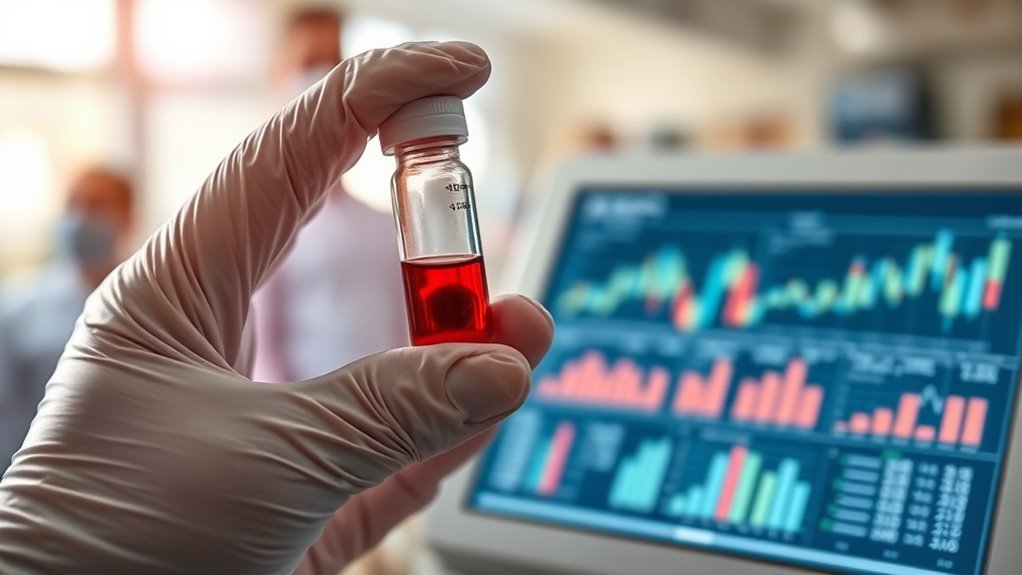
Detecting micronutrient deficiencies can be tricky because of limited diagnostic tools and subtle signs. You might not notice symptoms until deficiencies are advanced or hidden under subclinical conditions. Overcoming these challenges is essential for timely and accurate diagnosis. Utilizing advanced testing methods can improve detection accuracy and help identify deficiencies earlier.
Limited Diagnostic Tools
Despite the critical importance of identifying micronutrient deficiencies, current diagnostic tools often fall short in accuracy, accessibility, and timeliness. Diagnostic innovations face significant hurdles, making screening challenging worldwide. You should be aware of three key issues: 1. Limited availability of affordable, reliable tests in low-resource settings. 2. Delays caused by complex laboratory procedures and processing times. 3. Variability in test sensitivity, leading to missed or inaccurate diagnoses. These challenges hinder early detection, preventing timely intervention. As a result, many deficiencies go unnoticed until health problems emerge. Improving diagnostic tools is essential to overcoming screening challenges, enabling healthcare providers to better identify deficiencies. Without advances in technology, addressing global micronutrient gaps remains a significant hurdle. Additionally, promoting cultural awareness in health practices can facilitate better acceptance and implementation of innovative diagnostic approaches worldwide.
Subclinical Deficiency Signs
Subclinical deficiency signs often present subtly, making them difficult to recognize before more serious health issues develop. These silent symptoms can easily be overlooked because they don’t cause obvious discomfort or visible changes. Detecting these deficiencies requires understanding biochemical markers, which reveal internal nutrient levels. However, biochemical markers aren’t always reliable or accessible in routine testing, leading to missed or delayed diagnoses. Because symptoms are often nonspecific—such as fatigue, weakness, or irritability—they can be mistaken for other conditions. This challenge emphasizes the importance of targeted testing and awareness. Without clear signs, you might not realize you’re deficient until a severe health problem arises. Early detection of subclinical deficiencies depends on a combination of clinical vigilance and appropriate laboratory assessments. For example, in some cases, Real Couples can provide insights into lifestyle factors that influence nutritional status and overall health.
Strategies for Prevention and Intervention

- Implement widespread fortification of staple foods like flour and salt.
- Conduct community outreach to raise awareness and encourage dietary changes.
- Provide targeted supplementation for high-risk groups such as pregnant women and children.
These strategies work together to address deficiencies at both individual and community levels, ensuring broader health benefits and sustainable improvements.
The Role of Policy and Global Initiatives

Policy frameworks and international initiatives play a crucial role in tackling micronutrient deficiencies by providing the necessary infrastructure, funding, and coordination to implement large-scale interventions. Strong policy frameworks set the foundation for national strategies, ensuring consistent priorities and resource allocation. Global partnerships enable countries to share knowledge, leverage technical expertise, and access funding to scale up nutrition programs effectively. These collaborations foster innovation, streamline efforts across sectors, and promote accountability. International agencies, governments, and non-governmental organizations work together to develop policies that support fortification, supplementation, and dietary diversification. By aligning efforts and mobilizing resources, policy frameworks and global partnerships create an environment where all-encompassing strategies can succeed, ultimately reducing the prevalence of micronutrient deficiencies worldwide.
Future Directions in Combating Micronutrient Deficiencies

Looking ahead, addressing micronutrient deficiencies will depend on innovative strategies and emerging technologies that complement existing policy efforts. Nutrient fortification can be expanded through new food technologies, making micronutrients more accessible. Public health campaigns will play a crucial role in raising awareness and changing behaviors. To make a real impact, focus on:
- Developing targeted nutrient fortification programs tailored to specific populations.
- Leveraging technology for rapid detection and monitoring of deficiencies.
- Promoting community-based public health campaigns to encourage dietary diversity and supplement use.
Frequently Asked Questions
How Do Micronutrient Deficiencies Affect Mental Health and Cognitive Development?
Micronutrient deficiencies can seriously impact your mental health and cognitive development. When you’re lacking essential nutrients like iron, zinc, or B vitamins, you might experience mood swings, fatigue, or difficulty concentrating. These deficiencies can slow down brain growth and impair memory, learning, and decision-making skills. Ensuring proper nutrition supports your mental well-being and cognitive function, helping you stay alert, focused, and emotionally balanced every day.
What Are Innovative Technologies for Detecting Hidden Micronutrient Deficiencies?
Sure, because nothing says “cutting-edge” like playing detective with biosensor applications and imaging technologies. You can now uncover hidden micronutrient deficiencies without endless blood tests or guesswork. These innovative tools allow real-time, non-invasive detection, revealing what’s really going on inside your body. It’s like having a high-tech microscope at your fingertips, transforming how we identify and address deficiencies before they cause irreversible damage—no more waiting in the dark.
How Do Climate Change and Environmental Factors Influence Micronutrient Availability?
Climate impact and environmental factors directly affect micronutrient availability by changing crop growth conditions, reducing soil fertility, and increasing contamination risks. You might notice that extreme weather, droughts, and floods diminish nutrient-rich food production, making it harder to obtain essential vitamins and minerals. These environmental shifts can lead to deficiencies, impacting health, especially in vulnerable populations. Adapting agricultural practices and promoting resilient crops can help mitigate these effects.
Can Fortification and Supplementation Fully Eradicate Micronutrient Deficiencies?
Can food fortification and dietary supplements fully eradicate micronutrient deficiencies? It’s tempting to believe so, but the answer isn’t straightforward. While these strategies markedly reduce deficiencies, they can’t reach everyone or address underlying issues like food insecurity and poor diets. You must recognize that an all-encompassing approach—improving access to diverse foods and sustainable practices—is essential. Fortification and supplements are crucial tools, but not the ultimate solution.
What Role Do Cultural Practices Play in Micronutrient Deficiency Prevention?
You should recognize that cultural practices greatly influence micronutrient deficiency prevention. Traditional diets shape food choices, promoting nutrient-rich or nutrient-poor foods. Cultural taboos can restrict access to certain nutritious foods, making it harder to meet dietary needs. By understanding and respecting these traditions, health programs can better tailor interventions, encouraging culturally acceptable ways to improve nutrition. Addressing these cultural factors guarantees more effective and sustainable micronutrient deficiency prevention strategies.
Conclusion
As you navigate the fight against micronutrient deficiencies, remember they’re the silent shadows dimming potential worldwide. Addressing these deficiencies is like shining a light into dark corners, revealing hope and health. Your efforts, policies, and innovations serve as the keys to unfastening brighter futures. By understanding and acting on this global challenge, you become the catalyst for change—transforming hidden struggles into stories of resilience and renewal.
Fall Picks
fall essentials
As an affiliate, we earn on qualifying purchases.