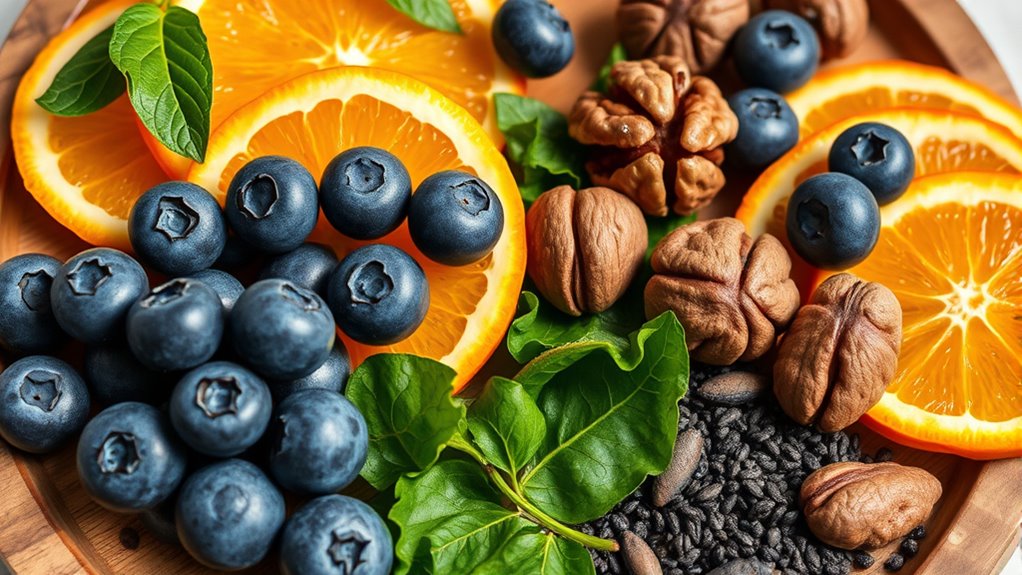

To boost your mood and support mental health, focus on foods that nourish your gut and brain. Include fermented items like yogurt and kimchi for probiotics, eat fatty fish rich in omega-3s, and load up on colorful fruits and vegetables for antioxidants. Avoid processed foods high in sugar and unhealthy fats, which can harm your gut bacteria. Staying mindful of your diet can markedly enhance your mental clarity and emotional resilience—discover more ways to feel better inside and out.

Get health and wellness essentials delivered free — and shop member deals
- Fast, free delivery on millions of items
- Access to Prime Big Deal Days deals on October 6–7
- Prime Video, Amazon Music and more included
Key Takeaways
- Incorporate fermented foods like yogurt and kimchi to introduce beneficial probiotics that support mood-regulating neurotransmitter production.
- Consume omega-3-rich fatty fish such as salmon and mackerel to reduce inflammation and enhance brain function.
- Include colorful fruits and vegetables high in antioxidants and vitamins to combat oxidative stress and improve mental clarity.
- Ensure adequate intake of B vitamins, magnesium, vitamin D, and omega-3s through nutrient-dense whole foods to prevent deficiencies linked to mood disorders.
- Limit processed foods high in sugar and unhealthy fats, as they disrupt gut flora and negatively impact mood and mental health.

Have you ever wondered how your diet impacts your mood and mental well-being? The answer lies in the intricate relationship between what you eat and how your brain functions. One vital aspect is the brain gut connection, a powerful link between your digestive system and your mental health. When your gut is healthy, it produces neurotransmitters like serotonin, which regulate mood, sleep, and anxiety. Conversely, poor digestion or an unbalanced gut can send negative signals to your brain, leading to feelings of irritability, depression, or brain fog. This connection emphasizes the importance of nourishing your gut with the right foods to support mental health.
Your gut health directly influences your mood and mental clarity through the brain-gut connection.
Nutrient deficiencies are often at the root of many mood disorders. When your body lacks essential vitamins and minerals, your brain doesn’t get the fuel it needs to operate at its best. For example, deficiencies in B vitamins, magnesium, omega-3 fatty acids, and vitamin D have all been linked to increased risk of depression and anxiety. If your diet is lacking in these nutrients, you might notice a decline in your overall mood or mental clarity. It’s not just about avoiding deficiencies but actively incorporating foods that boost your brain’s health. Whole foods rich in these nutrients, such as leafy greens, nuts, seeds, fatty fish, and fortified foods, can make a real difference.
Focusing on nutrient-dense foods helps support the brain gut connection and reduces the risk of nutrient deficiencies. Fermented foods like yogurt, kefir, sauerkraut, and kimchi introduce beneficial probiotics that promote a healthy gut environment. When your gut bacteria are balanced, they produce neurotransmitters and other compounds that positively influence your mood. Similarly, consuming omega-3-rich fish like salmon or mackerel provides essential fats that reduce inflammation and support brain function. Including a variety of colorful vegetables and fruits ensures you get antioxidants and vitamins that combat oxidative stress, which can harm brain cells and impair mental health.
In addition, avoiding processed foods high in sugar and unhealthy fats is vital. These foods can disrupt your gut flora and contribute to inflammation, both of which negatively affect your mood. Instead, opt for whole, minimally processed foods that nourish your body and mind. Staying consistent with a balanced diet that incorporates these elements can lead to improved mental clarity, better emotional resilience, and an overall boost in mood. Remember, your mental health is closely tied to what you feed your body, so choose foods that support your brain gut connection and nutrient absorption.
As an affiliate, we earn on qualifying purchases.
Frequently Asked Questions
Can Specific Foods Cure Depression or Anxiety?
No, specific foods can’t cure depression or anxiety, but they can support your mental health. By focusing on the brain-gut connection and ensuring you avoid nutrient deficiencies, you may improve your mood. Eating nutrient-rich foods like fruits, vegetables, and lean proteins helps provide essential vitamins and minerals that support brain function. While diet alone isn’t a cure, it’s a vital part of a thorough approach to managing these conditions.
How Quickly Can Mood-Boosting Foods Improve Mental Health?
You might notice a gentle lift in your mood within a few days to weeks as mood-boosting foods support your brain chemistry. When you eat nutrient-rich options, your body absorbs essential nutrients more effectively, helping stabilize your emotions. While these foods aren’t instant fixes, consistent consumption can foster a positive shift over time. Be patient, and remember that nourishing your body is a steady step toward improved mental well-being.
Are Supplements Necessary for Mental Health Nutrition?
Supplements aren’t always necessary for mental health nutrition; focusing on whole foods usually offers better nutrient absorption efficiency. You get a broader spectrum of vitamins, minerals, and phytochemicals that work together to boost your mood naturally. While supplements can help if you have deficiencies, they shouldn’t replace a balanced diet. Prioritize nutrient-rich foods first, and consult a healthcare professional before adding supplements, ensuring they complement your mental health goals effectively.
Do Dietary Changes Replace Therapy or Medication?
Dietary changes can’t replace therapy or medication, but they can complement your mental health efforts. By practicing mindful eating and paying attention to nutrient timing, you support your brain’s chemistry and stability. Incorporate mood-boosting foods into your meals, but remember, professional treatment is essential for managing mental health conditions. Use nutrition as a supportive tool, not a substitute, ensuring a well-rounded approach to your mental wellness.
Are There Any Foods to Avoid for Mental Well-Being?
Sure, avoid alcohol consumption and processed snacks if you want a happier mind. These culprits may seem harmless but actually sabotage your mental well-being, messing with your mood and energy levels. Instead of reaching for that sugary snack or a drink, opt for whole foods that support your brain health. Say no to quick fixes and yes to nourishing choices—your mood will thank you.
As an affiliate, we earn on qualifying purchases.
Conclusion
Think of your brain as a garden; the foods you choose are the seeds you plant. When you nourish it with mood-boosting foods, you’re watering and tending those seeds, helping your mental health blossom. Skip the junk and focus on wholesome options, and watch your mood and clarity grow like a vibrant, thriving garden. Remember, your daily choices are the sunlight and rain—powerful tools to cultivate a happier, healthier mind.
As an affiliate, we earn on qualifying purchases.
As an affiliate, we earn on qualifying purchases.
Fall Picks
fall essentials
As an affiliate, we earn on qualifying purchases.