
To reduce your environmental impact through sustainable eating, focus on making mindful choices like eating more plant-based meals, supporting local and seasonal foods, and reducing reliance on resource-heavy animal products. Emphasizing vegetables, fruits, grains, and legumes helps lower greenhouse gases and conserves water and land. By supporting nearby farms and choosing in-season produce, you can further minimize transportation emissions. If you’re interested, you’ll find plenty of simple ways to make a positive difference.
Key Takeaways
- Adopting plant-based diets reduces greenhouse gas emissions and resource use associated with livestock farming.
- Sourcing food locally and seasonally minimizes transportation emissions and supports sustainable agriculture.
- Incorporating more plant-based meals weekly lowers environmental impacts and decreases reliance on resource-intensive animal products.
- Choosing sustainable farming practices and reducing food waste further decreases ecological footprints.
- Small dietary changes and mindful food choices contribute significantly to overall environmental impact reduction.
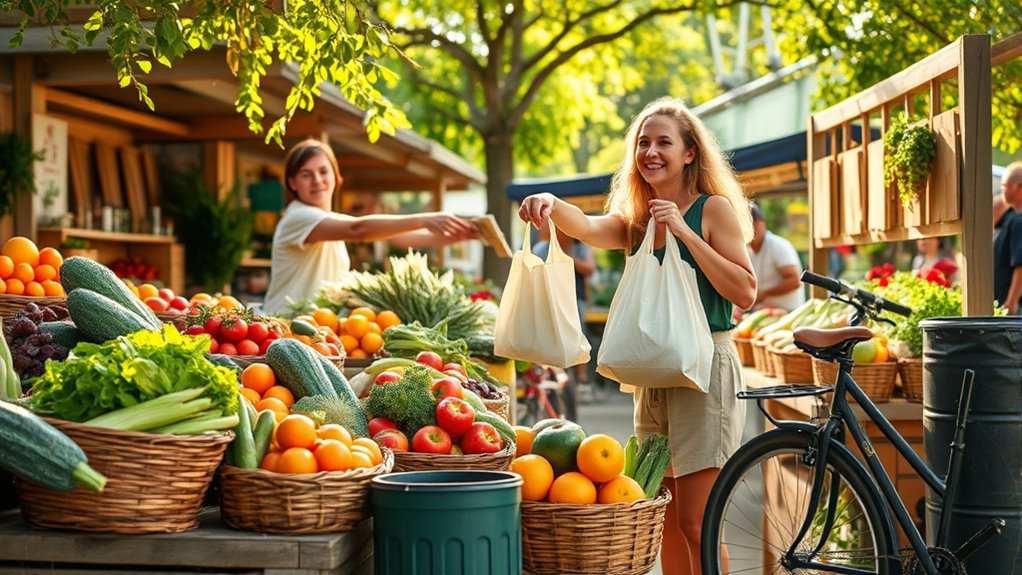
Have you ever wondered how your food choices impact the planet? Every meal you eat has a ripple effect on the environment, from water use to greenhouse gas emissions. One effective way to reduce your ecological footprint is by embracing plant-based diets. These diets focus on consuming more vegetables, fruits, grains, and legumes instead of relying heavily on meat and dairy. Livestock farming is a significant contributor to climate change because it produces methane, a potent greenhouse gas, and requires vast amounts of land, water, and energy. By shifting toward plant-based options, you directly cut down on these emissions, helping to slow global warming. Plus, plant-based foods often require fewer resources to produce, making them more sustainable overall. Incorporating more plant-based meals into your routine isn’t about giving up all animal products but about making smarter, more conscious choices that benefit the environment.
Alongside adopting plant-based diets, prioritize local food sourcing whenever possible. Choosing locally grown food means you’re supporting nearby farmers and reducing the need for long-distance transportation, which is a key source of fossil fuel consumption and air pollution. When food travels hundreds or thousands of miles to reach your plate, it leaves a hefty carbon footprint. By buying from local farmers’ markets or joining community-supported agriculture (CSA) programs, you gain access to fresher produce and help foster a sustainable local economy. Local food sourcing also encourages seasonal eating, which means consuming foods at their peak ripeness, reducing the need for energy-intensive refrigeration and artificial preservatives. Additionally, supporting local farmers often leads to more transparent and environmentally friendly farming practices, as small-scale farms tend to prioritize sustainability over mass production. Reducing reliance on resource-heavy animal agriculture can significantly lower your overall environmental impact.
Making these changes doesn’t require a complete overhaul of your diet but rather small, intentional adjustments. Start by incorporating more plant-based meals into your weekly routine and seek out local food sources. These steps not only lower your environmental impact but can also enhance your diet’s diversity and nutritional value. Being mindful about your food choices empowers you to be part of a larger movement toward sustainability. When you opt for plant-based diets and prioritize local sourcing, you’re reducing reliance on resource-heavy animal agriculture and diminishing transportation emissions. This way, you contribute directly to mitigating climate change while enjoying fresh, wholesome foods. Remember, even small shifts in your eating habits can lead to significant positive effects for the planet, making sustainability an accessible goal for everyone.

BlueWood 10-in-1 Pikler Triangle Set, Toddler Climbing Toys Indoor, Montessori Climber, Baby Jungle Gyms with Arch, Extra Rope Ladder & Footprint Balance Beam - Rose Garden
Endless Play with Four-Piece Set: Ramble Pikler Set has four pieces: triangle climber, arch, ramp, and a rope...
As an affiliate, we earn on qualifying purchases.
Frequently Asked Questions
How Can Urban Residents Access Sustainable Food Options?
You can access sustainable food options by exploring urban farming initiatives and joining community supported agriculture programs. Urban farms often sell fresh, local produce directly to residents, reducing your carbon footprint. Community supported agriculture allows you to buy shares in local farms, ensuring you get seasonal, sustainable foods while supporting local farmers. These options make it easier for you to enjoy healthy, eco-friendly meals right in your city.
What Are the Economic Benefits of Sustainable Eating Practices?
Switching to sustainable eating practices can boost your economy by creating new market opportunities and offering economic incentives. For example, a local farm adopting organic methods might attract eco-conscious consumers, increasing sales and profits. This growth benefits farmers and communities alike. By supporting sustainable foods, you help stimulate local economies, reduce environmental costs, and enjoy healthier options—making it a win-win for your wallet and the planet.
How Does Food Packaging Impact Environmental Sustainability?
Food packaging considerably impacts environmental sustainability, especially through single-use plastics that often end up in landfills and oceans, harming ecosystems. Opting for biodegradable packaging reduces plastic waste and pollution, making your choices more eco-friendly. By choosing products with sustainable packaging, you help decrease reliance on harmful materials, support eco-conscious companies, and promote a healthier planet for future generations. Your decisions can make a real difference in reducing environmental harm.
Can Traditional Diets Be Aligned With Modern Sustainability Goals?
Absolutely, you can make traditional diets fit modern sustainability goals! By emphasizing cultural preservation, you celebrate your heritage while choosing local, seasonal foods that reduce carbon footprints. Focus on maintaining nutritional balance, avoiding excess waste, and minimizing processed ingredients. It’s like giving your ancestors’ wisdom a green makeover—saving the planet one delicious, culturally rich meal at a time. Embrace the harmony of tradition and sustainability for a healthier, more vibrant future!
What Role Do Food Policies Play in Promoting Sustainable Eating?
Food policies play a vital role in promoting sustainable eating by encouraging responsible choices. You can benefit from clear food labeling that highlights environmental impacts, helping you make informed decisions. Policy incentives motivate producers to adopt eco-friendly practices, making sustainable options more accessible and affordable for you. Together, these strategies guide your eating habits toward sustainability, reducing environmental harm while supporting healthier, more responsible food systems.

Duwenem Pikler Triangle Set, 10in1 Toddler Climbing Toys Indoor, Montessori Kids' Indoor Climbers & Play Structures with Arch&Ramp&Ladder, Indoor Baby Climber for Montessori Toys
10-in-1 Variety for Endless Indoor Play: Duwenem 10-in-1 toddler climbing toys indoor redefine playtime with a complete Pikler...
As an affiliate, we earn on qualifying purchases.
Conclusion
By choosing to embrace sustainable eating, you’re gently guiding the planet toward a brighter future. Every mindful bite you take helps nurture our environment and preserves its beauty for generations to come. Think of it as a small, delightful step that makes a big difference—like a gentle ripple spreading kindness across the Earth. So, enjoy your journey toward healthier, more mindful meals, knowing you’re contributing to a more harmonious and vibrant world without sacrificing flavor or joy.

BlueWood Pikler Triangle Set with Cushion, 8-in-1 Foldable Wooden Toddler Climbing Toys Indoor Playground Jungle Gym Montessori Philosophy Climber for 2-6 Years Old, Baby, Kids (Rainbow)
Comfortable Cushion Support: Soft padded cushion with breathable cotton and four secure straps stays firm on the Nostalgia...
As an affiliate, we earn on qualifying purchases.

WINGYZ Pikler Triangle Set, Montessori Foldable 8-in-1 Jungle Gym with Reversible Animal Slide, Patent-Protected Climbing Set, Safe 2.35" Gap ASTM F963 Standards for Toddlers 18 Months-7 Years (Teak)
PICTURE THIS: YOUR CHILD’S EYES LIGHT UP — Imagine the delight as they discover a rainbow climbing wonderland....
As an affiliate, we earn on qualifying purchases.