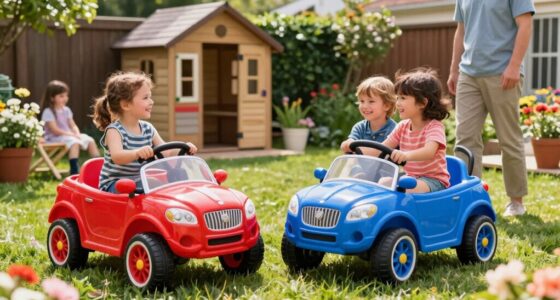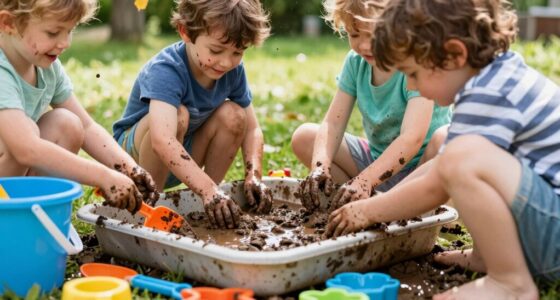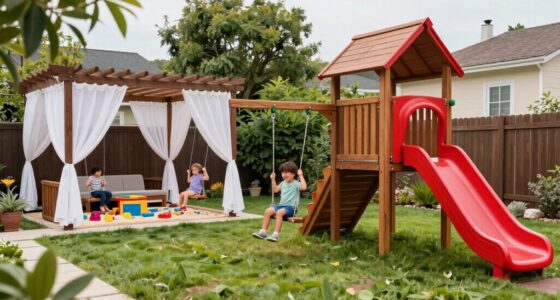
To create a nature play space at home, select a safe, sunny spot with shade nearby, avoiding hazards. Use natural elements like rocks, logs, and native plants to attract wildlife and provide tactile experiences. Incorporate sensory features such as fragrant herbs and textured bark, along with hands-on activities like mud kitchens and digging areas. Keep the space sustainable and easy to maintain, involving children in its creation and care. If you’d like detailed steps, keep exploring for inspiring ideas.

Get health and wellness essentials delivered free with Prime
- Fast, free delivery on millions of items
- Prime Video, Amazon Music and more included
- Member-only deals all year
Key Takeaways
- Select a sunny, safe location with shade and minimal hazards for a comfortable, inviting environment.
- Incorporate natural elements like rocks, logs, native plants, and water features to attract wildlife and provide sensory experiences.
- Include tactile and sensory activities such as fragrant herbs, textured bark, and digging areas for hands-on engagement.
- Add wildlife-friendly features and diverse plantings to promote ecological learning and support local fauna.
- Involve children in building, planting, and maintaining the space to foster ownership, curiosity, and a love for nature.
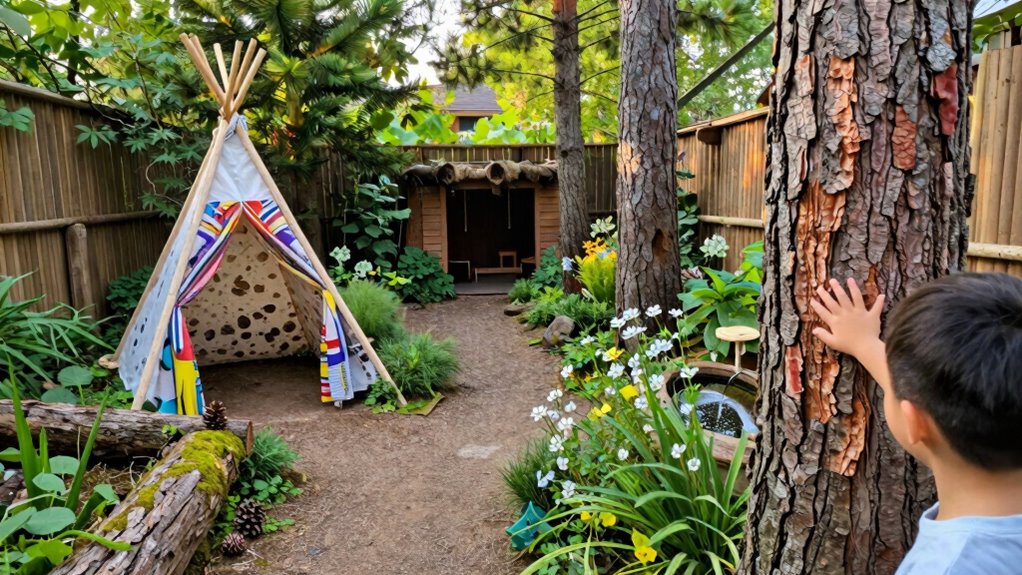
Creating a nature play space at home offers children a chance to explore the outdoors, develop their senses, and foster a love for the environment. To start, choose a suitable location in your yard or garden where kids can comfortably engage with nature. Look for a spot that gets plenty of sunlight, has some shade, and is safe from busy pathways or hazards. Once you’ve identified the area, think about how to make it inviting and educational. Incorporate natural elements like rocks, logs, and plants that encourage kids to observe, touch, and learn about the environment around them.
Choose a safe, sunny spot in your yard to create an inviting, educational nature play space for kids.
In designing your space, focus on creating wildlife habitats that attract birds, butterflies, and other creatures. You can add shallow water features, birdhouses, or native plants that provide food and shelter. These habitats not only make the space lively and engaging but also teach children about local ecosystems and the importance of biodiversity. When selecting materials, prioritize sustainable options. Use reclaimed wood, natural stones, and biodegradable decor to minimize your environmental impact. Avoid plastics and synthetic products, which can harm wildlife and pollute the environment. Sustainable materials help keep your play space eco-friendly and foster a sense of responsibility in your children to protect the planet.
Adding elements that stimulate the senses is essential. Incorporate textured bark, fragrant herbs, and colorful flowers to engage sight, smell, and touch. You could set up simple activities like mud kitchens, sand pits, or plantings where kids can dig, plant, and nurture. These hands-on experiences improve fine motor skills, encourage creativity, and deepen their connection to nature. Keep the area flexible; avoid over-structuring it so children can freely explore and invent their own games. Use natural materials for seating and stepping stones, which blend seamlessly into the environment and withstand weather conditions. Additionally, incorporating wildlife-friendly features can enhance the educational value and ecological health of the space. Creating habitats that support local fauna can also teach children the importance of biodiversity conservation. Understanding the role of drone bees and other pollinators in maintaining healthy ecosystems can enrich children’s appreciation for the interconnectedness of nature. Incorporating a variety of planting options can further attract beneficial insects and provide ongoing learning opportunities. Finally, involve your kids in creating and maintaining the space. Let them help plant, build, or choose decorations. This involvement increases their curiosity and sense of ownership, making the play area more meaningful. Regularly refresh the space with new plants or features, and ensure it remains safe and clean. A well-designed, sustainable, wildlife-friendly play space at home provides endless opportunities for discovery, learning, and joy while nurturing a lifelong love for nature.
As an affiliate, we earn on qualifying purchases.
Frequently Asked Questions
What Safety Considerations Should I Keep in Mind?
You should prioritize safety by ensuring wildlife habitats are secure and that children can’t access potentially dangerous areas. Choose sturdy outdoor furniture that won’t tip easily, and avoid sharp or splintered materials. Regularly inspect the space for hazards like broken branches or debris. Keep pathways clear, and consider fencing to contain children and protect wildlife habitats. Always supervise play and educate kids about respecting nature to create a safe, enjoyable environment.
How Much Space Do I Need for a Play Area?
You should allocate at least 10-15 square feet per child for a comfortable play area. Incorporate garden design elements that encourage exploration, like trees or shrubs, and include outdoor furniture that’s kid-friendly. Make certain the space is open enough for running and playing, yet safely enclosed. This balance ensures your children have ample room to enjoy nature, develop their imagination, and stay active within a well-designed outdoor environment.
Are There Specific Plants Suitable for Children?
Yes, there are child-friendly plants that suit a nature play space. Opt for wildflower selection like daisies, sunflowers, and violets, which are safe and colorful. Choose child-friendly shrubs such as lilacs, hydrangeas, and raspberry bushes that are non-toxic and soft to touch. These plants create a safe, engaging environment, encouraging kids to explore, learn, and connect with nature while minimizing risks of harm.
How Do I Maintain the Play Space Over Time?
Imagine your garden art shining amidst flourishing plants as you regularly inspect and clean outdoor furniture, keeping the space inviting. You’ll want to prune plants, remove debris, and check for pests to maintain safety. Over time, add new elements like seasonal flowers or playful garden art, and guarantee outdoor furniture stays sturdy and clean. Consistent care keeps your play space vibrant, safe, and inspiring for children to explore and enjoy.
Can I Include Water Features Safely?
Yes, you can include water features safely by choosing shallow, contained options like birdbaths or small ponds with secure edges. Make sure they have wildlife-friendly habitats and incorporate sensory elements like gentle streams or bubbling fountains to engage kids and attract wildlife. Always supervise children around water, keep the area clean to prevent mosquito breeding, and use natural materials to blend seamlessly with your play space’s nature theme.
wildlife-friendly water feature for garden
As an affiliate, we earn on qualifying purchases.
As an affiliate, we earn on qualifying purchases.
Conclusion
Creating a nature play space at home is like planting a seed that grows curiosity and joy. With just a little effort, you turn your yard into a wild garden of discovery, where your kids can explore, imagine, and connect with the outdoors. Remember, this space is a living storybook waiting to be written with every muddy footprint and every giggle. So, embrace the adventure, and watch your child’s love for nature blossom.
natural sensory play materials for children
As an affiliate, we earn on qualifying purchases.
As an affiliate, we earn on qualifying purchases.
sustainable outdoor play equipment
As an affiliate, we earn on qualifying purchases.
As an affiliate, we earn on qualifying purchases.
Cold & flu season Picks
humidifiers
As an affiliate, we earn on qualifying purchases.