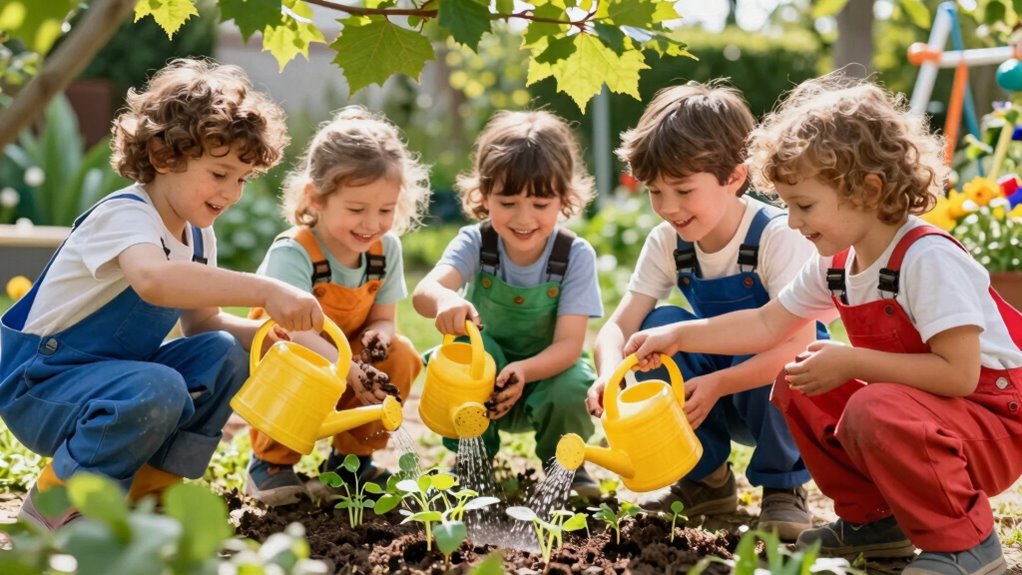

To use gardening as play for kids, turn your outdoor space into a lively learning environment with hands-on activities. Encourage their imagination through plant-based storytelling, like treating seeds as treasure or beans as friendly giants. Create fun crafts, such as painted plant markers or bird feeders, to foster ownership and creativity. Incorporate problem-solving by turning plant issues into detective stories. Emphasize sustainability to instill environmental care. Keep exploring ways to make gardening an engaging and enriching experience for kids.
Key Takeaways
- Incorporate storytelling to make plant growth and gardening tasks engaging and memorable for children.
- Create DIY garden crafts like plant markers and bird feeders to foster creativity and ownership.
- Turn troubleshooting into detective games to develop problem-solving and critical thinking skills.
- Design interactive activities such as planting, watering, and observing to promote hands-on learning.
- Teach environmental stewardship by discussing sustainability and biodiversity through gardening activities.
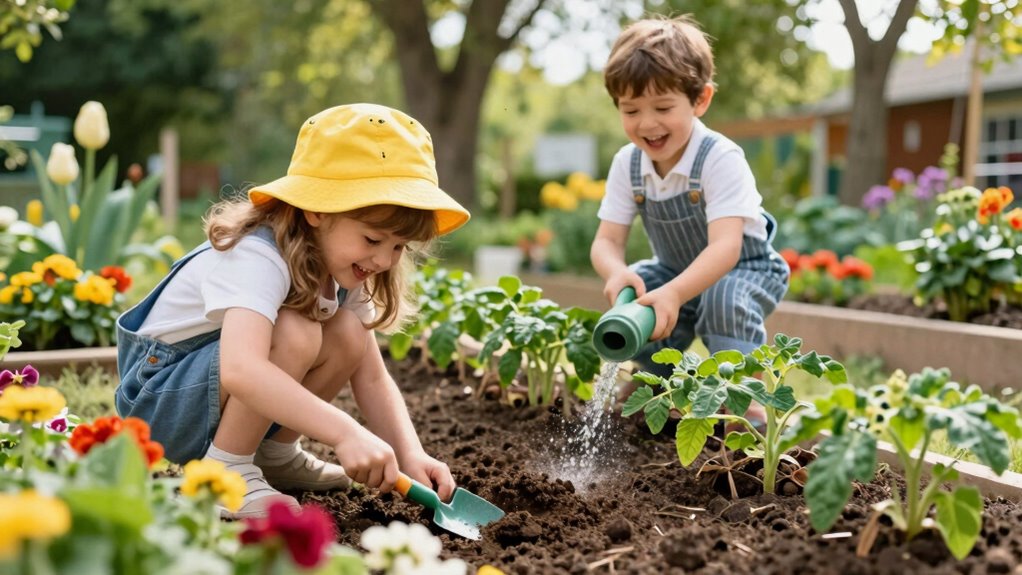
Gardening can be a fun and educational activity that turns outdoor space into a playful learning environment for kids. When you involve children in gardening, you open the door to creative storytelling and hands-on projects like DIY garden crafts. These activities make the experience more engaging, helping kids connect with nature while developing important skills.
One way to make gardening interactive is through plant-based storytelling. You can encourage children to imagine the life cycle of a seed or the journey of a tiny sprout as part of a story they create themselves. For example, they might pretend that a sunflower seed is a treasure waiting to be discovered or that a bean plant is a friendly giant growing tall to reach the sky. This approach sparks their imagination and helps them understand plant growth in a fun, memorable way. As they nurture their plants, they see the story come to life, solidifying their understanding of nature’s processes.
DIY garden crafts are another excellent way to turn gardening into play. You can guide kids in making plant markers from painted rocks, decorated sticks, or repurposed materials, which makes identifying different plants more exciting. Kids love creating personalized garden signs that add color and personality to the space. You can also encourage them to craft bird feeders or insect hotels from simple household items. These crafts not only make the garden more lively but also teach children about the importance of supporting local wildlife. The act of making these crafts together fosters a sense of ownership and pride in their garden. Incorporating environmental stewardship into these activities helps children understand their role in protecting our planet.
Incorporating storytelling and DIY crafts into gardening also boosts problem-solving skills. For instance, if a plant isn’t thriving, you can turn it into a detective story where the children figure out what might be wrong—maybe they need more water, sunlight, or different soil. This approach makes troubleshooting an adventure rather than a chore. Plus, it allows them to apply critical thinking while enjoying their outdoor playtime. Understanding plant growth processes helps children grasp the science behind gardening, making their learning experience even richer.
Additionally, learning about plant growth can inspire children to take an active interest in sustainability and environmental stewardship, which are essential concepts for their future. You can further emphasize the importance of environmental care by discussing how gardening impacts local ecosystems and promotes biodiversity. Ultimately, by blending plant-based storytelling and DIY garden crafts, you transform gardening from a routine task into a dynamic playground. Kids learn about nature, develop their creativity, and build confidence—all while having fun in the fresh air. These activities make gardening a memorable experience that nourishes both their curiosity and their connection to the natural world.
As an affiliate, we earn on qualifying purchases.
Frequently Asked Questions
What Age Is Best for Introducing Kids to Gardening?
You can introduce kids to gardening as early as age three, using simple planting techniques like planting seeds or watering. Younger children benefit from hands-on activities, which boost their curiosity and motor skills. As they grow, you can teach more complex planting techniques. Gardening benefits include developing responsibility, patience, and an appreciation for nature. Starting early helps foster a lifelong love for gardening and the outdoors.
How Can I Make Gardening Safe for Young Children?
You can make gardening safe for young children by prioritizing gardening safety and child supervision. Keep sharp tools out of reach and use child-friendly, non-toxic plants. Always stay close and supervise their activities, so they don’t accidentally ingest harmful substances or hurt themselves. Creating a secure, designated gardening space and teaching them about safe practices builds trust and guarantees their curiosity thrives without unnecessary risks.
What Tools Are Suitable for Kids’ Gardening Activities?
You should choose child-friendly tools like small trowels, child-sized watering cans, and lightweight gloves for kids’ gardening activities. These tools are designed with safety in mind, supporting safe gardening practices. Always supervise your children to guarantee they use tools correctly and avoid hazards. Opt for tools with rounded edges and non-toxic materials, making gardening both fun and safe for your little helpers.
How Do I Handle Children’s Allergies Related to Gardening?
Think of yourself as a garden guardian, protecting your little explorers from allergies. To handle children’s allergies related to gardening, prioritize allergy prevention by choosing hypoallergenic plants and avoiding known irritants. Practice safe planting by washing hands thoroughly after gardening, wearing gloves, and keeping kids away from plants that trigger sensitivities. Regularly monitor for reactions, and consult an allergist if needed. This guarantees gardening remains a fun, safe adventure for your kids.
Can Gardening Help Children Learn About Sustainability?
Yes, gardening can help children learn about sustainability. By involving them in urban farming, they see firsthand how local food production reduces environmental impact. Teaching composting benefits shows them how organic waste transforms into nutrient-rich soil, promoting eco-friendly habits. This hands-on experience fosters environmental awareness, encourages responsible resource use, and instills sustainable practices that children carry into their daily lives.
As an affiliate, we earn on qualifying purchases.
Conclusion
By turning gardening into a playful adventure, you’re nurturing not just plants, but your child’s curiosity and confidence—think of it as planting seeds of wonder that will grow for years to come. As the great explorers like Indiana Jones discovered, every adventure begins with a bit of curiosity and a willingness to dig in. So, grab your tools, embrace the mess, and watch your little explorers blossom into nature’s own heroes.
children's garden craft supplies
As an affiliate, we earn on qualifying purchases.
As an affiliate, we earn on qualifying purchases.
As an affiliate, we earn on qualifying purchases.