
Using a scooter helps your preschooler develop coordination by encouraging balance, motor skills, and spatial awareness through active play. As they push, steer, and turn, they improve hand-eye coordination and refine movement control. Riding also boosts confidence, resilience, and social skills as children take turns and navigate around others. These activities set a strong foundation for future physical skills. Keep exploring to discover even more ways scooters support your child’s growth.
Key Takeaways
- Scooters enhance hand-eye coordination through precise control of handlebars and body movements.
- They develop spatial awareness as children navigate their environment and avoid obstacles.
- Riding improves bilateral coordination by engaging both sides of the body simultaneously.
- The activity reinforces muscle memory, supporting smooth and automatic movements.
- Scooters promote balance and motor skills essential for future physical tasks and activities.
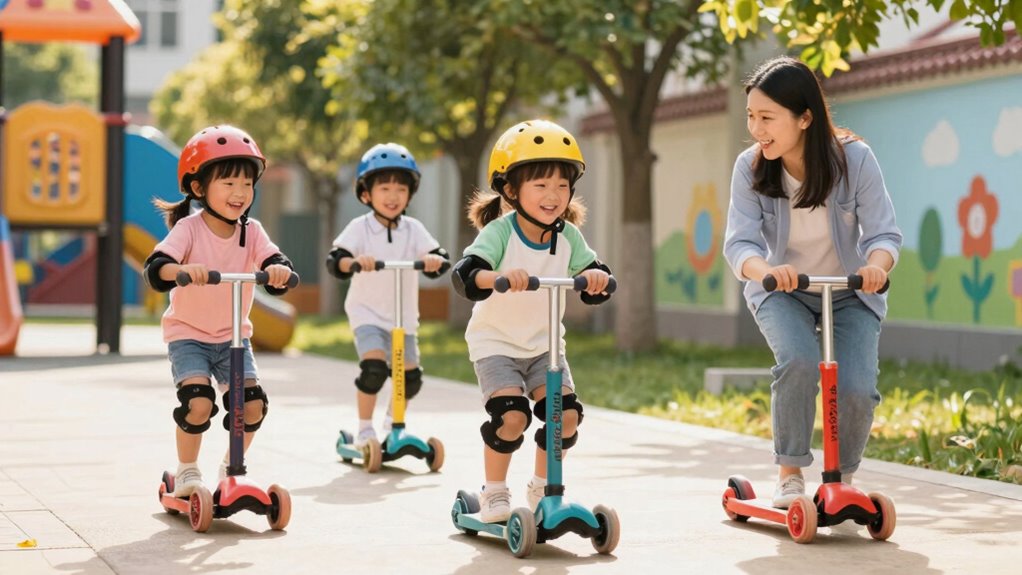
Introducing scooters into preschool activities can be a fun way to enhance children’s coordination skills. When you incorporate scooters into your child’s playtime, you’re providing an engaging opportunity for them to develop their balance and motor skills simultaneously. As preschoolers learn to ride and maneuver scooters, they actively work on maintaining their balance, which is indispensable for overall physical development. This process not only boosts their physical confidence but also helps them understand how their body moves in space.
Using scooters regularly encourages children to coordinate their movements smoothly. When your child pushes off with one foot, steers with the handlebars, or shifts their weight to turn, they’re practicing a variety of motor skills in real-time. These actions require precise control and timing, which in turn refine their hand-eye coordination and spatial awareness. As they gain confidence, they’ll start to experiment with different speeds and directions, pushing their limits just enough to challenge their motor control without feeling overwhelmed. This gradual progression is indispensable for building resilience and a sense of achievement.
Furthermore, riding scooters promotes bilateral coordination — the ability to use both sides of the body in a coordinated way. For example, your child will naturally use their dominant hand to grip the handlebars while their legs propel the scooter forward. This simultaneous use of both sides of the body fosters neural connections that are essential for many other tasks, like writing or sports. Plus, the repetitive nature of riding helps reinforce muscle memory, making these movements more automatic and fluid over time. Developing motor skills through activities like scooter riding can also positively influence other areas of your child’s development, including concentration and problem-solving abilities. Additionally, engaging in scooter play can help children develop balance and stability, which are fundamental components of physical coordination.
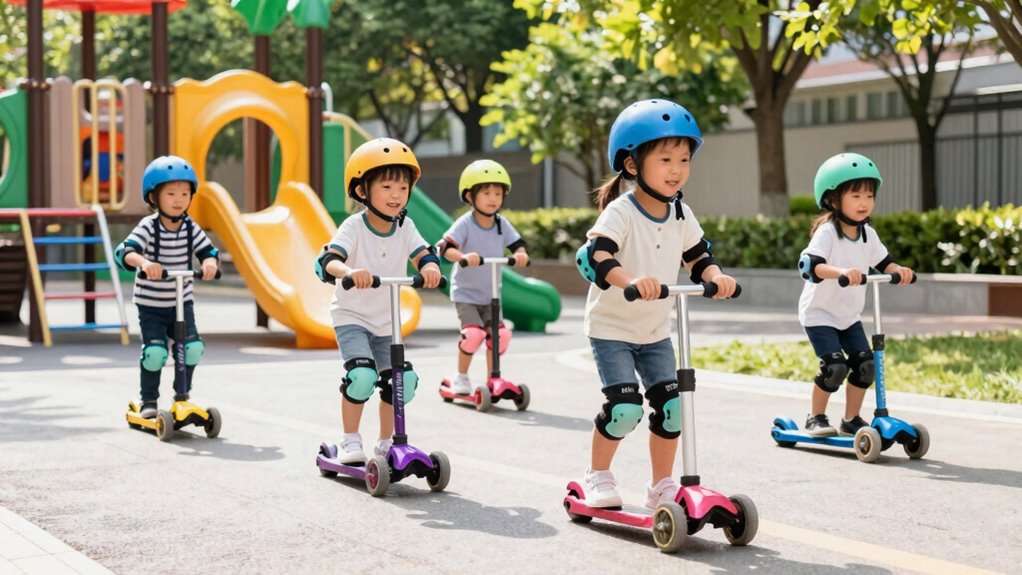
Beyond the physical benefits, scooter play can also support your child’s social and emotional development. As they ride around with friends, they learn to share space, take turns, and navigate around others, which boosts their social skills. The sense of independence that comes from mastering scooter riding builds self-esteem and encourages a positive attitude toward physical activity. Engaging in regular scooter play can also enhance their overall motor skill development, laying the groundwork for future physical challenges and activities. Incorporating structured playtime with scooters can help children practice both their motor and social skills in a fun environment. All these aspects combined make scooters an excellent tool for supporting well-rounded preschool development.
Ultimately, by introducing scooters into your child’s routine, you’re helping them develop essential motor skills and balance in a way that’s both enjoyable and educational. They get to practice control, coordination, and confidence all at once, setting a strong foundation for their future physical pursuits.
preschool kids scooter for balance and coordination
As an affiliate, we earn on qualifying purchases.
As an affiliate, we earn on qualifying purchases.
Frequently Asked Questions
What Types of Scooters Are Safest for Preschoolers?
The safest scooters for preschoolers are three-wheeled models with sturdy decks and adjustable handlebars. You should regularly check scooter maintenance to guarantee brakes work properly and wheels aren’t worn out. When not in use, store scooters in a secure, dry storage solution to keep them in good condition. Choosing lightweight, age-appropriate scooters with safety features helps prevent accidents and supports your child’s coordination development confidently.
How Do Scooters Enhance Social Skills in Preschoolers?
You might think scooters are just for fun, but surprisingly, they boost social skills too. You’ll notice your preschooler maneuvering playground dynamics, sharing space, and waiting their turn—all essential for peer interaction. Ironically, zooming around on scooters encourages cooperation and communication, helping kids build friendships. As they learn to ride, they also learn patience, empathy, and teamwork, making scooters a playful way to develop crucial social skills.
At What Age Should Children Start Riding Scooters?
Children can start riding scooters around ages 3 to 4, once they develop enough balance and motor skills. At this age, they typically gain better coordination, which helps them manage the scooter safely. You should watch for signs of readiness, like steady walking and climbing, to make sure they can handle the scooter confidently. Starting at the right age promotes balanced development and helps build essential motor skills in a fun, engaging way.
Are There Specific Safety Gear Recommendations for Preschoolers?
Yes, you should prioritize safety gear for preschoolers, including safety helmets and knee pads. These protect their heads and knees during falls or accidents, reducing injury risk. Make sure the helmet fits snugly and is approved for safety standards. Knee pads should be comfortable yet secure. Always supervise your child while they’re riding to reinforce safe habits, and regularly check gear for wear and tear to maintain protection.
How Can Parents Encourage Independent Scooter Riding?
Like a shepherd guiding their flock, you can encourage your child to ride independently by setting small, achievable goals that foster motor skill development and confidence building. Offer gentle encouragement, praise their efforts, and guarantee safety gear is worn. Gradually let them practice in safe, open spaces, allowing them to gain control and independence at their own pace. Your support helps them become confident and skilled scooter riders.
children's beginner ride-on scooter
As an affiliate, we earn on qualifying purchases.
As an affiliate, we earn on qualifying purchases.
Conclusion
As you watch children glide effortlessly on scooters, it’s no coincidence that their coordination skills flourish. These playful moments not only boost balance and motor skills but also foster confidence and joy. When you introduce scooters into preschool activities, you’re unknowingly setting the stage for lifelong coordination and self-assurance. So next time you see a child on a scooter, remember—sometimes, the simplest rides lead to the most remarkable growth.
kids scooter with adjustable handlebars
As an affiliate, we earn on qualifying purchases.
As an affiliate, we earn on qualifying purchases.
best preschool scooter for motor skills development
As an affiliate, we earn on qualifying purchases.
As an affiliate, we earn on qualifying purchases.