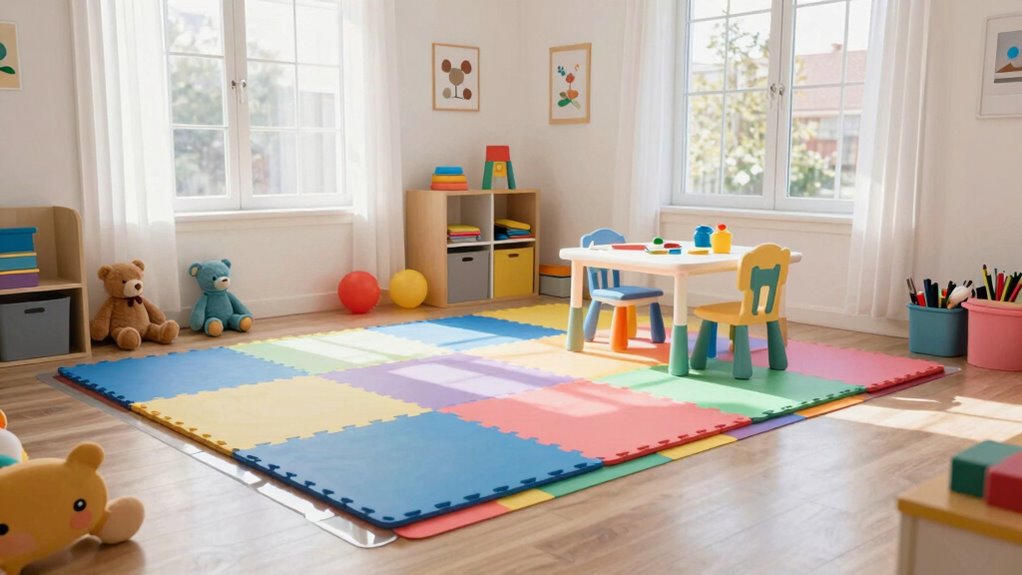

To create better play boundaries at home, model respectful behavior by demonstrating patience and gentle communication. Set clear, simple rules that are consistent and fair, making sure your children understand what’s expected. Reinforce boundaries positively and remind them calmly when needed. Establish routines to build trust and predictability, helping children feel safe. Supporting their emotional needs and respecting their cues also promote healthy boundaries. If you keep exploring, you’ll discover more ways to strengthen your child’s social skills and emotional security.

Get health and wellness essentials delivered free — and shop member deals
- Fast, free delivery on millions of items
- Access to Prime Big Deal Days deals on October 6–7
- Prime Video, Amazon Music and more included
Key Takeaways
- Model respectful behavior and gentle communication to set positive examples for boundary understanding.
- Establish clear, simple, and consistent rules to create a predictable play environment.
- Communicate boundaries clearly before play begins using straightforward language.
- Reinforce boundaries positively and maintain routine stability to foster safety and trust.
- Recognize children’s emotional cues and tailor boundaries to support their developmental needs.
Are your child’s playtime boundaries clear enough? If not, they might feel unsure about what’s okay and what’s not, leading to confusion or frustration during play. Setting clear boundaries isn’t just about telling your child what they can’t do; it’s about establishing a framework where they know what to expect. One of the most effective ways to do this is through role modeling. Children learn a lot by watching how you behave. If you consistently demonstrate respectful and safe interactions during your own activities, your child will naturally mirror those behaviors. For example, if you demonstrate patience and gentle words when resolving conflicts, your child will see that these are the expected ways to handle disagreements. Consistent rules also play a vital role. When boundaries are clear and rules are applied fairly and uniformly, children feel more secure. They understand that boundaries are not arbitrary but are meant to keep everyone safe and happy. Make sure your rules are simple, age-appropriate, and easy to remember. For example, “We use gentle hands,” or “Play only in designated areas.” When rules are consistent, you avoid giving mixed signals, which can confuse your child and undermine your authority. It’s equally important to communicate these boundaries clearly before play begins. Before your child starts playing, explain what behaviors are acceptable and what aren’t. For instance, you might say, “During playtime, we keep our hands to ourselves and share toys.” This clarity helps your child understand expectations upfront, reducing the chances of conflicts or misunderstandings. Reinforce boundaries gently and positively when they are followed, and calmly remind them when they’re not. Remember, children thrive on routine and predictability, which is why role modeling and consistent rules are so effective. Establishing consistent routines can also reduce stress for children by providing a stable environment. When you stick to these principles, your child learns to trust that boundaries are there for their safety and enjoyment. Additionally, understanding the importance of legal advice and proper documentation can help parents navigate situations where boundaries or safety concerns are involved, ensuring a secure environment. Being aware of child development principles can also help you tailor boundaries that support your child’s growth and emotional needs. Recognizing and respecting your child’s emotional cues can further improve communication and boundary-setting. Over time, this consistency builds their self-control and understanding of respectful play. It also makes your role as a parent or caregiver more manageable because you create a stable environment where everyone knows what to expect. Ultimately, clear boundaries set the foundation for healthy social skills and emotional development. When your child understands the limits and sees you respecting those limits through role modeling and consistent enforcement, they’re more likely to develop good habits that will serve them well both now and in the future.
As an affiliate, we earn on qualifying purchases.
Frequently Asked Questions
How Can I Enforce Boundaries Consistently Without Conflicts?
You can enforce boundaries consistently by practicing clear parental communication and maintaining calmness. When boundary negotiation happens, stay firm yet flexible, reminding your child of the agreed limits. Consistency is key; reinforce rules daily and avoid mixed signals. If conflicts arise, calmly explain why boundaries matter, listen to your child’s feelings, and reaffirm your expectations. This approach helps your child understand boundaries, reducing conflicts and fostering mutual respect.
What Are Age-Appropriate Boundaries for Different Children?
You need to tailor boundaries to your child’s age to keep things on track. For toddlers, keep boundaries simple and consistent, focusing on safety and basic respect. As kids grow, encourage emotional regulation by explaining boundaries clearly and involving them in setting rules. Remember, different parenting styles influence how boundaries are set—authoritative approaches work well for older children, fostering independence while maintaining respect. Adjust boundaries as your child develops to support healthy growth.
How Do I Handle Boundary Violations Calmly?
When boundary violations occur, stay calm and model emotional resilience. Use conflict resolution skills by gently addressing the behavior without anger or blame. Clearly explain why the boundary matters and listen to your child’s perspective. Reassure them with consistent responses, which helps build trust and understanding. Your calm approach encourages your child to learn from mistakes, fostering respect for boundaries and promoting healthier interactions at home.
When Should Boundaries Be Adjusted as Children Grow?
You should adjust boundaries as children grow to match their changing needs and development. Regularly observe their behavior and communication to identify when boundaries feel too strict or too loose. Setting boundaries with age adjustments helps children develop independence and responsibility while feeling secure. As they mature, gradually loosen restrictions and involve them in the process to foster understanding and respect for new limits.
How Do Boundaries Impact My Child’s Independence?
Did you know that children with healthy boundaries tend to develop stronger emotional skills and peer relationships? Boundaries support your child’s independence by helping them understand limits, build confidence, and make decisions. When boundaries are clear yet flexible, your child learns self-regulation and responsibility. This balance fosters emotional development, encourages social skills, and boosts their ability to navigate peer interactions confidently, setting a solid foundation for their growth.
positive discipline toys for kids
As an affiliate, we earn on qualifying purchases.
As an affiliate, we earn on qualifying purchases.
Conclusion
Remember, setting play boundaries is like planting a sturdy tree. With patience and clear roots, your child will grow into a confident, respectful gardener of their own space. These boundaries act as the branches — offering support while allowing room for exploration. As your child learns to respect limits, you’ll watch their independence flourish like leaves reaching toward the sun. Together, you’re nurturing a vibrant, balanced environment where play and growth thrive side by side.
As an affiliate, we earn on qualifying purchases.
emotional regulation toys for children
As an affiliate, we earn on qualifying purchases.
As an affiliate, we earn on qualifying purchases.
Cold & flu season Picks
humidifiers
As an affiliate, we earn on qualifying purchases.