
To blend active and quiet play in one room, organize the space into clear zones, such as an open area for energetic activities and a cozy corner for calming tasks. Use soft mats, sensory toys, and storage to keep each zone inviting and clutter-free. Incorporate visual and tactile elements to support sensory and emotional needs, ensuring seamless shifts between high-energy and calming activities. Keep exploring for more tips on designing a balanced play environment.
Key Takeaways
- Divide the room into designated zones for active and quiet play to promote focus and energy balance.
- Use soft rugs, mats, and clear signage to visually distinguish each area.
- Incorporate storage solutions to keep both zones organized and clutter-free.
- Include sensory elements and calming features in the quiet zone to support relaxation.
- Design smooth transitions with visual cues or soft lighting to shift between active and calming activities.
Balancing active play and quiet play is essential for fostering your child’s overall development and maintaining harmony in your daily routine. When you create a space that supports both types of activities, you help your child develop important skills like sensory integration and self-regulation. The key is thoughtful space organization, which guarantees that different zones within the room serve specific purposes without cluttering or overwhelming the area.
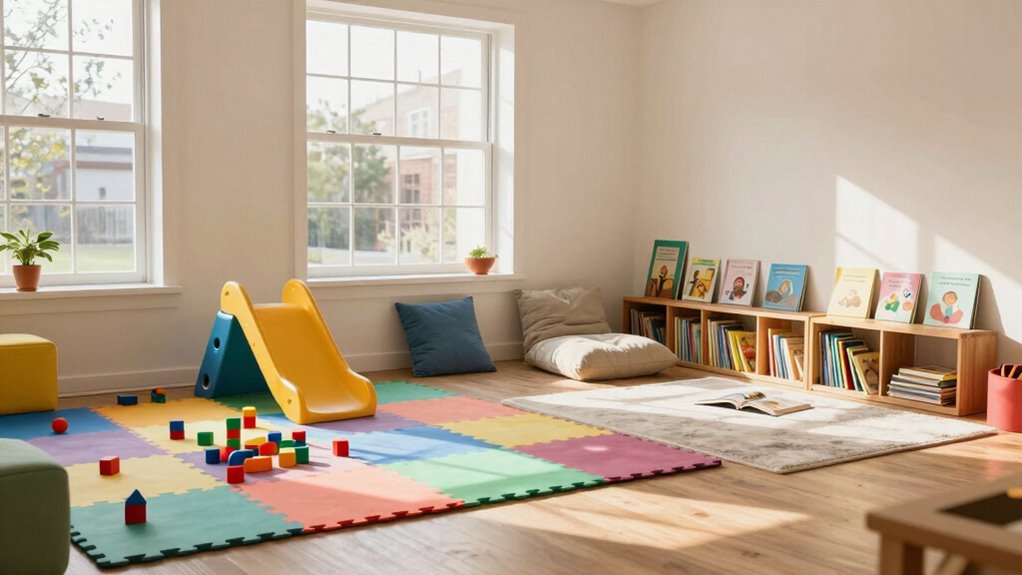
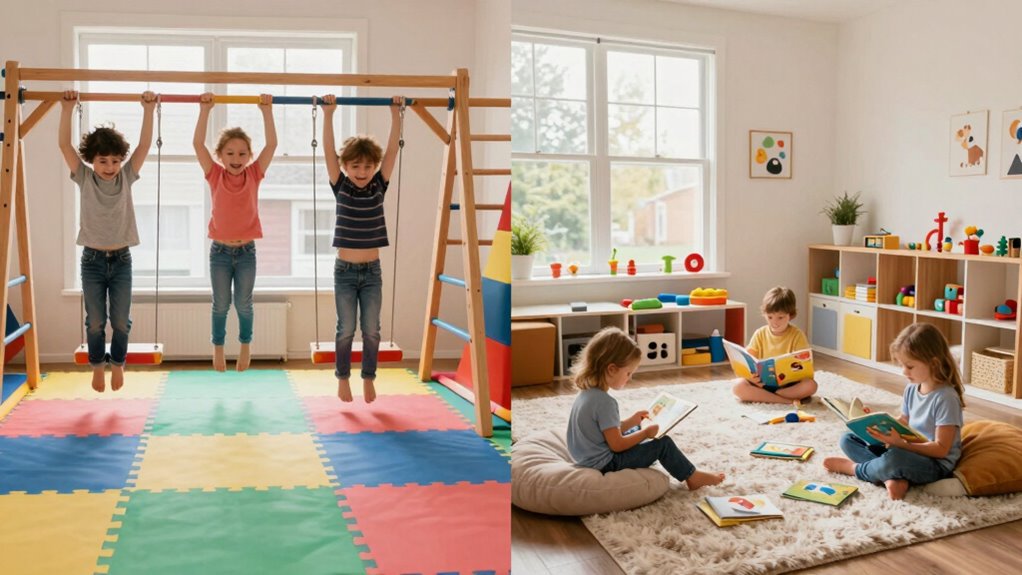
Start by dividing the room into clearly defined zones, so your child knows where to go depending on what they want to do. You can designate one corner for active play, filled with open space for running, jumping, or climbing. Use soft mats or rugs to define this area and make it safe for energetic movements. Incorporate toys and equipment like balance beams, balls, or climbing structures that promote sensory integration by engaging multiple senses during active play. These elements help your child process sensory input effectively, which is crucial for their overall development. Additionally, considering projector technology can inspire imaginative active play by projecting interactive games or visuals, making physical activity more engaging.
Create a dedicated active zone with soft mats, sensory toys, and climbing structures for safe, engaging energetic play.
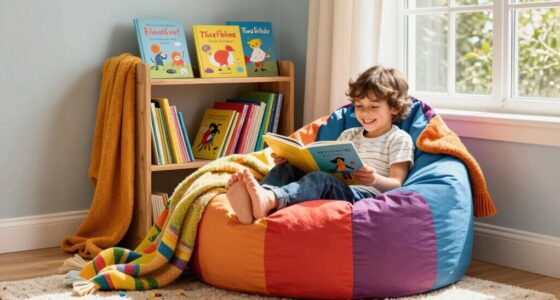
On the other side of the room, set up a calm, inviting space for quiet play. Use comfortable seating, soft lighting, and a variety of books, puzzles, or art supplies. Keeping this area clutter-free and organized encourages your child to settle down and focus when they need a break from active play. Storage solutions like bins or shelves help maintain order, making it easier for your child to access quiet activities independently. When the space is well-organized, it reduces overstimulation and creates a peaceful environment conducive to concentration and relaxation. Incorporating sensory elements into both zones can further enhance the room’s functionality. For example, include textured fabrics, calming sounds, or visual stimuli like colorful wall decor to support sensory integration. In the active zone, tactile toys and equipment stimulate the senses during movement, while in the quiet zone, sensory bottles or calming visuals can help your child wind down. These elements facilitate a smooth shift between high-energy activities and calming downtime, helping your child develop self-regulation skills. Incorporating an understanding of spiritual awakening can also inspire a sense of mindfulness and balance in your child’s environment, fostering emotional well-being.
As an affiliate, we earn on qualifying purchases.
Frequently Asked Questions
How Do I Prevent Noise From Active Play Disturbing Quiet Activities?
To prevent noise from active play from disturbing quiet activities, you should implement soundproofing strategies like adding noise reducing materials such as rugs, curtains, and foam panels. Use soft furnishings to absorb sound and consider creating designated zones within the room. You can also use storage solutions to keep toys organized, reducing clutter and noise. These steps help maintain a peaceful environment, balancing active and quiet play seamlessly.
What Are Some Space-Saving Ideas for Combining Both Play Types?
You can maximize space by using multi-purpose furniture, like storage benches that double as seating or beds with built-in shelves. Create designated zones for active and quiet play, clearly defined with rugs or furniture arrangements. Incorporate fold-away or stackable items to free up space when needed. These ideas help you seamlessly blend active and quiet play, making the room functional and organized without feeling cramped.
How Can I Encourage Children to Switch Smoothly Between Active and Quiet Play?
Did you know kids need about 60 minutes of active play daily? To encourage smooth shifts, set clear activity zones in your room, like a quiet corner and an active area. Use visual cues or timers for shift strategies, signaling when to switch. Gently guide children from one zone to another, reinforcing routines with positive prompts, making the shift seamless and enjoyable for everyone.
Are There Specific Toys That Suit Both Active and Quiet Play?
Yes, there are specific toys that suit both active and quiet play. Look for multifunctional toys and versatile play equipment, like building blocks, which encourage creativity and movement, or soft play mats that can be used for quiet reading or active tumbling. These toys adapt easily to different activities, helping children shift seamlessly between active and quiet play while keeping them engaged and entertained.
How Do I Organize the Room to Accommodate Different Play Needs?
You should create distinct play zones within the room for active and quiet play, making it easy for your child to switch between them. Use storage solutions like bins or shelves to keep toys organized and accessible, and label each area clearly. Incorporate soft rugs or mats in active zones for safety, and cozy furniture in quiet zones to encourage calm activities. This setup helps your child enjoy both play types seamlessly.
As an affiliate, we earn on qualifying purchases.
Conclusion
Blending active and quiet play in one room is like orchestrating a beautiful symphony—you set the tempo, switch melodies, and let each note shine. When you balance energetic adventures with calm moments, your space becomes a haven where curiosity and tranquility dance together. Think of it as planting seeds of joy and patience, watering them with creativity. With a little planning, your room transforms into a playground and a peaceful retreat, all wrapped into one harmonious space.
As an affiliate, we earn on qualifying purchases.
As an affiliate, we earn on qualifying purchases.