
To encourage pretend play without taking over, create a vibrant, inviting environment with a variety of costumes, props, and themed spaces that invite exploration. Support children in choosing their roles and exploring different identities, encouraging flexibility and perspective-taking. Let them lead their stories, offering guidance only when needed. Keep the focus on their creativity and autonomy, and you’ll help build confidence and social-emotional skills. If you want practical tips to foster open-ended play, keep exploring this topic.
Key Takeaways
- Provide open-ended prompts and let children lead their play narratives.
- Set up a rich, inviting environment with diverse costumes and props for independent exploration.
- Observe play silently, offering support only when children seek guidance or assistance.
- Encourage role switching and perspective-taking to foster autonomy and creativity.
- Avoid controlling the story; instead, ask guiding questions to inspire children’s own ideas.
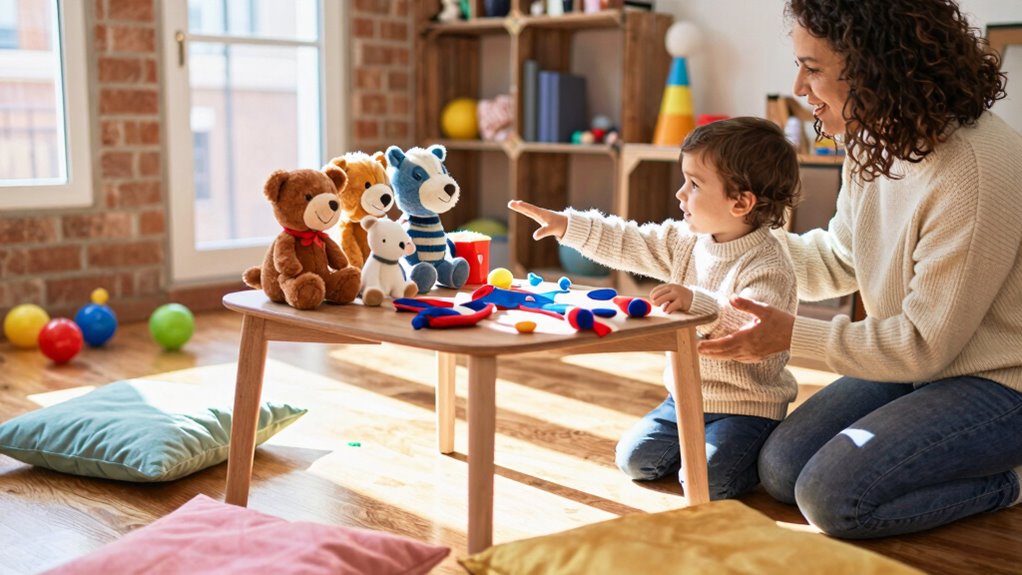
Ever wondered how to inspire your child’s imagination and creativity? One of the most effective ways is through pretend play, which allows children to explore the world around them and develop important social and emotional skills. To foster this, you can create an environment that encourages dressing up and role switching, two key components that spark a child’s imagination. Instead of dictating what they should play, offer a variety of costumes, hats, and accessories and let them choose what characters they want to become. When children dress up, they step into new identities, which helps them understand different perspectives and build empathy. Role switching, where they take turns playing different parts, is equally essential, as it teaches flexibility and enhances their ability to see situations from multiple angles. Additionally, supporting color accuracy in their pretend scenarios, such as using vibrant costumes or props, can make their imaginative stories more engaging and realistic. Creating a designated pretend play area with themed items can further inspire their storytelling and exploration. Incorporating imaginative play into daily routines can help reinforce these skills naturally and joyfully. Engaging in diverse pretend scenarios can also help children develop empathy and perspective-taking, which are crucial social-emotional skills. Incorporating opportunities for children to practice role flexibility during play can further strengthen their ability to adapt and respond to different situations.
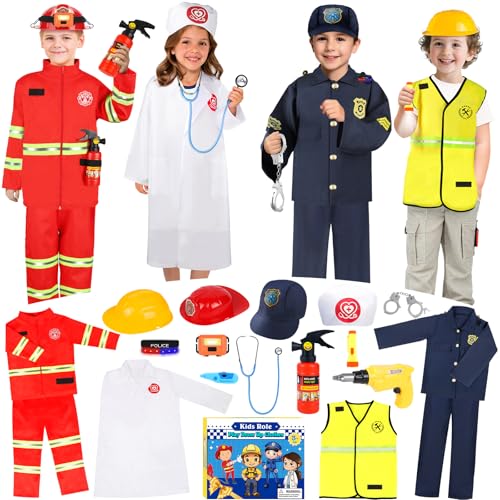
IVENRXIU Toddler Dress Up Clothes, Kids Role Play Costumes 4 In 1 Set-Police Doctor Fireman Engineer for Kids Boys and Girls 3-8, Career Dress Up Pretend Play Toys, Birthday Halloween Christmas Gifts
MULTI-STYLE KIDS DRESS UP COSTUME SET: With the IVENRXIU professional role-playing costume set, your child can immerse themselves…
As an affiliate, we earn on qualifying purchases.
As an affiliate, we earn on qualifying purchases.
Frequently Asked Questions
How Can I Tell if My Child Enjoys Pretend Play?
You can tell your child enjoys pretend play if they keenly engage in imaginative scenarios, often creating stories and using toys or props creatively. Observe their play preferences—do they spend a lot of time role-playing or inventing characters? If they show enthusiasm, initiate their own scenarios, and seem absorbed and happy during play, it’s a clear sign they genuinely enjoy pretend play and are developing their creativity and social skills.
What Are Some Common Mistakes to Avoid During Pretend Play?
Avoid imposing rules or overly directing during pretend play, or you’ll turn it into a chore, not fun. Kids thrive when they lead, so step back and resist the urge to control every storyline. Don’t dominate the scene with your ideas or correct their choices — that kills creativity faster than a bad joke. Instead, support their imagination, ask open-ended questions, and let their stories unfold naturally, free from your overbearing guiding hand.
How Do I Introduce New Pretend Play Themes?
To introduce new pretend play themes, start by creating imaginative scenarios that spark your child’s interest. Use everyday objects to inspire creative role playing, and ask open-ended questions to encourage their ideas. Offer themed costumes or props to make the scenarios more engaging. Keep the environment playful and flexible, allowing your child to steer the story. This approach fosters their creativity and confidence in exploring different roles and narratives.
When Should I Step Back During My Child’s Play?
You should step back during your child’s play when you notice they’re fully engaged and showing independence, like setting boundaries with their actions or expressing their ideas confidently. Observe cues such as focus, enthusiasm, or when they start exploring on their own. It’s like watching a puzzle come together — you’re there to support, but giving space allows their creativity to flourish and builds their confidence in managing their pretend worlds.
How Can I Encourage Social Pretend Play With Peers?
You can encourage social pretend play by facilitating opportunities for peer interaction through imaginative collaboration. Arrange playdates or group activities where children can co-create stories and scenarios, fostering teamwork and creativity. Use peer interaction strategies like prompting kids to share ideas, take turns, and build on each other’s roles. By supporting these interactions, you help children develop social skills and enjoy richer, more engaging pretend play experiences with their peers.

LynkVoxs Kids Fake Microphone Prop: 2pcs Eco-Safe Toy Microphones for Family Party Singing & Role Play – Gift for Children Ages 2-8
Perfect for Kids’ Role Play & Performances: Give children ages 2-8 the chance to become stars with these…
As an affiliate, we earn on qualifying purchases.
As an affiliate, we earn on qualifying purchases.
Conclusion
Think of your child’s imagination as a delicate garden. By gently planting seeds of ideas and stepping back to let them grow, you nurture their creativity without overshadowing it. When you resist the urge to take over, you’re not just encouraging pretend play — you’re giving their inner landscape room to flourish into vibrant, unique worlds. Trust in their ability to cultivate their own stories, and watch their confidence bloom like a well-tended garden in full bloom.

Mattel Disney Princess Carriage to Castle Transforming Playset with Aurora Small Doll, 3 Levels, 6 Play Areas, 4 Figures, Furniture & Accessories
With the Carriage to Castle Playset, kids can whisk away their Disney Princess small dolls to the next…
As an affiliate, we earn on qualifying purchases.
As an affiliate, we earn on qualifying purchases.

STOPKLAS Little Girls Dress Up Costume Set, Fairy and Mermaid Princess Dress Up Clothes Pretend Play Costume for Toddler Girl 3 4 5 6
Dress Up Clothes for Little Girls 3-6 Years Old: All dress up clothes are made of smooth and…
As an affiliate, we earn on qualifying purchases.
As an affiliate, we earn on qualifying purchases.