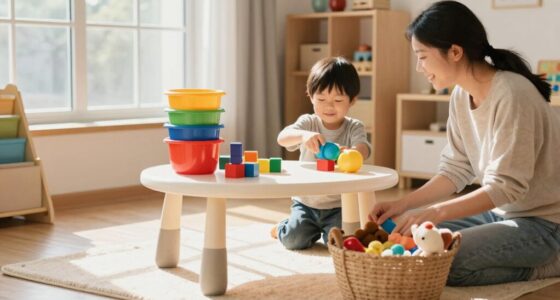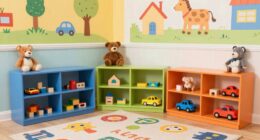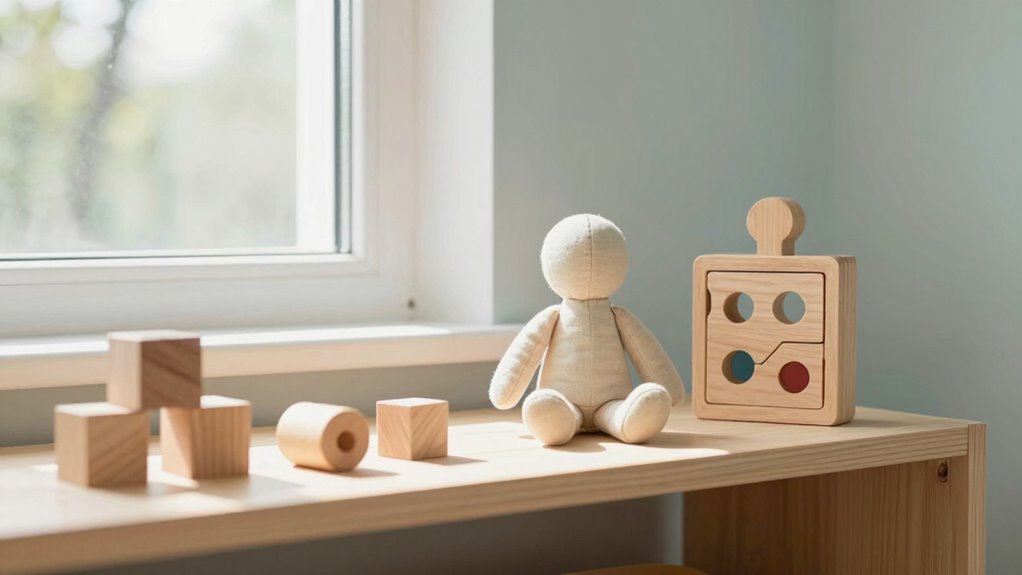

Fewer, high-quality toys help you create an engaging environment where your child can focus and explore deeply. With fewer options, they can develop better social skills, emotional intelligence, and creativity through meaningful play. These toys encourage problem-solving and imagination, supporting cognitive growth. Plus, a calmer space reduces stress for both of you. If you want to discover how this approach enhances play and learning even further, keep exploring the benefits.
Key Takeaways
- Fewer toys reduce overwhelm, allowing children to focus and engage more deeply in play.
- High-quality, open-ended toys stimulate creativity, problem-solving, and cognitive development.
- Simplified toy collections promote richer social interactions and emotional understanding.
- Limited options teach appreciation, gratitude, and value recognition in play.
- Fewer toys create a calmer environment, supporting overall well-being and easier supervision.

Many parents and caregivers believe that more toys lead to better play, but in reality, having fewer high-quality toys can promote more meaningful and creative play experiences. When your child has an abundance of options, they often become overwhelmed or quickly bored. Instead, providing a smaller selection of well-chosen toys encourages them to explore more deeply and intentionally. These thoughtfully selected toys can spark their curiosity and foster their cognitive development, allowing them to learn problem-solving skills, recognize patterns, and develop their imagination. With fewer toys, your child is more likely to focus on one activity at a time, which enhances their ability to concentrate and think critically. Incorporating open-ended toys and eco-friendly materials can further support their development while being kind to the environment. Additionally, choosing toys with ergonomic design can make play more comfortable and accessible, supporting their physical development and reducing fatigue.
Choosing high-quality toys also creates opportunities for richer social interaction. When there are fewer distractions, your child can engage more meaningfully with you or other children. Play becomes a shared experience, where they can practice communication, negotiation, and empathy. For example, a simple set of building blocks not only stimulates creativity but also invites collaborative play, where kids work together to construct something. This kind of social interaction strengthens their social skills and emotional intelligence, which are *essential* for their overall development. It’s easier for you to observe and guide their social behaviors when play is more focused and less chaotic. Additionally, toy durability ensures that these high-quality toys can withstand repeated use, providing ongoing opportunities for growth and exploration. Furthermore, selecting toys that promote educational value can enhance their learning process and curiosity.
Furthermore, introducing fewer toys can help teach your child about value and appreciation for the possessions they have, fostering gratitude and respect for their belongings. Moreover, fewer toys teach your child to value quality over quantity. They learn to appreciate the toys they have, which can lead to more sustained engagement. When toys are durable and open-ended, your child can use them in various ways, supporting their cognitive growth and encouraging them to think outside the box. They might turn a simple toy car into a storytelling prop or a marker into a tool for drawing their own world. This versatility promotes creative thinking and problem-solving, key components of cognitive development. Additionally, having fewer toys can help create a more calming environment that supports overall well-being and reduces stress during play.
Reducing toy clutter also benefits you as a caregiver. It makes cleanup easier and gives you more opportunities to engage with your child during play. When your child isn’t overwhelmed by choices, you can help guide their play more effectively, encouraging activities that promote learning and social skills. Overall, this approach cultivates a play environment that is more intentional, engaging, and educational. By focusing on fewer, higher-quality toys, you create a space where your child’s imagination flourishes, their social skills grow, and their cognitive development is supported in a meaningful way.
high-quality open-ended toys for children
As an affiliate, we earn on qualifying purchases.
As an affiliate, we earn on qualifying purchases.
Frequently Asked Questions
How Do Fewer Toys Improve a Child’s Creativity?
You’ll notice that fewer toys spark your child’s creativity by encouraging open-ended exploration and imaginative engagement. With fewer options, they focus more deeply, inventing new stories and uses for each toy. This simplicity fosters their problem-solving skills and inspires unique play scenarios. Less clutter helps your child develop concentration and encourages them to think outside the box, ultimately nurturing their ability to create and imagine beyond limited, predefined choices.
What Criteria Determine a “Better” Toy?
A “better” toy is like a treasure chest of endless possibilities. You determine this by checking its durability, ensuring it withstands rough play, and its educational value, fostering learning and curiosity. A top-tier toy isn’t just fun but also safe and stimulating. It sparks imagination, promotes development, and lasts longer, making it a worthwhile investment. Ultimately, a better toy enriches your child’s playtime and supports their growth.
How Can Parents Identify High-Quality Toys?
To identify high-quality toys, you should check for toy durability, ensuring they can withstand active play without breaking. Look for products from reputable brands known for safety and quality standards. Read reviews and descriptions carefully, focusing on materials and construction. High-quality toys often have smooth edges, non-toxic finishes, and sturdy parts, making them safer and more enjoyable for your child. Trust established brands to guarantee better play outcomes over time.
Do Fewer Toys Help Reduce Children’s Screen Time?
Imagine your child’s playroom as a garden—less clutter lets the flowers bloom. Fewer toys encourage screen time reduction by making play more engaging and meaningful. When you minimize toy clutter, kids naturally turn to creative, active play instead of screens. Studies show that curated toy selections foster better focus and imagination. So, reducing toys doesn’t just tidy up; it transforms play into richer, more stimulating experiences.
How Does Toy Simplicity Affect Social Play?
Toy simplicity encourages more meaningful social interaction because it promotes imagination and shared play rather than relying on complex toys. When you choose fewer, simpler toys, you enable kids to focus on toy diversity, which sparks creativity and collaboration. This setup fosters better social skills, as children learn to negotiate, share, and engage more deeply with each other, creating richer, more interactive play experiences.
durable eco-friendly children's toys
As an affiliate, we earn on qualifying purchases.
As an affiliate, we earn on qualifying purchases.
Conclusion
By choosing fewer, higher-quality toys, you open the magic of meaningful play. Think of it as tending a garden—you give each toy the time and attention it deserves, allowing creativity to bloom like a well-watered flower. When you simplify your child’s toy collection, you’re not just decluttering; you’re planting the seeds for richer imagination, better focus, and more joyful discoveries. Less truly becomes more, turning playtime into a fertile ground for growth and happiness.
Montessori style building blocks
As an affiliate, we earn on qualifying purchases.
As an affiliate, we earn on qualifying purchases.
educational toys for cognitive development
As an affiliate, we earn on qualifying purchases.
As an affiliate, we earn on qualifying purchases.