To handle toy overload without family drama, involve everyone in creating clear storage and donation routines. Communicate openly about the benefits of decluttering, such as a tidier, more enjoyable space. Use labels and fun organization methods to make cleanup easier and more engaging for kids. Set boundaries on what stays or goes, and regularly review your system to prevent buildup. Keep conversations positive, and you’ll find that staying organized becomes smoother—and there’s more helpful advice ahead.
Key Takeaways
- Involve all family members in toy decluttering decisions to foster collaboration and reduce resistance.
- Communicate the benefits of organized toys, such as easier cleanup and more play space, to gain support.
- Set clear boundaries on which toys stay or go, explaining the reasons to prevent misunderstandings.
- Use positive language and make the process fun to minimize stress and family tension.
- Establish routine decluttering sessions to keep toy overload manageable and prevent last-minute conflicts.
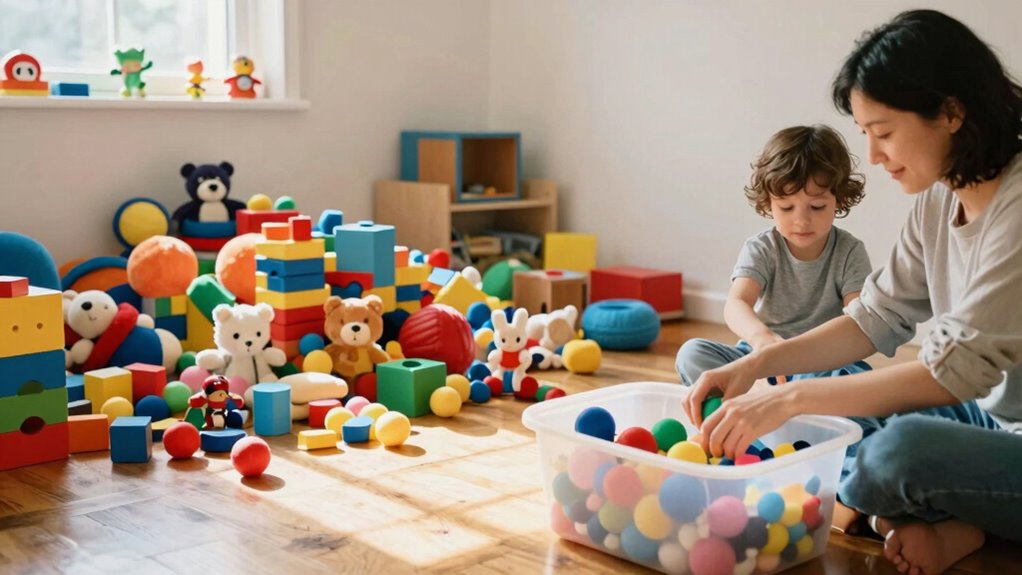
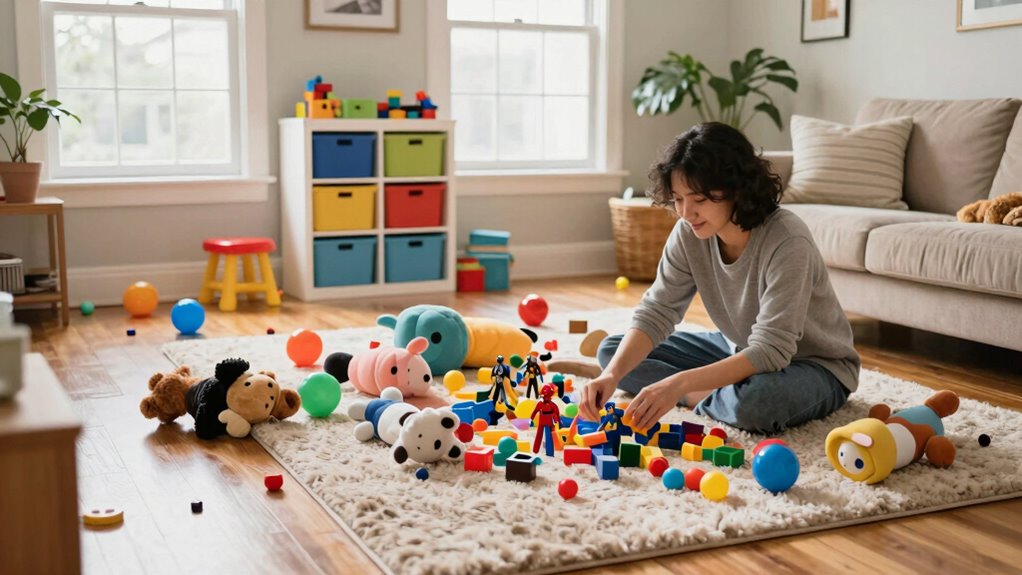
Dealing with an overload of toys can quickly turn into a family stressor if not handled thoughtfully. When your child’s collection starts spilling over into every corner, it’s easy for tension to build, especially if everyone has different opinions on what to keep or toss. Instead of letting the chaos lead to conflict, take proactive steps to organize and manage the clutter. One effective method is to implement a toy donation system. Explain to your child that donating toys is a way to help other children who might not have as many. This not only reduces clutter but also teaches kindness and generosity. Make it a positive experience by involving your child in choosing which toys to donate, so they feel empowered rather than overwhelmed by the process. It helps to set clear boundaries about what stays and what goes, making the transition smoother for everyone.
Alongside toy donation, investing in good storage solutions can make a significant difference. Use clear bins or baskets labeled with pictures or words to keep toys organized and accessible. When toys have designated spaces, your child learns to tidy up more easily and can find what they want without turning the house upside down. Look for multi-purpose furniture, like ottomans with storage inside or shelves that are accessible to little hands, to maximize space and reduce visual clutter. Rotating toys is another smart storage solution. Keep some toys out for a few weeks and then swap them with others stored away. This keeps things fresh and prevents boredom, while also reducing the number of toys in immediate use. Recognizing the importance of regional flavors and unique toy themes can also make organizing toys more engaging for your child. Additionally, incorporating creative organization ideas can help make the process more fun and tailored to your child’s interests. Establishing routine decluttering practices can also help prevent overload and maintain a tidy home environment.
Communicating your plan with family members is crucial to avoid misunderstandings. Make sure everyone understands the importance of decluttering and agree on the process. If your partner or other caregivers feel involved and supportive, you’re less likely to face resistance or guilt about getting rid of toys. Remember, the goal isn’t to eliminate fun but to create a more manageable environment where toys are enjoyed without taking over the house. Regularly revisiting your storage solutions and donation efforts keeps clutter from creeping back in. By establishing routines around toy organization and involving your child in decision-making, you set a tone of cooperation rather than conflict. Keeping the lines of communication open and using practical storage ideas helps you manage toy overload smoothly, without family drama.

DECOMOMO Storage Bins, Cube Storage Bin with Labels, Fabric Storage Cubes for Shelves (10.5" x 11" / 6pcs, Beige)
Durable & Stable: Made with durable, dust-resistant, and tear-resistant non-woven fabric, our fabric storage bins offers long-lasting durability…
As an affiliate, we earn on qualifying purchases.
As an affiliate, we earn on qualifying purchases.
Frequently Asked Questions
How Can I Involve My Child in Toy Decluttering?
You can involve your child in toy decluttering by making toy organization a fun, collaborative activity. Encourage them to choose toys to keep, donate, or toss, emphasizing the benefits of a tidy space. Teach about sibling sharing to foster cooperation. Use positive reinforcement and set clear, gentle boundaries, making them feel responsible and empowered. This involvement not only declutters but also teaches valuable lessons on sharing and organization.
What Are Eco-Friendly Ways to Donate Old Toys?
You can donate old toys through eco donations by finding local charities or thrift stores that prioritize eco-friendly practices. Look for organizations that participate in toy recycling programs, ensuring your toys are reused responsibly. Before donating, clean the toys thoroughly and check for safety. Many communities also offer special drop-off points for eco donations, making it easier to give your toys a second life while supporting sustainability efforts.
How Do I Prevent Future Toy Clutter?
To prevent future toy clutter, embrace a minimalist approach by regularly reviewing and editing your child’s collection. Implement toy rotation, swapping out toys every few weeks to keep things fresh and manageable. Set clear limits on toys, focusing on quality over quantity. Encourage your child to choose favorites, and donate or recycle the rest. This way, you maintain an organized space, reduce overwhelm, and foster gratitude for the toys they cherish most.
What Are Creative Storage Solutions for Small Spaces?
To maximize toy organization in small spaces, consider creative storage solutions like multi-functional furniture with built-in compartments or hanging mesh organizers. Use stackable bins and label them clearly for easy access. Space-saving ideas such as under-bed storage or corner shelves can free up room while keeping toys accessible. Incorporate vertical storage to utilize wall space efficiently. These strategies help keep toys tidy and accessible without cluttering your limited space.
How Can I Manage Relatives’ Gift-Giving Habits?
Managing relatives’ gift-giving habits is like steering a boat through choppy waters—you need clear boundaries. You can kindly set gift boundaries to communicate your preferences, explaining family expectations openly. Let them know what’s helpful and what’s too much. By doing so, you respect their generosity without overloading your space or causing misunderstandings. Consistent communication helps everyone feel heard and keeps gift exchanges joyful rather than stressful.
multi-purpose storage ottoman
As an affiliate, we earn on qualifying purchases.
As an affiliate, we earn on qualifying purchases.
Conclusion
In the end, managing toy overload smoothly keeps family harmony intact. Remember, a recent survey found that 78% of parents feel overwhelmed by clutter, yet only 35% set clear boundaries. By involving everyone in decluttering and establishing limits, you foster cooperation and reduce stress. When you approach toy management with patience and teamwork, you turn chaos into a shared accomplishment. Keep these strategies in mind, and enjoy a clutter-free, happier home for everyone.
toy rotation organizer
As an affiliate, we earn on qualifying purchases.
As an affiliate, we earn on qualifying purchases.
clear plastic toy bins
As an affiliate, we earn on qualifying purchases.
As an affiliate, we earn on qualifying purchases.