
TL;DR

Get health and wellness essentials delivered free with Prime
- Fast, free delivery on millions of items
- Prime Video, Amazon Music and more included
- Member-only deals all year
Amid concerns about AI and social media’s impact on youth, experts emphasize that parents can steer their children toward responsible AI use through curiosity and active engagement. The development of responsible ecosystems and legislation signals a shift toward safer AI integration for kids.
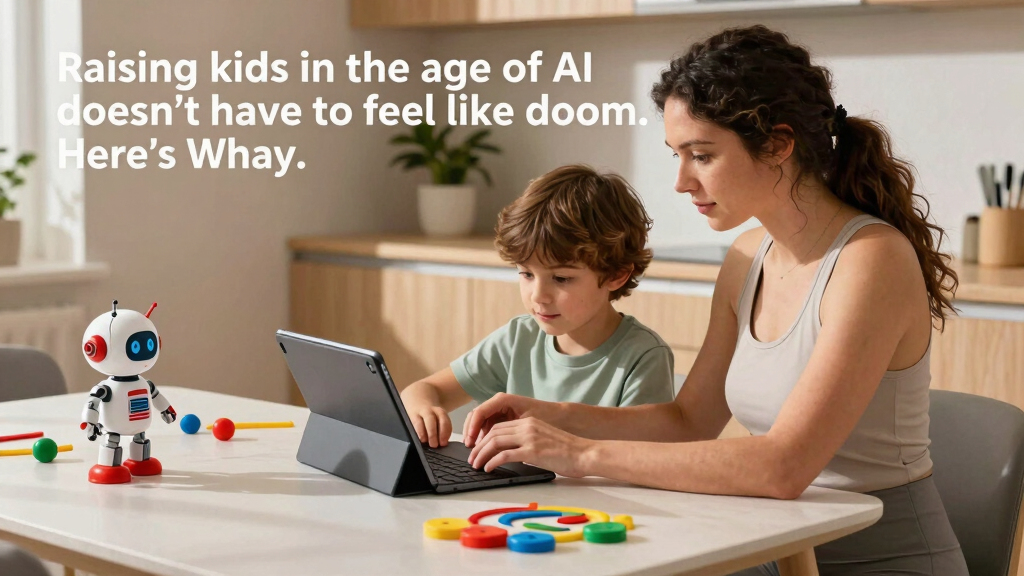
Experts and advocates argue that raising children in the age of AI does not have to be overwhelming or negative. Instead, with proactive parenting, responsible technology design, and evolving legislation, society can foster a safer, more ethical environment for kids to grow up with AI.
Michele L. Jawando, a former Google executive and civil rights attorney, highlights that AI is a designed technology, not an inevitable destiny. She emphasizes the importance of intentional design and the role of civil society, including parents, in shaping AI’s development. Despite declining hopefulness among Gen Z regarding technology, nearly half remain curious about AI, indicating a critical thinking and discerning mindset. Jawando advises parents to stay curious about their children’s digital lives, understand what tools like Snapchat or AI are offering, and advocate for safer, more responsible platforms. She notes that legislation and community efforts are gaining momentum, with more than 25 states enacting AI laws and diverse groups, including teenagers, contributing to responsible innovation. The rise of responsible ecosystems like Spill, which intentionally modulate content for safety, exemplifies this shift. Jawando also points out that the earlier awareness among parents about social media harms offers an advantage in guiding children through AI’s challenges.
Why It Matters
This matters because the way society manages AI’s integration into daily life will influence future generations’ safety, privacy, and well-being. Active parental engagement and responsible technology development can mitigate risks associated with AI, such as data harvesting or misinformed use, while fostering critical thinking and curiosity in children. The movement toward legislation and community-led initiatives indicates a societal shift toward more ethical AI deployment, which could shape the future of digital childhoods.
As an affiliate, we earn on qualifying purchases.
Background
The current landscape is shaped by social media’s negative impacts on youth, prompting increased awareness and regulation efforts. Historically, technological innovations like the internet and telephones aimed to connect people but also brought unforeseen challenges. Recent studies show declining hope and rising anger among Gen Z regarding AI and social media, yet curiosity remains high, reflecting a desire for better tools. Legislation is advancing in over 25 states, and new platforms are adopting responsible design principles, signaling a shift from reactive to proactive management of AI’s societal role.
“AI is not destiny. It is designed. And we can design something better this time around — because we can remember the shocks. We’re still experiencing the shocks and the pain of social media. We can shift what we’re designing.”
— Michele L. Jawando
“Parents will go to the mat and we will fight with everything that we have for our children.”
— Michele L. Jawando
“The curiosity is actually grounded in critical thinking. What is happening, and does what I’m getting match what I actually want? They grew up as digital natives. They’ve seen the effects of social media across their entire childhood. So they’re more discerning now.”
— Michele L. Jawando
children's critical thinking AI books
As an affiliate, we earn on qualifying purchases.
As an affiliate, we earn on qualifying purchases.
What Remains Unclear
It is still unclear how widespread and effective the upcoming legislation and responsible ecosystems will be in practice. The long-term impact of AI on childhood development and societal norms remains uncertain, and the pace of technological change continues to outstrip regulation and awareness.
parental control AI apps for kids
As an affiliate, we earn on qualifying purchases.
As an affiliate, we earn on qualifying purchases.
What’s Next
Next steps include ongoing legislative efforts, increased parental engagement, and the development of more responsible AI platforms. Monitoring how these initiatives influence youth experiences and societal norms will be crucial in the coming years.
kids responsible social media platforms
As an affiliate, we earn on qualifying purchases.
As an affiliate, we earn on qualifying purchases.
Key Questions
Can parents really influence how AI impacts their children?
Yes. Parents can foster curiosity, set boundaries, and advocate for responsible technology, which can significantly shape their children’s experiences with AI.
Are current AI regulations enough to protect children?
While more than 25 states are enacting AI legislation, it is still early to determine if these measures will fully address all risks. Continued advocacy and responsible platform design are necessary.
How can I ensure my child uses AI tools responsibly?
Stay curious about what your children are using, ask questions about their digital experiences, and promote critical thinking about the tools and content they engage with.
What role do tech companies play in shaping AI for kids?
Tech companies have the power to design safer, more ethical AI platforms. Responsible design choices, like content moderation and data privacy, are key to protecting young users.
Halloween Picks
halloween
As an affiliate, we earn on qualifying purchases.