
Repetition in play helps your child develop essential motor skills like grasping and walking by practicing the same movements repeatedly. It also gives them a sense of predictability, making them feel safe and secure. Repeating activities builds confidence and patience as they master new skills. Plus, it encourages creativity and learning through exploration, all within familiar routines and environments. Keep exploring this further to see how repetition continues to support your child’s growth in many important ways.
Key Takeaways
- Repetition develops motor skills and coordination essential for daily tasks and physical growth.
- It provides predictability, promoting emotional security and helping children manage their emotions.
- Repetition boosts focus, mastery, and confidence as children see progress through practice.
- It fosters creativity by allowing exploration and variation within familiar routines.
- Repeated engagement in natural environments enhances learning, emotional security, and overall development.
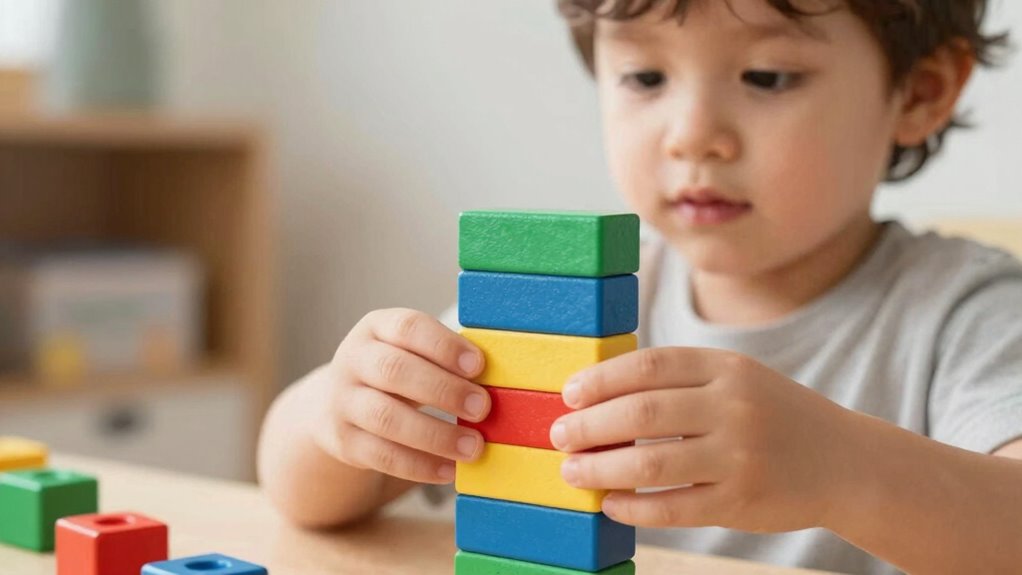
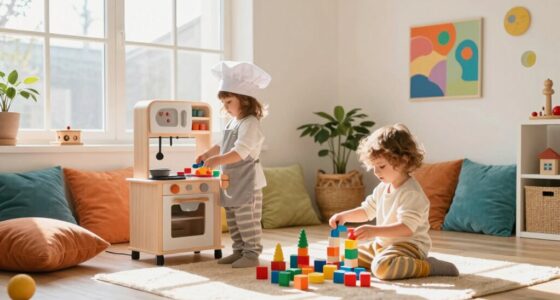
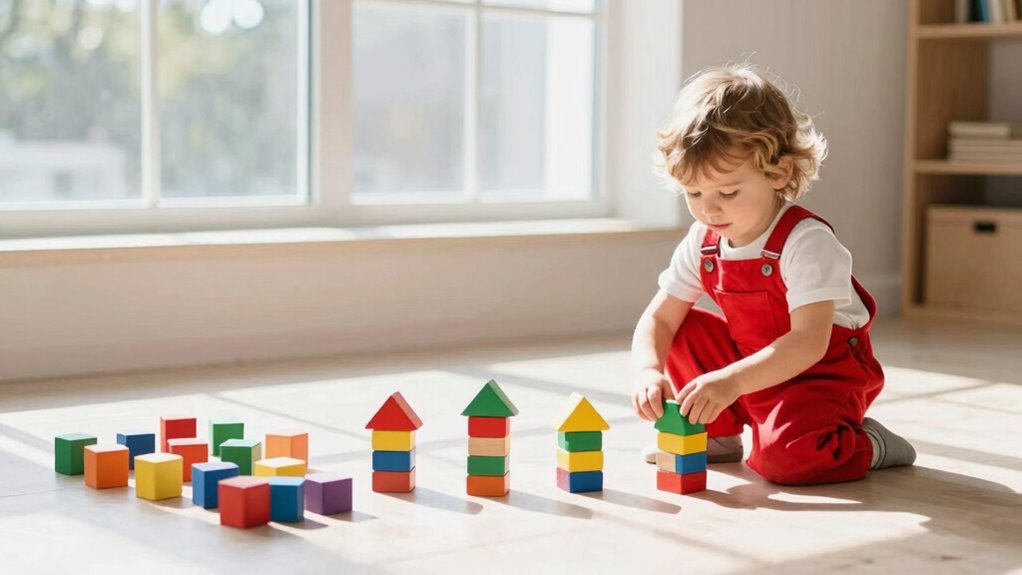
Repetition is a fundamental part of how children learn and explore their world through play. When your child repeats activities, they’re not just having fun—they’re building essential skills that will serve them for life. Repetition helps children develop their motor skills, which are crucial for everyday tasks like grasping toys, crawling, walking, and eventually running or jumping. Each time they repeat a movement, their brain and muscles coordinate more effectively, making these actions smoother and more controlled. For example, stacking blocks repeatedly improves hand-eye coordination and fine motor skills, giving your child greater confidence in manipulating objects.
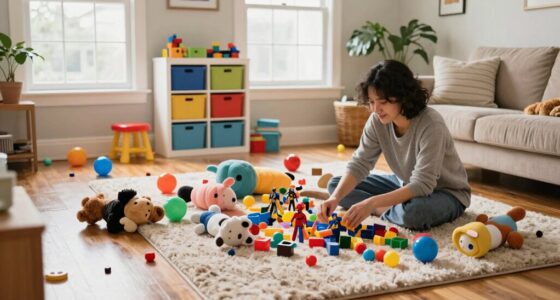
Repeating activities helps children develop motor skills, boosting coordination, confidence, and mastery through playful practice.
Beyond physical development, repetition plays a significant role in emotional regulation. When children engage in familiar activities over and over, they gain a sense of predictability and control. This consistency helps them feel safe and secure, especially in new or challenging situations. Repetition allows children to practice managing their emotions by repeating calming routines or social interactions, which can make them more resilient. For instance, a child might repeatedly play with a favorite toy or participate in a familiar game, helping them learn to manage frustration or disappointment if things don’t go as planned. Over time, these repeated experiences teach children how to soothe themselves and handle their feelings constructively.
You’ll notice that when children repeat the same play activities, they often become more focused and intentional. This focused repetition creates opportunities for mastery, boosting their confidence as they see their skills improve. It also reinforces learning, making it easier for them to remember new concepts or social rules. In the process, children learn patience and perseverance, understanding that mastery takes time and effort. This kind of play encourages them to experiment, take risks, and learn from mistakes—an essential part of emotional growth. Additionally, repetition in play can foster creativity by allowing children to explore variations within familiar routines, deepening their understanding and engagement. Recognizing the importance of consistent routines in their daily lives further supports their emotional security and development. Incorporating structured repetition into daily activities can also help children develop a sense of stability and predictability, which are key for their overall well-being.
A deeper understanding of natural play environments and how children interact with them can further enhance their development and emotional security.
stacking blocks for motor skills
As an affiliate, we earn on qualifying purchases.
As an affiliate, we earn on qualifying purchases.
Frequently Asked Questions
How Does Repetition Influence a Child’s Language Development?
Repetition boosts your child’s language development by providing verbal reinforcement, helping them internalize new words and sounds. When they hear words repeatedly, they gain confidence and clarity in pronunciation. This process also supports vocabulary expansion, allowing your child to understand and use more words effectively. By engaging in repeated play, you create a nurturing environment where language skills grow naturally and comfortably, laying a strong foundation for future communication.
Can Too Much Repetition Hinder a Child’s Creativity?
You might worry that too much repetition could cause creative stagnation or boredom risk. However, repetition actually helps children master skills and deepen understanding, which boosts confidence. While excessive repetition might seem to limit creativity, it often provides a safe space for children to explore variations and refine ideas. Balance is key—using repetition alongside new challenges fosters both stability and inventive thinking.
What Are Age-Appropriate Repetitive Activities for Toddlers?
You can engage your toddler in age-appropriate repetitive activities like simple music activities, such as clapping rhythms or singing familiar songs, which help develop their auditory skills. Sensory exploration, like stacking blocks or finger painting, also benefits from repetition, allowing your child to master new skills and strengthen neural connections. These activities are playful and predictable, providing comfort while supporting their cognitive and motor development.
How Do Cultural Differences Affect Repetitive Play?
Cultural differences shape how you see repetitive play, influencing the stories and traditional games children enjoy. You might notice that cultural narratives are embedded in repetitive activities, helping kids connect with their heritage. Traditional games often involve repetitive actions that reinforce cultural values and community bonds. As a parent or caregiver, embracing these diverse forms of play allows children to learn about their identity while developing coordination, memory, and social skills.
When Should Parents Introduce New Play Variations?
A stitch in time saves nine, so introduce new play variations when your child’s playroom routines become too predictable. Watch for signs of boredom or hesitation in their Repetition patterns. When they seem enthusiastic to explore different ways to play, gently introduce new activities or modify existing ones. This keeps play engaging, stimulates their creativity, and helps them develop adaptable skills, making playtime both fun and enriching.
repetition toys for toddlers
As an affiliate, we earn on qualifying purchases.
As an affiliate, we earn on qualifying purchases.
Conclusion
Embracing repetition in play gently guides your child’s growth, like the steady hum of a comforting melody. It’s through these familiar echoes that they build confidence, deepen understanding, and find joy in discovery. While it might seem simple, this gentle rhythm nurtures their curious spirit, encouraging them to explore and learn at their own pace. So, cherish these moments—they’re the quiet notes that compose a beautiful symphony of development.
familiar routine activity toys
As an affiliate, we earn on qualifying purchases.
As an affiliate, we earn on qualifying purchases.
children's emotional regulation toys
As an affiliate, we earn on qualifying purchases.
As an affiliate, we earn on qualifying purchases.