
TL;DR

Get health and wellness essentials delivered free with Prime
- Fast, free delivery on millions of items
- Prime Video, Amazon Music and more included
- Member-only deals all year
Two U.S. studies using electronic health records found that newborns who missed vitamin K shots had higher bleeding risks, including more than twice the risk of intracranial hemorrhage. The share of newborns recorded as not receiving the shot rose from 3.1% in 2017 to 6.8% in 2025; the researchers say the data show an association, while some reasons behind the trends remain uncertain.
Two studies of U.S. infant health records found that newborns who did not receive a vitamin K shot had higher bleeding risks, including more than twice the risk of intracranial hemorrhage, while the recorded share missing the shot rose from 3.1% in 2017 to 6.8% in 2025. The findings, published in JAMA and JAMA Pediatrics, concern a preventive measure recommended by the American Academy of Pediatrics and address a potentially severe but uncommon risk during early infancy.
The JAMA study followed 5.24 million newborns born at 35 weeks’ gestation or later, using electronic health record data from Epic Cosmos between January 2017 and December 2025. By six months, infants who had not received vitamin K had a bleeding rate of 288.0 per 10,000, compared with 185.9 per 10,000 among infants who received it. The researchers reported an adjusted risk ratio of 1.47, meaning the nonreceipt group had a 47% higher measured risk after adjustment for factors in the analysis.
The same study recorded 33.0 intracranial bleeding cases per 10,000 among infants who missed the shot, compared with 13.2 per 10,000 among recipients. The adjusted risk ratio was 2.43. Death with concurrent bleeding during the birth hospitalization was also more frequent in the nonreceipt group: 2.9 versus 1.1 per 10,000, with an adjusted risk ratio of 2.69. These are study findings, not proof that nonreceipt alone caused each outcome.
A separate JAMA Pediatrics research letter examined records for 11 million U.S. infants ages zero to six months. From 2017 to 2025, diagnosed vitamin K deficiency rose from 11.8 to 37.3 per 100,000 infants, while diagnosed vitamin K deficiency bleeding rose from 24.0 to 107.4 per 100,000. The studies used the same broad electronic-record platform and period, but they assessed different populations and outcomes.
Higher Risks During Early Infancy
The findings matter because vitamin K helps the body activate blood-clotting factors, and bleeding in an infant’s brain can lead to serious injury or death. In an accompanying editorial, Laura Kair of the University of California, Davis, and colleagues said the JAMA study’s estimated number needed to harm was 114 infants: in the authors’ calculation, one additional bleeding event would occur if 114 infants did not receive vitamin K. That estimate is a study-based way to describe risk, not a prediction about any one child.
The results also give clinicians and families current population-level data as nonreceipt becomes more common. The study does not establish why parents declined the shot or show that every infant who missed it will bleed. It does, however, identify a group with higher recorded rates of bleeding outcomes and supports clear discussion of both the preventive measure and its risks and benefits.
Products Worth Considering

Fitbit Inspire 3 Health and Fitness Tracker Bundle

Fitbit Versa 2 Health and Fitness Smartwatch with Heart Rate, Alexa, Music, Sleep and Swim Tracking

Hyperice Hypervolt Go 3 Portable Percussion Massage Gun with Carry Case
As an affiliate, we earn on qualifying purchases.
Why Newborns Receive Vitamin K
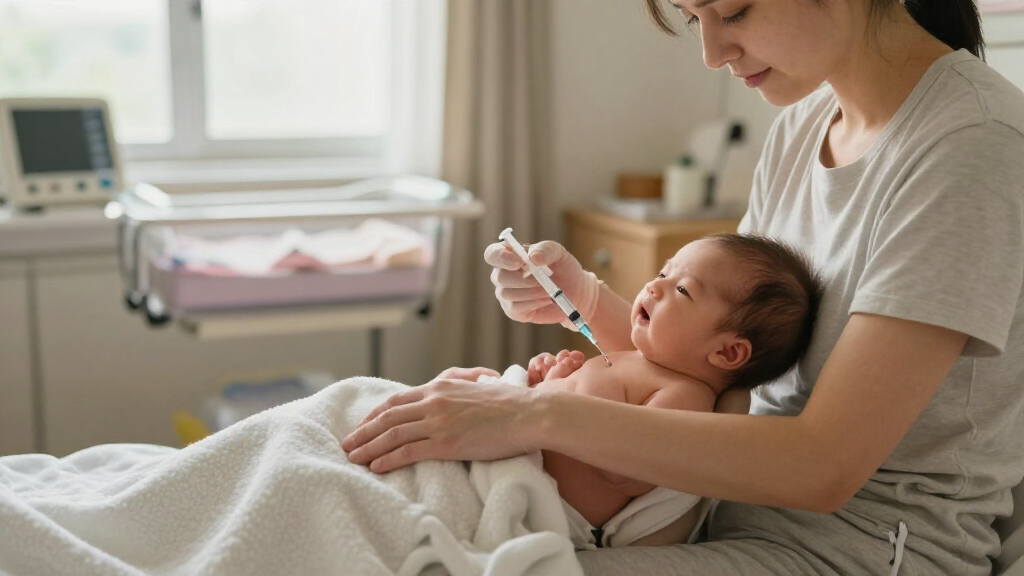
Newborns can have low vitamin K because little crosses the placenta, their gut has limited early vitamin production, breast milk contains relatively little, and gastrointestinal absorption may be poor. The American Academy of Pediatrics has recommended newborn vitamin K shots since 1961. The shot is intended to prevent vitamin K deficiency bleeding, which can occur in the first days after birth or later in infancy.
Classical vitamin K deficiency bleeding typically occurs between two days and one week after birth and can involve umbilical bleeding or bruising. Late cases can arise from one week through six months. The source report cites prior research finding that infants without a shot were 81 times more likely to develop late vitamin K deficiency bleeding; that figure comes from earlier studies, not the two new analyses. The editorialists said the causes behind recent year-over-year increases in bleeding remain uncertain.
“This study shows the real-world consequences of vitamin K refusal.”
— Elizabeth Wolf, MD, MPH, of Virginia Commonwealth University, speaking to MedPage Today
Limits of the Available Evidence
The studies rely on Epic Cosmos electronic health records, which do not include infants treated at facilities using other record systems. The researchers assessed recorded diagnoses and outcomes; the data may not capture every case or every factor influencing whether an infant received vitamin K. The findings show an association between nonreceipt and higher recorded risks, but do not by themselves establish the cause of each bleeding event.
It is also unclear why nonreceipt and diagnosed deficiency rose over the study period. The editorialists said changes in the health of mothers and infants could be involved, alongside the faster rise in bleeding among infants who did not receive vitamin K. The report does not establish how widely families would accept an oral option or what effect a U.S. alternative program would have.
Counseling and Alternatives Under Discussion
The findings may inform discussions between health professionals and parents about newborn vitamin K prophylaxis and the risks associated with declining it. The source material does not identify a new policy decision or a scheduled change to U.S. recommendations. Researchers and clinicians will need further evidence to clarify the causes of the trends and how well the study results represent infants outside the Epic Cosmos network.
Wolf and colleagues raised oral vitamin K as a possible second-line option if rejection of the injection continues, pointing to its use in some other countries. They noted that oral vitamin K can be less effective at preventing late deficiency bleeding. Whether U.S. guidance or practice will change remains unsettled.
Key Questions
What did the new studies find?
The JAMA study found higher recorded bleeding risks among infants who did not receive newborn vitamin K, including an adjusted risk ratio of 2.43 for intracranial bleeding. A separate JAMA Pediatrics analysis found that diagnosed vitamin K deficiency and deficiency-related bleeding increased between 2017 and 2025.
How common was vitamin K shot nonreceipt in 2025?
In the JAMA study, the recorded share of newborns who did not receive the shot increased from 3.1% in 2017 to 6.8% in 2025.
Does the study prove that missing the shot caused each bleeding event?
No. The studies found an association in electronic health record data. Their results do not establish that nonreceipt alone caused every outcome, and other factors may contribute to the trends.
Why do newborns receive vitamin K?
Vitamin K helps activate proteins involved in blood clotting. Newborns can have low levels for several reasons, and the shot is recommended to prevent vitamin K deficiency bleeding.
Could oral vitamin K replace the shot in the United States?
The authors raised oral vitamin K as a possible second-line alternative if refusal of injections continues. They also noted that oral vitamin K may be less effective at preventing late vitamin K deficiency bleeding; the source does not report a U.S. policy change.
Source: medpagetoday.com