
To effectively respond to climate-driven vector diseases, you should focus on integrating community engagement, environmental management, and innovative technology. Encourage residents to eliminate breeding sites and participate in awareness campaigns. Strengthen partnerships between health authorities and communities to promote protective behaviors like using bed nets and reporting breeding grounds. Leveraging mobile tools can enhance data collection and communication. Staying proactive and adaptive is key. If you continue exploring, you’ll discover how these strategies work together to protect public health.
Key Takeaways
- Implement adaptive vector control strategies targeting emerging mosquito habitats influenced by climate change.
- Engage communities through education, awareness campaigns, and participation in eliminating breeding sites.
- Strengthen surveillance systems to monitor climate-sensitive vector populations and disease patterns.
- Foster partnerships between health authorities and local populations to promote protective behaviors and reporting.
- Leverage technology for data collection, communication, and sustaining community-led vector control efforts.
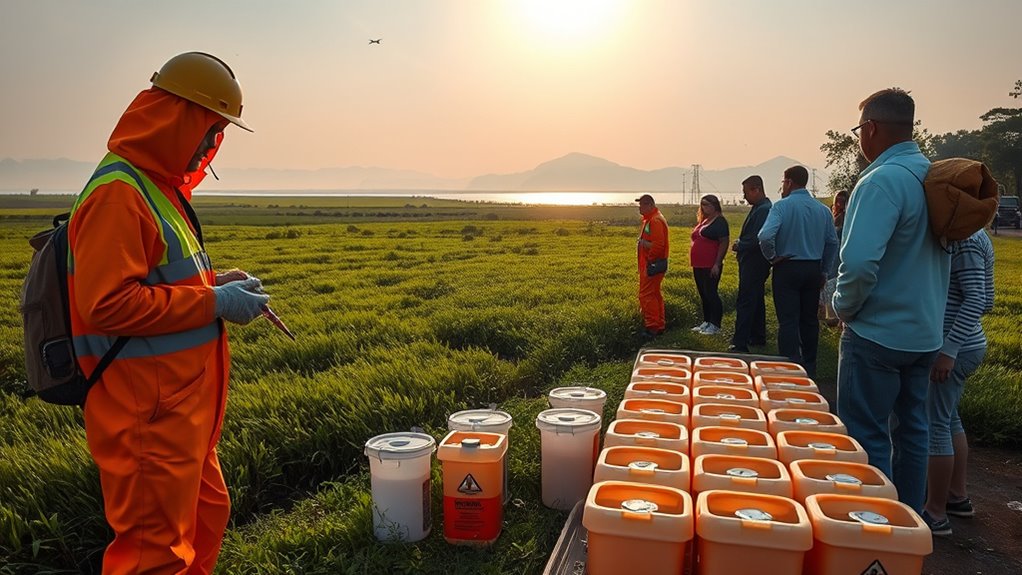
As climate change accelerates, vector-borne diseases like dengue, Zika, and malaria are spreading to new regions, posing a growing threat to public health. You need to understand that controlling these diseases requires more than just medical treatment; it relies heavily on effective vector control strategies combined with active community engagement. Without involving local communities, efforts to reduce mosquito populations or eliminate breeding sites often fall short. Engaging residents helps ensure they understand the importance of removing standing water, using protective measures, and maintaining clean environments. When communities participate actively, they become vital partners in reducing disease transmission.
Community engagement is essential for effective control of climate-driven vector-borne diseases.
Implementing vector control measures involves targeting the mosquito populations responsible for spreading these illnesses. You should focus on eliminating breeding sites by encouraging communities to discard containers that collect water, cover water storage containers, and clear clutter around homes. Environmental management, such as drainage improvements and larviciding, also plays a critical role. But these efforts are only successful if communities are motivated and equipped with the right knowledge. That’s where community engagement comes in—by organizing local awareness campaigns, workshops, and neighborhood clean-up drives, you foster a sense of ownership and responsibility among residents.
Moreover, community engagement extends beyond education; it involves building trust and establishing partnerships between health authorities and local populations. When residents understand the risks and see tangible actions being taken, they’re more likely to adopt protective behaviors like using bed nets, installing window screens, and reporting breeding sites. This collective effort greatly amplifies the impact of vector control programs. You also need to contemplate culturally appropriate messaging to resonate with different communities, ensuring that health advice is accessible and actionable.
In addition, empowering local leaders and community groups helps sustain these efforts over time. Training volunteers to identify mosquito breeding sites or distribute insecticide-treated nets creates a grassroots network that maintains momentum even when external support diminishes. You should recognize that community engagement isn’t a one-time activity but a continuous process that adapts to changing conditions and community needs. Incorporating mobile health technology can enhance communication and data collection, further supporting ongoing engagement.
Ultimately, tackling climate-driven vector diseases demands an integrated approach where vector control strategies are complemented by ongoing community involvement. When people are informed, motivated, and involved, the likelihood of successful intervention increases. You become a catalyst for change—helping communities reduce mosquito populations, prevent disease spread, and build resilience against future climate-related health threats. This collaborative approach is essential to mitigate the health impacts of climate change and protect vulnerable populations worldwide.
Frequently Asked Questions
How Do Climate Changes Affect Mosquito Breeding Patterns?
Climate changes increase mosquito breeding by creating warmer temperatures and more standing water, which promote urban proliferation. You’ll notice more breeding sites in areas with poor drainage or water accumulation. To manage this, you should focus on breeding site management—eliminating stagnant water and improving drainage. Staying vigilant about changing climate patterns helps you reduce mosquito populations and lower the risk of vector-borne diseases effectively.
What New Diseases Are Emerging Due to Climate-Driven Vectors?
You should be aware that climate-driven vector adaptation is leading to the emergence of new pathogens, such as Zika, chikungunya, and dengue, expanding into regions previously unaffected. These emerging pathogens pose significant health risks as vectors adapt to changing environments. Staying informed about these developments helps you understand how climate change influences disease spread and underscores the importance of proactive public health measures to prevent outbreaks.
How Can Communities Prepare for Sudden Vector-Borne Disease Outbreaks?
Did you know that vector-borne diseases have increased by over 50% in the last decade? To prepare, you should focus on community education and emergency preparedness. Educate residents about mosquito breeding sites and protective measures. Develop emergency plans for outbreaks, including local alert systems and accessible healthcare. By staying informed and organized, you can help your community respond swiftly and effectively, limiting the impact of sudden outbreaks.
What Role Do Local Governments Play in Climate-Related Vector Control?
You play a crucial role in climate-related vector control by implementing urban planning strategies that reduce mosquito breeding sites, like eliminating standing water and managing green spaces. Additionally, you promote public education campaigns to inform residents about preventive measures. By integrating these efforts, you help limit disease transmission, build community resilience, and adapt to the changing climate’s impact on vector-borne diseases.
How Effective Are Current Vaccines Against Climate-Spread Vector Diseases?
Current vaccines against climate-spread vector diseases vary in effectiveness, but vaccine development has made significant progress. You can improve protection by getting vaccinated, which helps build herd immunity and reduces disease transmission. However, some vaccines may require booster doses or have limited efficacy against certain strains. Staying informed about vaccine updates and ensuring high vaccination rates in your community are key to controlling these climate-driven health threats.
Conclusion
As you combat climate-driven vector diseases, remember that while science advances and policies improve, the changing climate remains a relentless challenge. You hold the power to adapt, prevent, and educate, but nature’s shifting patterns often outpace your efforts. This juxtaposition reminds you that progress is essential yet insufficient alone. Ultimately, your resilience and innovation must work hand in hand with nature’s unpredictability to protect public health now and in the future.